Understanding the Symptoms of Advanced Cancer: What to Watch For
PART C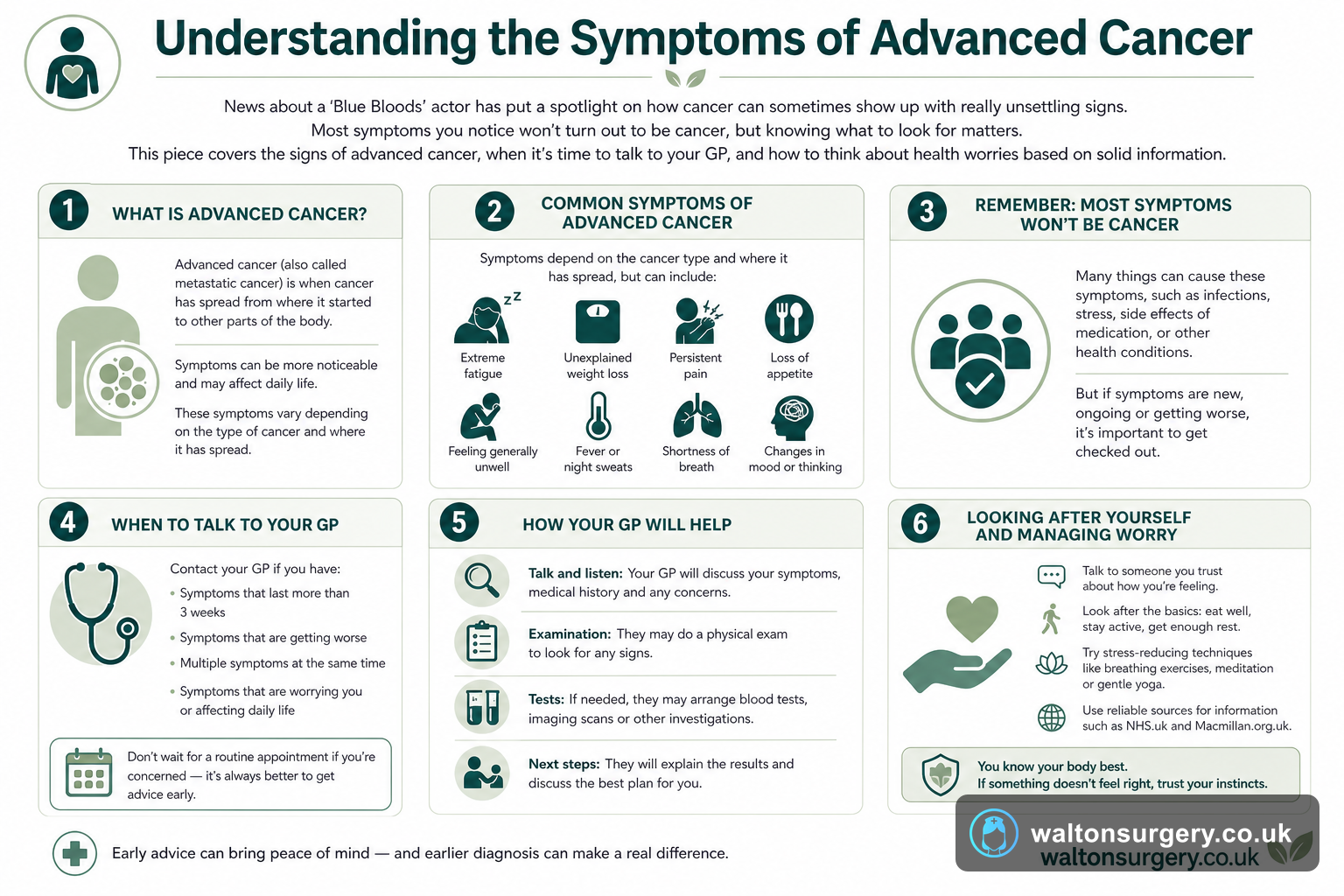
⚡ Quick Answer
News about a 'Blue Bloods' actor has put a spotlight on how cancer can sometimes show up with really unsettling signs. Most symptoms you notice won't turn out to be cancer, but knowing what to look for matters. This piece covers the signs of advanced cancer, when it's time to talk to your GP, and how to think about health worries based on solid information.
A 'Blue Bloods' actor recently received a terminal cancer diagnosis after noticing a symptom that was, by all accounts, deeply disturbing. That story has naturally made people sit up and pay attention. It's a sharp reminder that cancer doesn't always announce itself quietly. And while the vast majority of symptoms you or I might experience are nothing to do with cancer, being clued up on potential warning signs is just sensible health management.
What follows is a breakdown of what's understood about the symptoms of advanced cancer. This isn't a replacement for seeing a doctor — nothing is — but it should give you clear, factual information to help you figure out when a symptom might be worth bringing up with your GP.
What Was the 'Blue Bloods' Actor's Symptom?
The reports about the 'Blue Bloods' actor described his symptom as "disturbing." The exact details weren't spelled out in the verified coverage, but symptoms linked to advanced cancer tend to involve noticeable shifts in how your body works or looks. Things like pain that won't shift and has no obvious cause, losing a lot of weight without trying, or bleeding that seems out of place.
One thing to keep in mind: a single symptom, even a frightening one, almost never means cancer by itself. Plenty of other serious conditions can produce the same effects. What the actor's situation really drives home is that any new, lasting, or worrying symptom needs to be looked at by a professional — and quickly.
Recognising the General Warning Signs of Cancer
The NHS lists a number of general signs that should send you to your GP. These aren't specific to advanced cancer, but they're red flags that need checking out. Unexplained weight loss is one. Finding a lump or swelling somewhere on your body is another. Unexplained bleeding rounds out the big three.
There are more, though. A cough or hoarseness that hangs around for three weeks or longer. A shift in your bowel habits. A sore that just won't heal. You should also keep an eye out for pain with no clear explanation, night sweats, or a new mole — or changes to one you already have. If any of these show up, getting a GP appointment is the right move. For women, it is particularly important to be aware of breast cancer signs and symptoms, as early detection can significantly improve outcomes.
Symptoms More Common in Advanced Cancer
Once cancer has spread — metastasised, in medical terms — to other parts of the body, it tends to cause problems linked to wherever it's ended up. Cancer that's reached the bones, for instance, might bring persistent bone pain or fractures that happen with barely any force. If it's in the liver, you could see jaundice — that yellowing of the skin and eyes — or your abdomen swelling up.
Lung involvement often means increasing breathlessness or a cough that simply will not quit. Brain metastases can throw up headaches, seizures, or changes to your vision and behaviour. These are all serious. They need urgent medical attention, full stop.
🔬 Key Facts
Advanced Cancer: Where It Spreads
- → Bone metastases can cause persistent pain and fractures with minimal force.
- → Liver involvement may lead to jaundice (yellowing of skin/eyes) and abdominal swelling.
- → Lung metastases often present as increasing breathlessness or a persistent cough.
- → Brain metastases can cause headaches, seizures, and changes in vision or behaviour.
Why Do Symptoms Sometimes Go Unnoticed?
Cancer symptoms can start out so subtle that you mistake them for something else entirely. A cough that lingers gets blamed on a cold that won't shift. Tiredness gets chalked up to a hectic schedule. This is exactly why awareness matters so much. Your body is often sending signals, but we're not always great at reading them.
In some cases, the cancer's location means it doesn't cause any noticeable trouble until it's grown large enough to press on nearby organs or structures. That's partly why the NHS runs routine screening programmes for certain cancers — breast, cervical, bowel — because screening can pick up problems before you'd ever feel a symptom. The breast cancer symptoms NHS guide offers comprehensive information on what to look for and when screening is recommended.
When Should You Actually See a GP?
See your GP if you've got any symptom that's new, persistent, or has no obvious explanation. The NHS advice is straightforward: don't wait, and don't try to figure it out yourself. A handy rule of thumb — if something's been hanging around for three weeks or more, get it looked at. That goes for a cough, a change in bowel habits, or a pain that just won't budge.
Some symptoms need faster action. Coughing up blood. Blood in your urine or stool. Losing weight rapidly for no clear reason. A sudden, severe headache. These are "red flag" symptoms, and you should see a doctor straight away. It is always better to be cautious and get a professional opinion. Your GP will then decide whether you need further tests. If you are concerned about specific changes, such as those in the breast, researching breast cancer diagnosis symptoms uk can help you understand what to look for before your appointment.
How Do GPs Investigate Potential Cancer Symptoms?
If you turn up at your GP with a symptom that's worrying them, they'll start by asking you a lot of questions — about your health generally, and about the symptom in particular. A physical examination might follow. From there, they could send you for tests or refer you to a specialist.
Blood tests are common; they can flag markers that suggest something's wrong. Imaging tests — X-rays, CT scans, MRI scans — create pictures of what's going on inside your body. For certain symptoms, a biopsy might be needed. That's where a small tissue sample gets taken and looked at under a microscope. The NHS has a two-week wait referral pathway for suspected cancer, which is designed to make sure you're assessed quickly.
Frequently Asked Questions
⭐ The Bottom Line
What this means for you
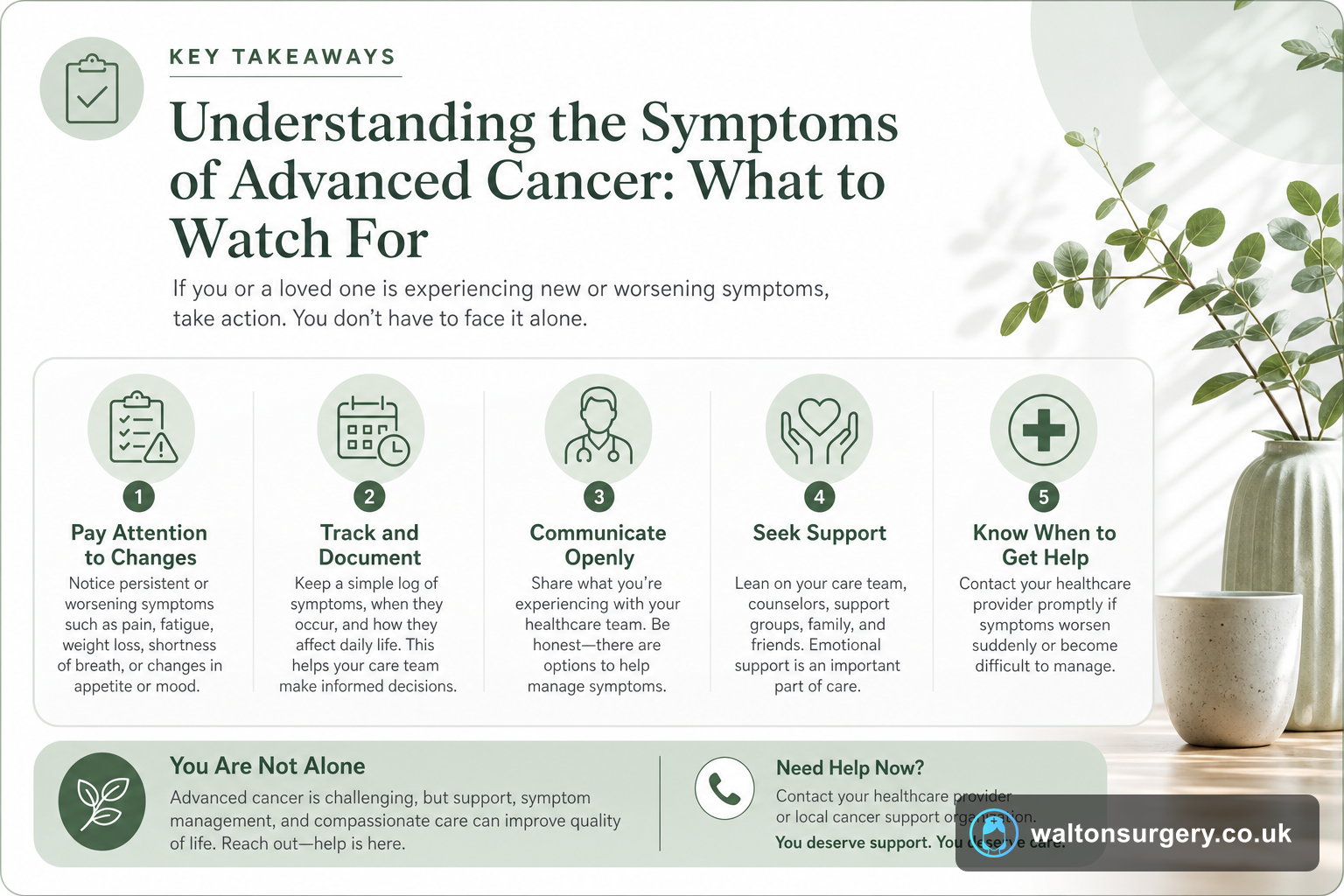
The story about the 'Blue Bloods' actor is a sobering prompt to listen to what your body's telling you. Most symptoms won't be cancer — that's the reality. But any new, persistent, or "disturbing" change deserves medical attention. The NHS lays out clear guidelines on warning signs. Your GP is your first port of call for getting things checked. Don't put it off. Early detection can make a real difference to outcomes.
Last updated: 2026-09-02 · Written by the Walton Surgery editorial team · Medical information is for educational purposes only and does not replace advice from a qualified healthcare professional.