Understanding Invisible Pain: What Miranda Hart's Fibromyalgia Reveals
⚡ Quick Answer
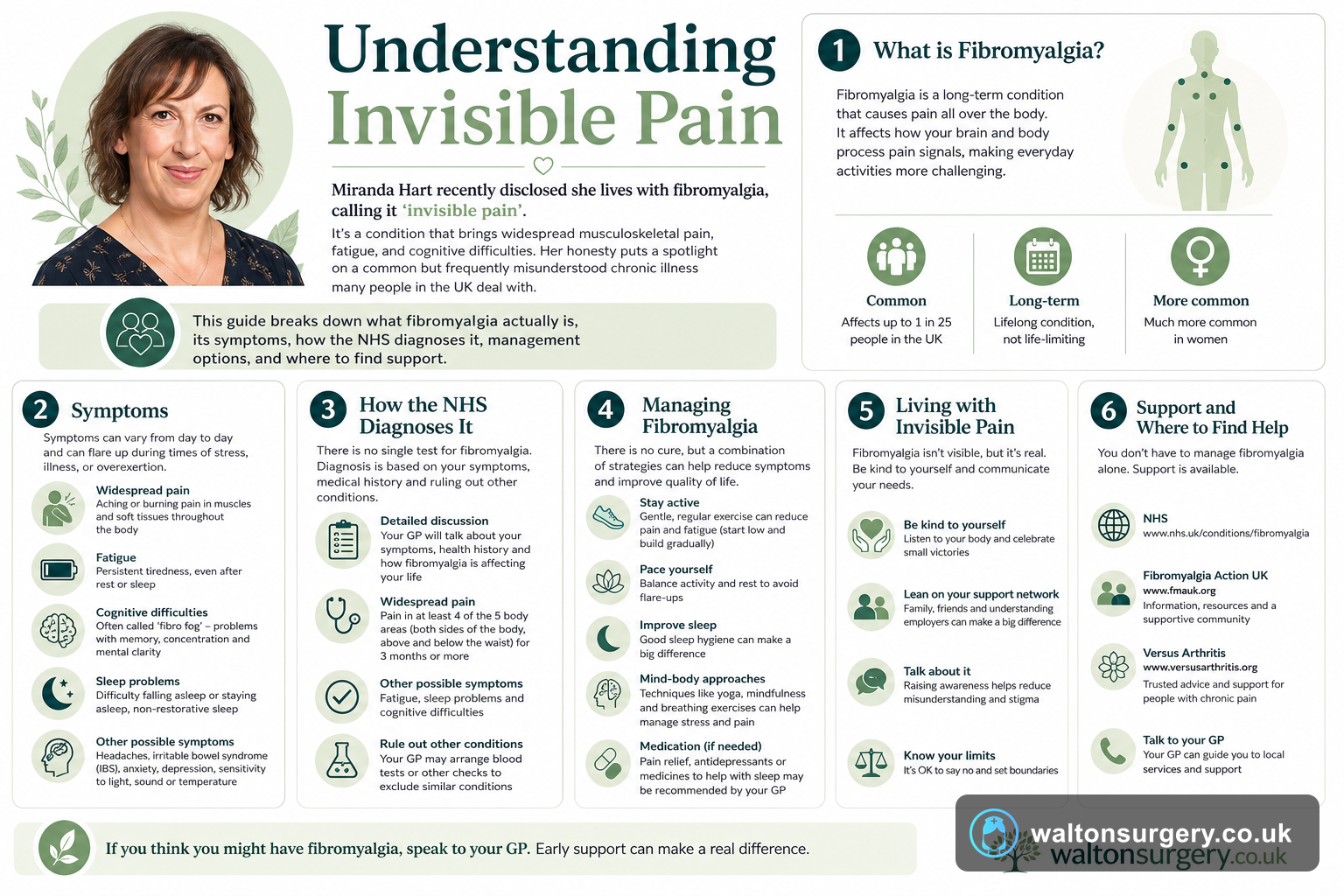
Miranda Hart recently disclosed she lives with fibromyalgia, calling it 'invisible pain'. It's a condition that brings widespread musculoskeletal pain, fatigue, and cognitive difficulties. Her honesty puts a spotlight on a common but frequently misunderstood chronic illness many people in the UK deal with. This article breaks down what fibromyalgia actually is, its symptoms, how the NHS diagnoses it, management options, and where to find support.
Miranda Hart has come forward about quietly dealing with 'invisible pain' from fibromyalgia, which is bringing overdue attention to a condition that affects roughly 1.8 million people across the UK. When a comedian and actor of her stature is open about it, it does a lot to normalise the daily grind that comes with living with a chronic condition like this.
Fibromyalgia is essentially a long-term condition where you get widespread pain all over. It can also bring on extreme tiredness, muscle stiffness, and issues with memory and concentration — what people often call 'fibro fog'. The NHS itself recognises it as a genuine, often quite debilitating, condition. While over-the-counter gels might offer superficial numbing, looking for evidence-backed solutions like a rapid relief gel uk pain review evidence 2026 can be a better route than guessing, though fibromyalgia pain usually requires a broader management strategy than topical treatments alone.
What Exactly Is Fibromyalgia?
Fibromyalgia is a chronic condition where pain affects your whole body. The NHS suggests it's linked to abnormal levels of certain brain chemicals and changes in how your central nervous system deals with pain messages. Basically, your body's pain sensitivity gets dialled up, and you might feel pain from things that wouldn't normally bother you.
Nobody's entirely sure what causes it. That said, the NHS notes it's often set off by a physically or emotionally stressful event — could be an injury, an infection, childbirth, or a period of significant psychological stress. There seems to be a genetic component too, so it can run in families.
Recognising the Symptoms of Fibromyalgia
The main thing with fibromyalgia is widespread pain. It's usually a constant, dull ache that's been hanging around for at least three months. To count as widespread, the pain needs to be on both sides of your body and above and below your waist.
Beyond that primary symptom, there's a whole list of other common problems you might run into, according to the NHS:
- Fatigue: You can feel wiped out even after a full night's sleep. Sleep itself is often broken because of the pain, and some people with fibromyalgia also deal with other sleep disorders like restless legs syndrome or sleep apnoea.
- Cognitive difficulties: Known as 'fibro fog', this means struggling with memory and concentration.
- Headaches: Migraines and tension headaches are pretty common.
- Irritable Bowel Syndrome (IBS): This is a frequent comorbidity, bringing stomach cramps, bloating, and alternating constipation and diarrhoea.
There are other potential symptoms too — dizziness, clumsiness, and being more sensitive to things like pain, light, temperature, and noise. The severity of symptoms really varies from one person to the next, and it can also fluctuate in the same person over time.
How Is Fibromyalgia Diagnosed by a GP?
Getting a diagnosis can take a while, honestly. There's no specific test — no blood test or X-ray — that can definitively say you have it. Instead, a diagnosis is usually based on your symptoms and ruling out other things that could be causing them.
The NHS recommends going to your GP if you suspect fibromyalgia. Your doctor will probably ask about your pain and how it's affecting your day-to-day life. They'll also do a physical examination to look for signs of other conditions.
The NICE (National Institute for Health and Care Excellence) guidelines on fibromyalgia recognition and management say a diagnosis should be considered if you have pain in at least four out of five areas as defined by the Widespread Pain Index (WPI), and a significant level of severity on the Symptom Severity Scale (SSS). In practice, it's a detailed discussion and assessment. A specialist like a rheumatologist might get involved to confirm things.
Understanding the Causes and Triggers
As I mentioned, the cause of fibromyalgia isn't fully understood. The leading theory from the NHS and research bodies is that it's to do with changes in how the nervous system processes pain. Specifically, the brain, spinal cord, and nerves may become more sensitive to pain signals — they're basically overreacting.
Several risk factors can make it more likely you'll develop the condition:
- Age: It can hit people at any age, including children, but it most commonly shows up between 30 and 50.
- Gender: Women are more likely to get it than men.
- Family history: If a close relative has it, your risk goes up.
- Other conditions: Having something like osteoarthritis, rheumatoid arthritis, or lupus can increase your chances.
- Stressful events: As noted, a significant physical or emotional event can act as a trigger.
The NHS Approach to Fibromyalgia Management
There's no cure for fibromyalgia, but the NHS and NICE lay out a management plan that aims to ease symptoms and improve quality of life. It's often multi-faceted, combining different treatments. And it's definitely not a one-size-fits-all thing — what works for one person may do nothing for another.
🔬 Key Facts
NHS Recommended Treatments
- → Exercise: A graded exercise programme, where you slowly increase your activity levels, can help reduce pain and improve fitness.
- → Cognitive Behavioural Therapy (CBT): This talking therapy can help you develop coping strategies for the psychological toll of living with long-term pain.
- → Pain management clinics: Your GP might refer you to a specialist pain management clinic for more support and advice.
- → Medications: Can help manage specific symptoms rather than curing the condition, including painkillers, antidepressants, and anti-seizure drugs.
The main recommended treatments focus on self-management and non-pharmacological (non-drug) therapies. The NHS highlights several approaches:
- Exercise: This is seen as one of the most effective treatments. A graded exercise programme, where you slowly increase your activity levels, can help reduce pain and improve fitness. Walking, swimming, and cycling are often recommended.
- Cognitive Behavioural Therapy (CBT): This talking therapy can help you develop coping strategies for the psychological toll of living with long-term pain.
- Pain management clinics: Your GP might refer you to a specialist pain management clinic for more support and advice.
Medications can help too, though they're usually aimed at managing specific symptoms rather than curing the condition. The NHS states that common medications include painkillers, antidepressants (which can help with pain and sleep problems), and anti-seizure drugs (which can help reduce pain in some cases). Some people also explore topical solutions such as an amish origins pain relief cream uk review evidence 2026, but these should be discussed with a GP as part of a wider plan rather than used in isolation.
Living with Fibromyalgia: Practical Self-Management
A huge part of managing fibromyalgia is learning to pace yourself. This is a skill that helps you balance activity and rest. The goal is to avoid the 'boom and bust' cycle, where you overdo it on good days and then pay for it with a significant flare-up afterwards.
Practical steps you can take, as recommended by organisations like Arthritis Research UK (now Versus Arthritis), include:
- Pacing activities: Breaking tasks down into smaller, manageable chunks and taking regular breaks.
- Prioritising sleep: Establishing a regular sleep routine and making sure your sleep environment is comfortable can help fight fatigue.
- Stress management: Techniques like mindfulness, meditation, or yoga can help reduce stress, which is a common trigger for flare-ups.
- Diet and nutrition: While there's no specific fibromyalgia diet, eating a balanced diet can help maintain your energy levels and overall health. Some people find that certain foods make their symptoms worse, so keeping a food and symptom diary can be useful.
If you are dealing with specific, co-occurring complaints like bowel or pelvic pain that can accompany chronic conditions, guidance on managing those symptoms, such as Pain in anus hole home remedies UK, can sometimes provide complementary comfort strategies, though always verify with your clinician first.

Frequently Asked Questions
The Bottom Line
⭐ The Bottom Line
What this means for you
Miranda Hart's disclosure highlights the very real struggle of living with invisible pain. Fibromyalgia is a recognised medical condition with defined diagnostic pathways and management strategies within the NHS. If you suspect you have symptoms, the first and most important step is to speak to your GP for a proper assessment and to discuss a personalised management plan. Support is available.
Last updated: 2026-09-24 · Written by the Walton Surgery editorial team · Medical information is for educational purposes only and does not replace advice from a qualified healthcare professional.