Tommy Walsh's Cancer Diagnosis: What to Know
PART C — HTML BODY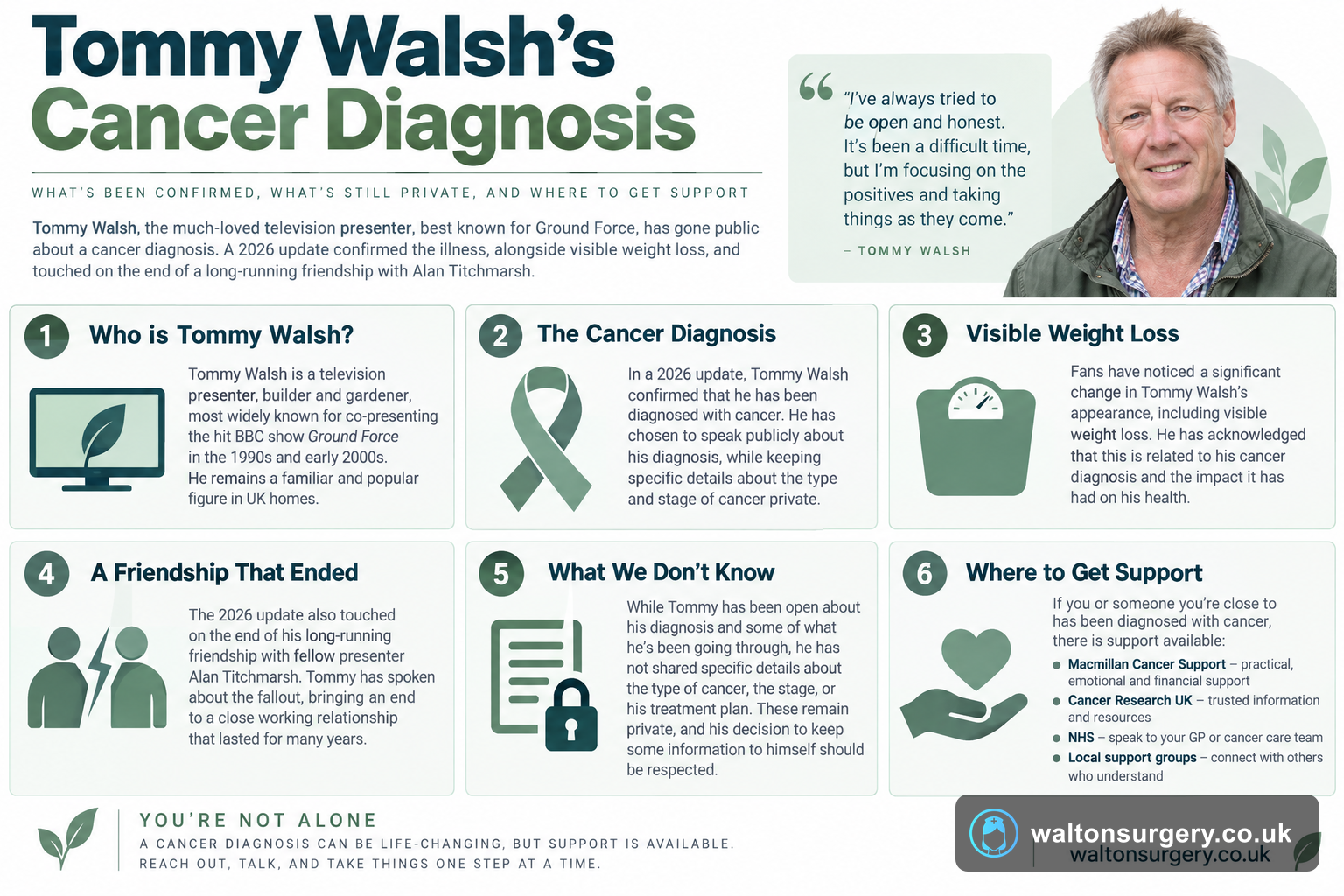
⚡ Quick Answer
Tommy Walsh, the television presenter most people still associate with Ground Force, has gone public about a cancer diagnosis, alongside visible weight loss and a long-running falling out with Alan Titchmarsh. A 2026 update confirmed the illness, addressed what's been happening with his appearance, and touched on the end of a friendship that lasted years. What follows is what's actually been said, what's still private, and where you can turn if a diagnosis lands on you or someone you're close to.
The word got out after Walsh gave a 2026 interview that covered three separate things in one go — being ill, looking noticeably thinner, and not being on good terms with Alan Titchmarsh any more. He's been one of the faces of British gardening telly for well over twenty years now, so it's no surprise people who've watched him since Ground Force days felt uneasy when they heard.
And because Walsh has not laid out the full medical picture, the internet has done what the internet does and filled in the gaps with guesswork. It's worth taking a moment, then, to sort the confirmed bits from the rumour. Consider this a nudge to check in on your own health too, or a friend's. Only general information here. Not medical advice, not a substitute for speaking to a doctor.
What Has Tommy Walsh Actually Said?
The confirmed stuff comes from a November 2026 interview where Walsh spoke about the diagnosis himself. Weight loss came up in the same breath, as did the Alan Titchmarsh thing — he seemed to treat the whole stretch as one chapter. No detailed medical timeline has been published and no specific treatment has been confirmed publicly, not as of now.
What stands out more than anything is the tone, honestly. No sympathy drive, no media blitz. He's built an entire career on getting stuck in and doing the practical thing, so it tracks. The essentials stay public; everything else stays with him and his family. Other public figures have handled similar news in a similar register, from a joe biden cancer diagnosis to an i'm a celebrity star cancer diagnosis, which tells you something about how widely this pattern plays out.
Why Fans Noticed a Change in His Appearance
People were already talking about how different he looked, long before any diagnosis came out. On screen and at appearances, it was mostly the weight loss that got noticed. It's worth remembering, though, that visible change on its own tells you nothing certain about someone's health. Nothing at all.
A GP is the right place to take unexplained weight loss. The NHS lists it as a symptom worth mentioning. There are loads of causes — thyroid trouble, digestive issues, stress, to name a few. Cancer is one possibility, just one. If the weight's been dropping off and you haven't been trying to lose it, get an appointment booked rather than crossing your fingers it'll sort itself out.
Understanding Weight Loss as a Symptom
What Walsh's story has done, in a way, is put the spotlight on something a lot of people brush off. The NHS guidance is fairly plain: lose more than a bit of weight without changing what you eat or how you exercise, and you should get it looked at. It is not automatically something awful. But it shouldn't sit at the bottom of your to-do list either.
There are other things that tend to show up alongside it, according to the same NHS material. Appetite loss. Tiredness that lingers and doesn't shift with a good night's sleep. Bowel changes. Lumps. Bleeding that won't stop. None of them, on their own, means cancer — but a GP should be the one to look at the pattern. Catching things early genuinely moves the needle on outcomes, and that goes for plenty of conditions, not only cancer.
🔬 Key Facts
Unexplained weight loss: what the NHS says
- → Lose weight without changing your diet or exercise and it should be looked at
- → Accompanying signs include appetite loss, lingering tiredness, bowel changes, lumps and bleeding that won't stop
- → Cancer is one possibility, just one — thyroid trouble, digestive issues and stress can all cause it too
- → Book a GP appointment rather than waiting to see if it resolves itself
What We Don't Know — And Why That Matters
Gaps get filled fast when someone famous mentions they're ill. People online will name a cancer type, predict a prognosis, describe a treatment plan, all based on practically nothing. The truth is Walsh hasn't put those details out there, and honestly, he doesn't have to.
Telling people you're ill isn't the same thing as handing over your medical notes. Lots of people with cancer say "I'm sick" to their community and then keep the specifics where they belong, between themselves and their doctors. When Tommy Walsh's cancer diagnosis gets written up, responsible reporting means sticking to what he's actually said. Not extrapolating from paparazzi photos and second-hand whispers.
Weight Loss, Cancer and Support: What the Evidence Actually Shows
People are curious, and the Walsh story has turned a general question about weight loss in cancer into a topical one. Fair enough. But we should be straight about where the knowledge actually ends.
It's well established that unexplained weight loss can be an early sign of several cancers. The NHS guidance puts it next to appetite changes and fatigue as a reason to get checked. Also established: some cancers, and the treatments used against them, cause additional weight and muscle loss. That in turn can knock recovery and quality of life sideways. Other high-profile disclosures, such as the olivia munn breast cancer diagnosis story, have similarly pushed people to look up symptoms for themselves.
Then there's the online noise about "cancer diets" and supplement stacks, which is less straightforward. The NHS and organisations like the British Dietetic Association say don't adopt anything restrictive without professional input. What works for one person can set another one back. Diet during treatment is a conversation for a registered dietitian or a specialist nurse. Not for an influencer with a discount code.
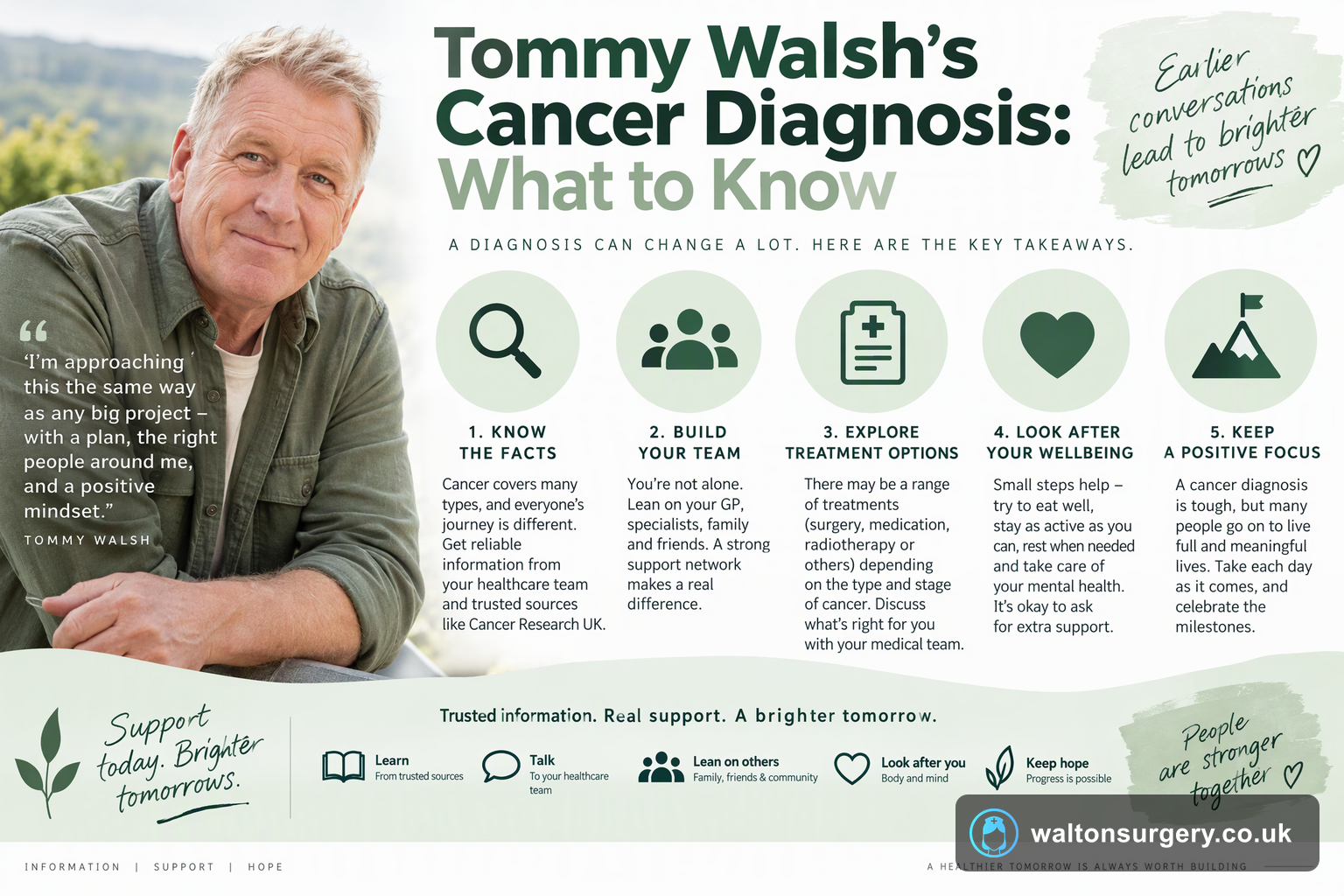
Where should you go first, if weight loss is bothering you — whether it's showing up as a symptom or as a treatment side effect? Your GP, or the specialist team already looking after you. A pharmacist can help with the practical stuff too, like nausea that's messing with how you eat and drink. General articles such as this one cannot substitute for that kind of one-to-one support.
The End of a Long Friendship With Alan Titchmarsh
Along with the health stuff, Walsh spoke about where he and Alan Titchmarsh stand. They presented Ground Force together and stayed tied together in the public imagination for years afterwards. The 2026 comments made clear that's finished. The friendship is no longer what it was.
Relationships that get forged in the hot house of television production often loosen once the work stops. That happens across all kinds of jobs. It's relevant here because Walsh brought up the fall-out in the very same conversation as his diagnosis. He seems to be saying these things landed on him during one hard patch of life, though he hasn't given details beyond confirming the situation.
Frequently Asked Questions
The Bottom Line
⭐ The Bottom Line
What this means for you
The diagnosis is out there in the public domain now, alongside the weight loss and the end of a friendship with Alan Titchmarsh. Whatever the medical specifics are, they remain his to share or not. If hearing about it makes you stop and think about yourself, use that. Persistent, unexplained changes — weight loss in particular — deserve a trip to the GP. Again: this is general information. It is not medical advice.
Last updated: 2026-11-09 · Written by the Walton Surgery editorial team · Medical information is for educational purposes only and does not replace advice from a qualified healthcare professional.