Joe Biden's Cancer: Understanding the Condition Behind the News
PART C — HTML body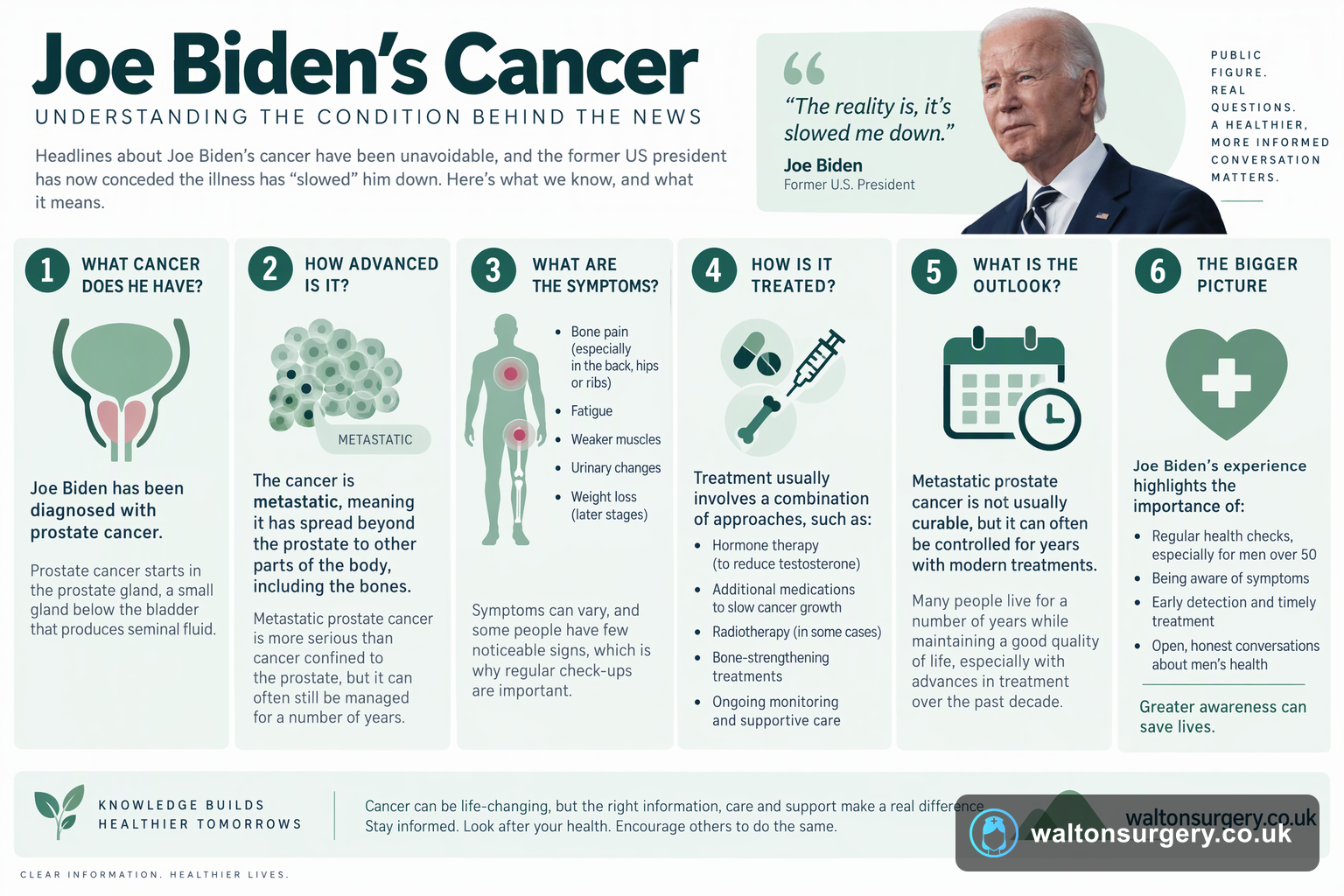
⚡ Quick Answer
Headlines about Joe Biden's cancer have been unavoidable, and the former US president has now conceded the illness has "slowed" him down. The reporting centres on a prostate cancer diagnosis that had reached his bones. Making sense of that means pulling apart what the medical terms actually describe, how these cancers get staged and treated, and being clear-eyed about how much — or how little — a story like this can tell you about your own risk and what you should do next. There's more on this in our olivia munn breast cancer diagnosis explainer. There's more on this in our Duane Kuiper cancer diagnosis explainer.
On 9 November 2026, Joe Biden admitted that cancer has "slowed" him down, the frankest thing he has said publicly so far about how the diagnosis has hit him. If you've read the headline, the obvious next thought is a simple one: what exactly is wrong with him, and just how serious is it?
Reporting around Joe Biden's cancer diagnosis has focused on a prostate cancer that moved into the bones. That detail matters enormously, because the word "cancer" by itself tells you almost nothing useful. The organ a cancer started in, how far it had travelled before anyone found it, and how the individual responds to treatment — all of that shapes the outlook. What follows is a plain-English walk through the terminology, so you can read the story with a steadier head and know when something you've noticed in yourself is worth putting in front of a GP. We cover this in more depth in i'm a celebrity star cancer diagnosis.
What exactly was Joe Biden diagnosed with?
From what's on the public record, Joe Biden's cancer diagnosis is prostate cancer that had already reached the bones by the time it was picked up. The prostate gland sits underneath the bladder, just in front of the rectum, and it makes fluid that becomes part of semen. Cancer starting there is one of the commonest malignancies in men, and the risk climbs noticeably after 50.
"Spread to the bones" means cells broke away from the original tumour and travelled — usually via the bloodstream or the lymphatic system — then began growing in bone tissue. Doctors call this secondary bone cancer, or bone metastases. It is not the same as a cancer that starts in the bone itself. That distinction matters quite a lot, since treatment is aimed at the original cancer type, prostate cancer here, and not at the bone as such.
Reports have flagged the fact the disease was found at this later stage. It's a big part of why the story blew up the way it did, and it's what we'll spend most time on when we get to staging further down.
How do prostate cancers typically spread?
Most prostate cancers grow slowly. A great many men live for years — sometimes their whole lives — carrying a prostate cancer that never once causes a symptom or shortens anything, and some are never treated at all. A proportion of them do behave differently though. They move faster, break out of the prostate, and turn up elsewhere in the body.
Nearby lymph nodes and the tissues around the gland are usually where things go first. Cells can then get into the bloodstream from there. Prostate cancer cells have a marked tendency to settle in bone, most commonly the pelvis, spine, ribs or the long bones in the legs. That pattern is so well recognised now that bone scans and related imaging form a routine part of staging once prostate cancer is suspected or confirmed.
Established in bone, the disease is classed as metastatic. Worth stressing: metastatic does not mean untreatable. But it does shift what doctors are trying to achieve, and it reshapes the conversations around side effects, quality of life and planning for the longer term.
Understanding what "stage" means in a cancer diagnosis
Stage is the single most useful piece of information in any cancer story, and it's also the one most often mangled in headlines. Read this bit twice.
In simple terms, staging tells you how much cancer is in the body and where it has got to. Doctors use it to plan treatment and to give some estimate of outlook. For prostate cancer the staging picture combines several things: the size and extent of the original tumour, whether lymph nodes are involved, whether it has gone to distant places like bone, and blood test results including PSA (prostate-specific antigen) levels.
Treatment for a cancer still sitting inside the prostate looks very different from one that has made it to the bone. Localised disease might be handled with surgery to take the prostate out (a prostatectomy) or radiotherapy directed at the gland, sometimes combined with hormone therapy. Metastatic prostate cancer — already spread — is generally managed with systemic therapies: things that work right through the body, such as hormone therapy, chemotherapy or other drugs circulating in the bloodstream.
Reporting that Joe Biden's cancer had reached the bones puts it firmly in the metastatic group. That tells you a fair amount about the likely shape of treatment and the goals behind it. It also explains the kind of language medical teams reach for when they talk about what's realistic to expect.
What treatments are available when cancer has reached the bones?
Since what's being treated is still prostate cancer, the plan is built on prostate cancer therapies rather than anything bone-specific. Several well-established routes exist, and doctors frequently combine them.
Hormone therapy forms the backbone of treatment for metastatic prostate cancer. The cells usually need the male hormone testosterone to grow, so hormone therapy — also called androgen deprivation therapy — lowers testosterone levels or blocks its action on the cancer. Injections, implants and tablets are the usual delivery routes, and the treatment can hold metastatic prostate cancer in check for months or years.
Chemotherapy, by contrast, uses drugs that travel through the bloodstream to hit cancer cells wherever they sit. It tends to be added when hormone therapy on its own isn't holding things. Other medicines, targeted agents among them, get used depending on individual factors — tumour characteristics, what's been tried before, other health conditions and personal preference.
Where bone metastases are causing pain or making the bone weaker, targeted treatments come into play. Radiotherapy to a specific sore area and bone-strengthening drugs like bisphosphonates, the same class used for osteoporosis, fall into this group. They don't tackle the prostate cancer itself but they can protect the bone and dial symptoms down.
🔬 Key Facts
Treating prostate cancer that has reached the bones
- → Hormone therapy is the backbone — injections, implants and tablets lower testosterone or block its action on the cancer.
- → Chemotherapy travels through the bloodstream and tends to be added when hormone therapy on its own isn't holding things.
- → Radiotherapy and bisphosphonates protect the bone and dial symptoms down without tackling the prostate cancer itself.
- → The exact mix is settled by the oncology team — general information only, not personalised medical advice.
The exact mix is settled by the oncology team. If you've landed here because a relative has had a similar diagnosis, the oncologist is who to ask — they can walk through the plan and the reasoning behind it. Nothing here tells you what treatment anyone should have. This is general information, not personalised medical advice.
What Joe Biden has said about how the illness has affected him
Cancer has "slowed" him down, is Joe Biden's most recent public comment. Plainly put, and it matches up with what plenty of people with metastatic cancer describe: fatigue, stamina that drops off, and the sheer demand of treatment stacked on top of the disease.
Fatigue is among the commonest symptoms people with cancer report, and it is not the same as being tired in the ordinary sense. Rest doesn't reliably fix it. Cancer Research UK describes cancer fatigue as persistent and overwhelming, with knock-on effects on concentration, mood and everyday activity.
Treatment piles on its own weight. Hormone therapy, to take one example, frequently brings hot flushes, mood shifts, reduced libido, weight gain and tiredness. Nausea, hair loss, a higher risk of infection and fatigue come with chemotherapy. Bone-targeting treatments have their own side effects too. Coping with all of this is a normal part of cancer care, which is precisely why oncology teams run to specialist nurses, palliative care input and allied health professionals — not just doctors.
A public figure talking about their own experience cannot tell you what any individual's course will look like. Cancer hits people differently. Still, it serves as a reminder that treatment isn't just about what shows up on a scan. It's about living day to day with the condition and the medicines used against it.
What this story can — and can't — tell you about your own risk
A public figure getting a cancer diagnosis reliably makes people wonder about themselves. Completely natural. What follows is the honest part.
One person's medical story — that is what Joe Biden's cancer diagnosis is. It shifts your own risk of prostate cancer not one jot. It creates no new screening recommendation. And it tells you nothing whatsoever about how a cancer you may already have been diagnosed with is going to behave.
What it does do is stir awareness. Prostate cancer is common, especially in older men, and early disease typically brings no symptoms at all. The NHS page on prostate cancer symptoms, which is kept reasonably up to date, lists things like trouble passing urine, needing to urinate more often particularly at night, and blood showing in the urine. An enlarged prostate causes plenty of these symptoms without any cancer being involved — but a GP visit is still warranted.
Family history of prostate cancer, or you're past 50 and weighing up a PSA test? Talk to your GP before anything else. A PSA blood test is not offered routinely to everybody, because it can throw up false alarms and drag you into investigations that may bring no benefit. Testing should be an informed call, made with a doctor who knows your background.
None of this is personalised medical advice. If something in here has set off a concern about your own health, book in with your GP. And if you want to get ready for that appointment — what to ask, what to raise — jot your questions down beforehand so they don't evaporate the second you're in the room.

A public figure talking about their own experience cannot tell you what any individual's course will look like. Cancer hits people differently. Still, it serves as a reminder that treatment isn't just about what shows up on a scan. It's about living day to day with the condition and the medicines used against it.
Frequently Asked Questions
⭐ The Bottom Line
What this means for you
Prostate cancer that reached his bones, plus a public admission that the illness has slowed him down — that's the Joe Biden story in a sentence. For you, the real takeaway sits less in one man's prognosis and more in the vocabulary: staging, metastasis, hormone therapy, fatigue. If a symptom or worry has surfaced while you've been reading, take it as your cue to speak to a GP instead of sitting on it. This is general information, not personalised medical advice.
Last updated: 2026-11-09 · Written by the Walton Surgery editorial team · Medical information is for educational purposes only and does not replace advice from a qualified healthcare professional.