Can You Tattoo Over Surgery Scars? What to Know First
PART C — HTML BODY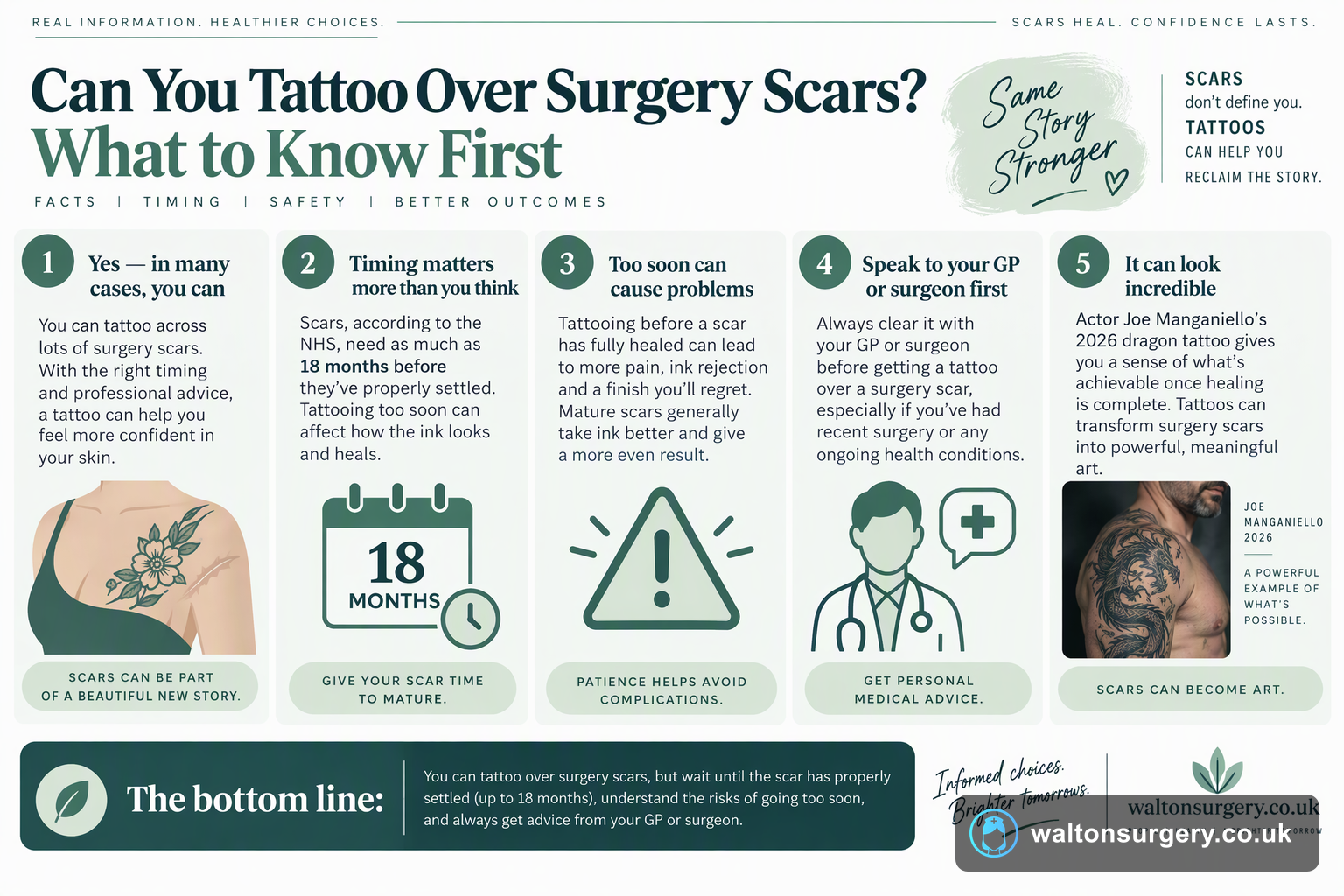
⚡ Quick Answer
You can tattoo across lots of surgery scars, although how long you wait and how mature the scar is matters far more than most people realise. Scars, according to the NHS, need as much as 18 months before they've properly settled, and tattooing too soon brings pain, ink rejection and a finish you'll regret. Joe Manganiello's 2026 dragon tattoo gives you a sense of what's achievable once healing is complete, but clear it with your GP or surgeon before you do anything.
Going under the needle across a surgical scar is possible — but only after the tissue has finished maturing. Most scars keep shifting in colour and texture for up to 18 months post-surgery, the NHS points out, and tattooing within that window carries a genuine risk of infection, ink rejection and a result that disappoints. Whether the site is a thyroidectomy line, a mastectomy area or an orthopaedic incision, the precautions are broadly the same.
Covering scars with ink isn't a new idea, though it got a burst of publicity in October 2026 when actor Joe Manganiello unveiled a one-metre dragon covering his surgery scars. Realistic outcomes of that kind depend on planning, patience and an artist who knows what they're doing — a nice design alone won't carry it. This guide looks at what the NHS and tattoo safety guidance actually state, so you can judge what's appropriate in your own case.
How Long Should You Wait Before Tattooing a Scar?
Unhappy cover-up tattoos nearly always trace back to timing. The NHS puts full scar maturity at up to 18 months, during which the tissue keeps remodelling — red or purple fades toward pale, the surface eases off, and any lingering swelling comes down.
Needling into a scar that hasn't finished settling is risky business. It's more infection-prone, often still sore to the touch, and takes ink unevenly. Before any cosmetic procedure on a surgical site — tattoos included — the NHS says talk to your surgeon or GP first.
Some surgeons hand you a clearance date; others would rather eyeball the scar themselves. Book that check-up instead of rolling the dice. Slower than grabbing a tattoo slot, admittedly, but far safer — and slower, steadier timelines are something patients of every stripe end up needing to learn, from fractured vertebra surgery recovery to routine wound care.
What Does the NHS Actually Say About Tattooing Over Scars?
There's no single NHS document headed "tattooing over scars", but the scar-care pages and the tattoo-safety pages both land in the same place. Living tissue is how the NHS scar information describes scars — they go on changing for up to 18 months — and the tattoo safety pages hammer home infection risk, sterile kit and aftercare.
🔬 Key Facts
What the NHS guidance actually signals
- → Scars keep remodelling for up to 18 months — red or purple fades toward pale and swelling settles.
- → Tattoo safety pages stress infection risk, sterile kit and aftercare as non-negotiables.
- → Keloid history, immunosuppression or blood thinners must be flagged to your GP before booking.
- → A healthcare professional should confirm the area has healed before any cosmetic procedure on a surgical site.
Taken together the message is straightforward: sit tight for full maturity, have a healthcare professional confirm the area has healed, and pick a studio that takes hygiene seriously. Keloid history, immunosuppression or blood thinners? Your GP needs to hear about that before you book.
None of this is medical advice tailored to you. Only your surgeon knows your operation and how you healed — so ring their office first, before anything else. It is the same principle that comes up whenever surgical decision-making makes headlines, from cosmetic concerns to wider health stories such as the snake cancer surgery veterinary cases that show how individualised surgical advice always is.
Which Types of Surgery Scar Are Easier to Cover?
Once a needle meets scar tissue, surgical scars don't all behave alike. Flat, tidy incision lines from a thyroidectomy or a caesarean usually take ink more evenly than scars that are raised or thickened.
Flat and mature scars
Pale, flat, at least 18 months old, no ongoing irritation — that's the sweet spot. Stable tissue, even ink.
Raised, red or keloid-prone scars
Keloids and other raised scars react to needles in their own way. The British Association of Dermatologists (BAD) calls keloids scars that outgrow the original wound, and tattooing them can wind the tissue up further. Prior keloid? Flag it to both your GP and your tattoo artist.
Skin grafts and irradiated skin
Skin that's been grafted or blasted with radiotherapy tends to be thinner and less stretchy than the stuff around it. The surgeon who treated you should assess those sites individually. Don't just assume a cover-up is fair game without that chat.
How to Choose a Tattoo Artist Who Understands Scar Tissue
Choosing the artist is as important as choosing the date. Scar tissue is a different animal under the needle — less predictable, occasionally numb, prone to healing patchily. Ask outright: have you tattooed surgical scars, and can I see healed photos? Fresh work doesn't count.
UK environmental health rules require the studio to be registered with your local authority, so check that registration exists and that single-use needles and sterile inks are standard. The Chartered Institute of Environmental Health (CIEH) polices hygiene standards through local authorities — a registered studio won't mind flashing its hygiene certificate.
Walk away from anyone willing to tattoo a scar that's obviously still immature, or anyone who waves off the need for medical clearance. A decent artist asks about your surgery and healing timeline before quoting a price — much like any other health professional who wants the full picture first, whether that is a tattoo studio or someone weighing up something as everyday as a kelly ripa gum surgery habit that turns out to have clinical implications.
What Happens to Ink in Scar Tissue?
Ink settles differently in scar tissue than in untouched skin. The collagen's built wrong for it, basically, which is how you end up with patchy colour or pigment drifting over the years. Most cover-up work leans on bold lines and dark shading for exactly this reason rather than wispy fine detail.
Colour matters too. No NHS guidance exists on ink hues for scars, but tattooists who regularly work surgical sites tend to steer clear of pale pastels on raised scars — light pigments throw irregularities into sharp relief. That's an aesthetic call, not a medical one, so have the conversation openly.
Two or three sessions to build coverage evenly is not unusual. Budget accordingly instead of assuming one sitting wraps it all up.
How Should You Prepare for a Scar Cover-Up Tattoo?
Mostly common sense, prep — and mostly skipped. Ahead of the session:
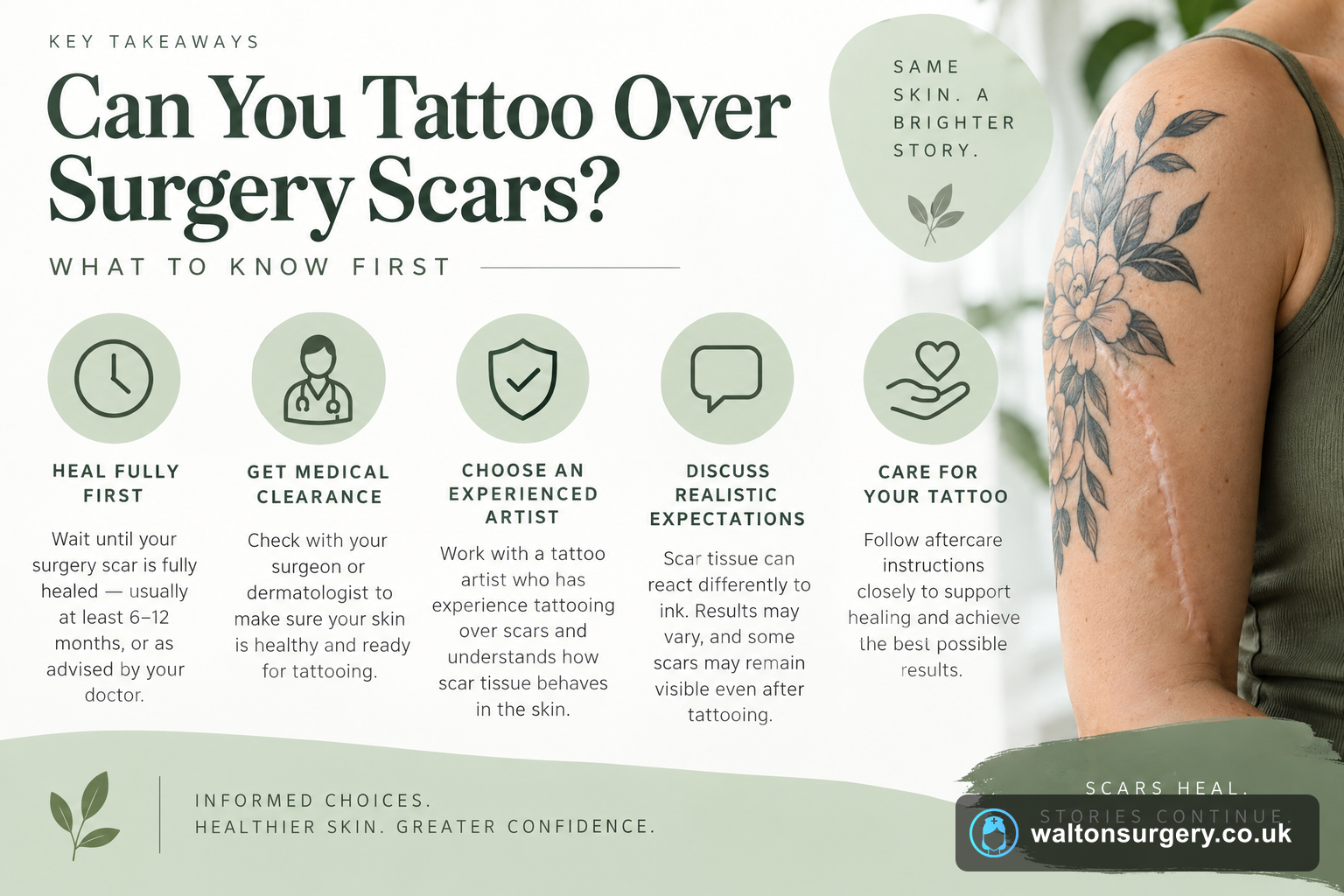
- Get written or verbal clearance from your GP or surgeon, especially if you have ongoing follow-up.
- Make sure the scar is fully mature — the NHS's 18-month figure is the minimum most professionals work to.
- Avoid alcohol for 24 hours before the session, as it can thin the blood.
- Eat properly beforehand and stay hydrated.
- Tell the artist about any medication you take, including blood thinners and isotretinoin.
On the day: no creams, no fake tan, no numbing products unless the artist said otherwise. Clean skin is where it starts.
Looking After a Tattoo Over a Scar Afterwards
Caring for fresh ink on scar tissue asks a bit more of you than a normal tattoo would. The NHS tattoo aftercare page is your baseline — keep it clean, leave scabs alone, don't soak it, keep it out of direct sun while it heals.
Because scar tissue heals slower once needled, expect the recovery to run a shade longer than you're used to. Spreading redness, discharge, pain ramping up — call your GP promptly. Infection risk runs higher on surgical sites.
After it's healed, moisturise the area and shield it from the sun. The BAD flags that sun darkens scar tissue, which holds for tattooed scars just the same.
Frequently Asked Questions
⭐ The Bottom Line
What this means for you
Tattooing over a surgery scar works — but how it turns out rests almost entirely on when you do it, who does it, and how straight you've been with your doctors. Honour the NHS's 18-month maturity window, get sign-off from your GP or surgeon, and find an artist who's been here before. Joe Manganiello's 2026 dragon shows what's possible — but patience, not impulse, is what gets you there safely.
Last updated: 2026-10-24 · Written by the Walton Surgery editorial team · Medical information is for educational purposes only and does not replace advice from a qualified healthcare professional.