When Someone Reveals a Cancer Diagnosis: How to Respond Supportively
⚡ Quick Answer
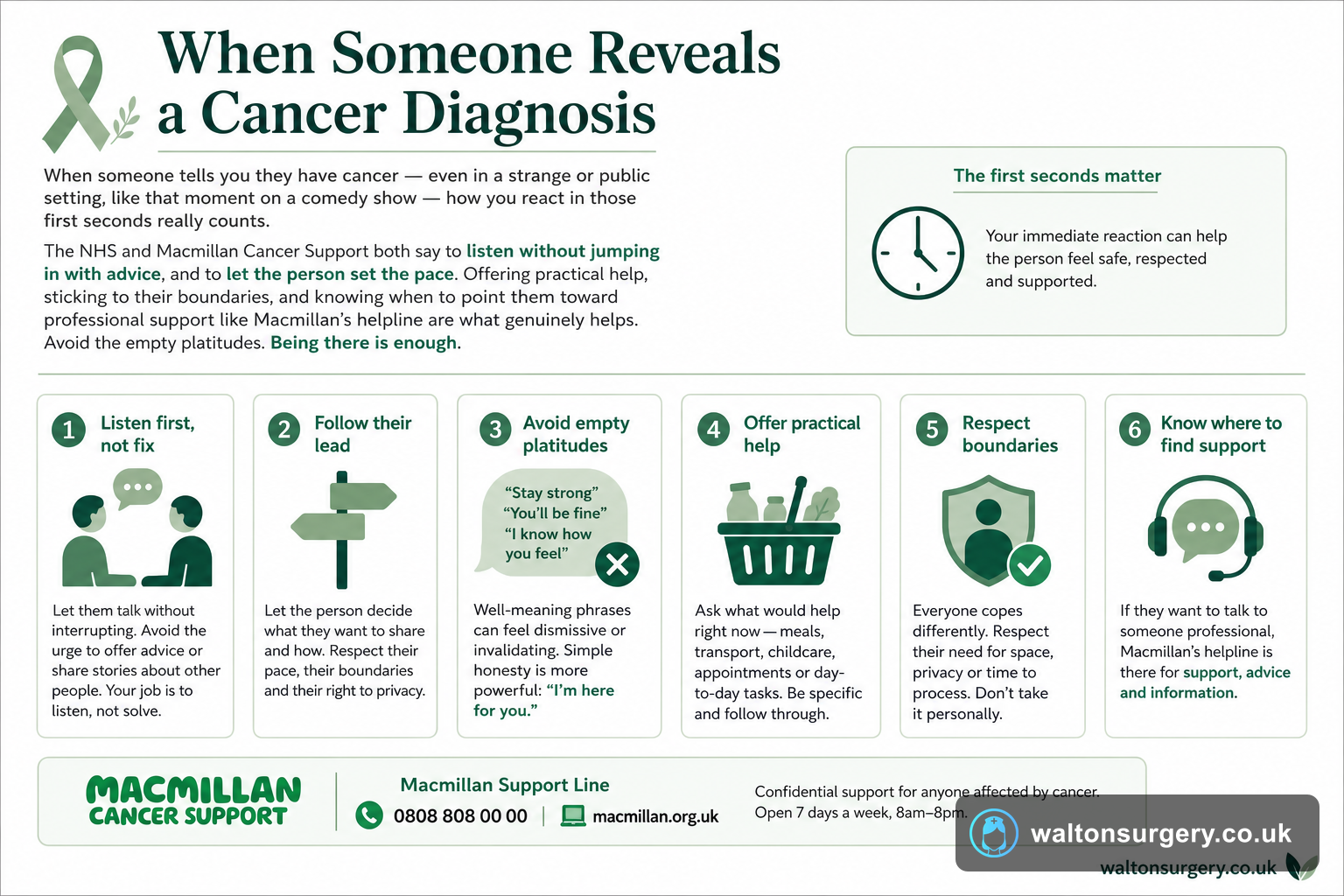
When someone tells you they have cancer — even in a strange or public setting, like that moment on a comedy show — how you react in those first seconds really counts. The NHS and Macmillan Cancer Support both say to listen without jumping in with advice, and to let the person set the pace. Offering practical help, sticking to their boundaries, and knowing when to point them toward professional support like Macmillan's helpline are what genuinely helps. Avoid the empty platitudes. Being there is enough.
A contestant on India's Got Latent recently shared a cancer diagnosis, and the host, Samay Raina, did something simple but striking — he took another judge's microphone away so the attention would stay on the person speaking. That viral clip from September 2026 touched a nerve because it captured something most of us have faced or will face: what on earth do you say when someone tells you they have cancer? The urge to help kicks in fast. The right words, though, are another matter entirely.
How you respond in those early moments shapes whether someone feels genuinely supported or awkwardly alone. The NHS and Macmillan Cancer Support have put together clear, evidence-based advice on how to offer real help rather than making things worse. Below, we've broken that guidance down into steps you can actually use.
The Importance of Listening First
Listening — really listening — is the most supportive thing you can do. This isn't something to fix or rush through. It's a reality someone is working through, and they've chosen to share it with you. Macmillan Cancer Support's guidance makes it clear: the person disclosing their diagnosis holds the controls. Your main job is to take in what they're saying with care.
That means putting distractions away. Eye contact, phone down, letting them finish their thoughts without cutting in. You don't need a rehearsed line. Sometimes "I'm here to listen" or even just "Thank you for telling me" lands perfectly. Try not to launch into a story about your neighbour's cousin who had the same thing — the spotlight belongs to them right now, their feelings, what they're going through. Listening shows you respect how hard it was to say it out loud.
What You Should Avoid Saying
Good intentions don't always produce kind words. Some phrases, even though everyone uses them, end up minimising what someone is going through. The NHS suggests staying away from clichés that downplay the struggle. "Stay positive!" or "You'll beat this!" can make someone feel they have to perform a cheerfulness they don't have, and it can brush aside very real fears.
It's also best not to offer medical advice nobody asked for. "Have you tried a special diet?" or "My uncle took that new drug and it worked" — these kinds of comments undermine the medical team the person has chosen and the treatment plan they've agreed with their doctors. It's their healthcare path, not a discussion forum. Rather than leaning on platitudes, focus on being present. Something like "This sounds really hard. How are you feeling about it?" invites honesty without pushing anyone toward a particular emotion. You're there to support, not to dictate how they should feel or what treatment they should try. For more on this topic, see our article on Dolly Parton's cancer diagnosis.
How to Offer Practical Help
"Let me know if you need anything" is well-meaning but it puts the work on someone who is already exhausted. Macmillan recommends going further and offering specific, concrete help — the kind that's easy to say yes to.
Think about the everyday stuff that gets harder during treatment. You could say:
- "I'm doing a supermarket run on Tuesday. Want me to grab your groceries?"
- "I'd like to cook for you this week — would Thursday or Friday suit?"
- "I can drive you to your appointment on Wednesday. Does that work?"
- "I've got some free time this month for school runs or walking the dog."
These are real offers with dates attached, which takes the mental load off. If they say no, accept it. Don't push. The fact that you've offered something specific tells them you mean it — that this is about their practical needs, not just sympathy.
Navigating Emotional Support and Boundaries
A cancer diagnosis drags in a whole tangle of emotions: fear, anger, grief, sometimes even a strange relief at finally knowing what's wrong. There's no correct way to feel about any of it. Your part is to stay steady and non-judgmental as those feelings shift. Cancer Research UK points out that letting someone express the darker emotions without trying to fix or reframe them is itself a form of deep support.
Boundaries matter too. They might not want to talk about cancer every single time you meet. Follow their lead. Some days the conversation will be about their favourite show or a silly thing that happened at work; other days they'll want to unpack their fears. Be ready for both. It's also worth looking after your own wellbeing through all this — supporting someone through illness takes a toll. Make sure you have people you can lean on as well. Setting gentle limits, something like "I can chat for an hour tonight," is healthy and keeps things sustainable for both of you. If you are supporting a public figure, you can learn from the Dave Mustaine cancer diagnosis advice.
Connecting Them with Professional Resources
🔬 Key Facts
Support Resources in the UK
- → Macmillan Support Line is free on 0808 808 00 00
- → Cancer Research UK offers a nurse helpline and treatment guides
- → NHS website covers symptom management and mental health
- → Online communities connect you with others in similar situations
Your support means a lot, but professional services offer something different — specialist help. Without being pushy, you can share details about trusted organisations. In the UK, Macmillan Cancer Support runs a free support line (0808 808 00 00), hosts online communities, and gives financial guidance. Cancer Research UK has a nurse helpline plus detailed information on specific cancer types and treatments.
If they seem receptive, you might say something like "I came across this organisation with a helpline for people and families going through this — want the details?" That keeps the choice entirely theirs. The NHS website also has a section on living with cancer, covering symptom management and mental health support. Framing these as tools that exist, rather than instructions, lets the person reach out when they're ready and on their own terms.
Sometimes the context is different from what you might expect. You might find inspiration in how others, like Bruce Campbell's cancer diagnosis or similar news, have navigated these difficult conversations.
Frequently Asked Questions
⭐ The Bottom Line
What this means for you
The most helpful response to a cancer diagnosis isn't some perfect sentence — it's showing up, practically and consistently. Listen without judging. Offer help that's specific. Respect their pace and their boundaries. Gently mention professional resources like Macmillan Cancer Support if they seem open to it. Walking alongside someone through the hard days and the ordinary ones, that's what meaningful support actually looks like.
Last updated: 2026-09-15 · Written by the Walton Surgery editorial team · Medical information is for educational purposes only and does not replace advice from a qualified healthcare professional.