Tinnitus Control Review 2026: Can a Homeopathic Spray Really Silence the Ringing?
Tinnitus Control Review 2026: Can a Homeopathic Spray Really Silence the Ringing?

⚡ Quick Answer
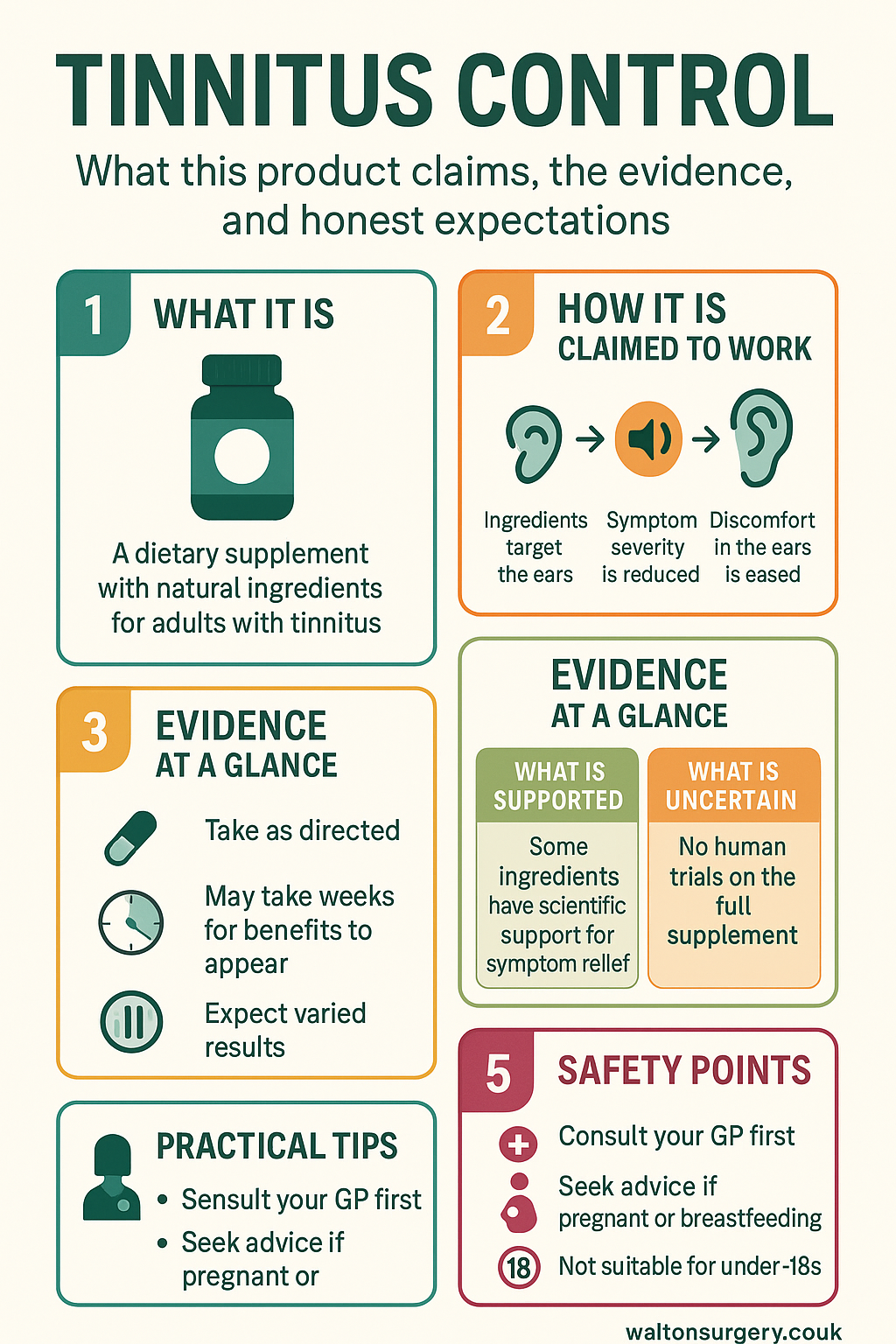
Tinnitus Control is a homeopathic oral spray containing highly diluted preparations of minerals and plant extracts such as Arnica, Pulsatilla, and Chininum Sulphuricum. There are no published clinical trials on this specific product, and the broader evidence base does not support homeopathy as an effective treatment for tinnitus. If you have already explored evidence-based options with your GP and are curious about homeopathic approaches, it may be worth understanding what you're getting — and what you're not — before spending around £32 per bottle.
🛒 Shop the product
Approx. £32 / $40.00 per bottle — affiliate link, see disclosure above.
If you live with tinnitus — that persistent ringing, buzzing, or hissing that nobody else can hear — you'll know how maddening it can be. It can disrupt sleep, sap concentration, and make quiet moments feel anything but peaceful. An estimated six million people in the UK experience tinnitus to some degree, and for perhaps 600,000 of them it is severe enough to affect daily life. It's no surprise, then, that products promising relief find a willing audience.
One such product is Tinnitus Control, an oral spray sold online that uses homeopathic dilutions of various substances. It's marketed as a way to reduce the severity of ringing, buzzing, and hissing. In this review we'll look at what's actually in it, what the science says — and doesn't say — and where you might turn for more established help.
Before we go further, it's worth being clear about a key distinction. Tinnitus Control is a homeopathic preparation — not a licensed medicine, not a nutritional supplement, and not a medical device. That classification matters, because it determines what level of evidence is required before the product can be sold, and what claims its makers can reasonably make. Understanding that difference is the first step to making an informed decision.
What Exactly Is Tinnitus Control?
Tinnitus Control is a sublingual spray — you spray it under your tongue — that contains a blend of homeopathic ingredients. Homeopathy is a system of alternative medicine developed in the late 18th century by Samuel Hahnemann. Its central principle is "like cures like" (a substance that causes symptoms in a healthy person can, in highly diluted form, treat similar symptoms in a sick person), combined with extreme serial dilution.
The typical ingredients in Tinnitus Control include:
- Arnica Montana — a plant used homeopathically for bruising and trauma
- Chininum Sulphuricum — derived from quinine; traditionally associated with ear symptoms
- Kali Phosphoricum — a potassium phosphate salt; used homeopathically for nervous exhaustion
- Natrum Sulphuricum — sodium sulphate; associated with head and ear complaints in homeopathic texts
- Pulsatilla — windflower; one of the most commonly referenced remedies in homeopathic ear conditions
- Silicea — silica; used for perceived sensitivity to noise
- Thiosinaminum — derived from mustard oil; associated with scar tissue and fibrous conditions in homeopathic literature
These are typically diluted to potencies of 12X or 30C. To put that in perspective: a 12X dilution means one part in 1012 (a trillion), and a 30C dilution means one part in 1060 — a number larger than the estimated number of atoms in the observable universe. At these dilutions, it is statistically improbable that even a single molecule of the original substance remains in the finished product.
⚠️ Reality check — regulatory status
Homeopathic products are legal to sell in the UK under the Human Medicines Regulations 2012, and some hold a "National Rules" registration from the MHRA. However, this registration does not require proof of clinical efficacy — it confirms safety and quality of manufacture only. Tinnitus Control does not appear on the MHRA's register of authorised homeopathic products. It is sold as a cosmetic/wellness product via international retailers, not as a licensed medicine.
How Homeopathic Remedies Are Supposed to Work
Homeopathy proposes that water retains a "memory" of the substances once dissolved in it, and that this memory — rather than any physical molecule — produces a therapeutic effect when taken. This is the theoretical mechanism offered for why extreme dilutions might still "work."
Mainstream pharmacology and chemistry do not support this mechanism. The proposed "water memory" effect has not been replicated under controlled laboratory conditions in any consistent way. Multiple systematic reviews — including the widely cited 2005 Lancet meta-analysis by Shang et al. and the 2015 Australian National Health and Medical Research Council (NHMRC) report — have concluded that homeopathy performs no better than placebo for any health condition when tested in rigorous trials.
That said, placebo effects are real, and for some people the ritual of taking a remedy, the expectation of improvement, and the attention of a practitioner can produce genuine, measurable symptom relief — particularly for subjective experiences like pain perception or, potentially, the bothersomeness of tinnitus. This is not the same as the product having a specific pharmacological effect.
The Evidence: What Do Clinical Trials Say?
The short answer is: very little. There are no published, peer-reviewed randomised controlled trials on Tinnitus Control as a branded product. No independent laboratory has tested its specific formulation for efficacy against tinnitus symptoms.
If we look at the broader question — "does homeopathy work for tinnitus?" — the picture is equally sparse. A handful of small studies have examined individual homeopathic remedies for ear-related conditions, but they are typically methodologically weak (small sample sizes, no blinding, no placebo control, subjective-only outcomes). No major audiology or ENT guideline body in the UK, Europe, or the US recommends homeopathy for tinnitus management.
📊 What the research bodies say
No guideline recommends homeopathy for tinnitus
- The NHS does not recommend homeopathic treatments and has progressively withdrawn funding for homeopathy since 2017.
- NICE (National Institute for Health and Care Excellence) does not include homeopathy in its guidance on tinnitus or hearing loss.
- The British Tinnitus Association does not list homeopathy among its recommended management approaches.
- The Cochrane Collaboration has found no reliable evidence that homeopathy is effective for any health condition.
This doesn't prove that the product will do nothing at all for any individual — placebo responses are variable and sometimes powerful — but it does mean there is currently no scientific basis for expecting it to reduce the physical perception of tinnitus.
How Tinnitus Control Is Used
The product comes as an oral spray, applied under the tongue. The manufacturer typically recommends two sprays, three times daily. The sublingual route is chosen in homeopathic tradition because it allows rapid absorption through the mucous membranes — though at homeopathic dilutions, what is being absorbed is essentially the spray's carrier liquid (usually water and alcohol).
Users are generally advised to avoid eating, drinking, or brushing teeth for 15–30 minutes before and after use, and to avoid strong flavours (mint, coffee, camphor) near dosing times — a common instruction in homeopathy that has no pharmacological rationale but is part of traditional practice.
A single bottle is expected to last approximately one month at the recommended dosage. There is no published guidance on long-term use or how to taper off, which is consistent with the homeopathic view that these preparations carry no dose-dependent effects.
Side Effects and Who Should Think Twice
Because homeopathic dilutions contain negligible amounts of active substance, direct pharmacological side effects are considered extremely unlikely. This is, in a sense, the double-edged sword of homeopathy: the same extreme dilution that makes the product unlikely to cause harm is also what makes it unlikely to produce a specific therapeutic effect.
That said, there are important considerations:
- Do not use Tinnitus Control as a reason to delay seeing your GP. Tinnitus can be a symptom of treatable conditions including earwax impaction, middle-ear problems, Ménière's disease, acoustic neuroma (rare but serious), or medication side effects. Sudden or one-sided tinnitus warrants prompt medical assessment.
- If you are pregnant or breastfeeding, consult your GP before using any product, including homeopathic ones — not because homeopathic dilutions are likely to contain active molecules, but because the alcohol content in some sprays may be a concern.
- Not recommended for children under 12 without professional guidance.
- The spray contains alcohol as a preservative. The amount per dose is very small, but if you avoid alcohol for religious, medical, or recovery-related reasons, it's worth checking the label.
- Anyone on prescription medication should not discontinue or alter their treatment in favour of a homeopathic product without speaking to their doctor or pharmacist.
⚠️ The biggest risk isn't the spray — it's the delay
The most important safety concern with any unproven tinnitus product isn't toxicity — it's the potential to postpone a proper medical work-up. Some causes of tinnitus are eminently treatable (earwax removal, medication adjustments, hearing aids for associated hearing loss). Others, such as an acoustic neuroma, require specialist investigation. An unregulated product purchased online should never substitute for professional evaluation.
A Focused Look at This Product
Tinnitus Control is sold exclusively through online retailers — it is not available in Boots, Superdrug, or on the NHS. It is manufactured in the United States and shipped internationally. The manufacturer's website uses language such as "scientifically formulated" and claims the product "targets and reduces the severity of tinnitus symptoms," but no citations to clinical trials or peer-reviewed research are provided on the product page.
🔬 Product snapshot — Tinnitus Control
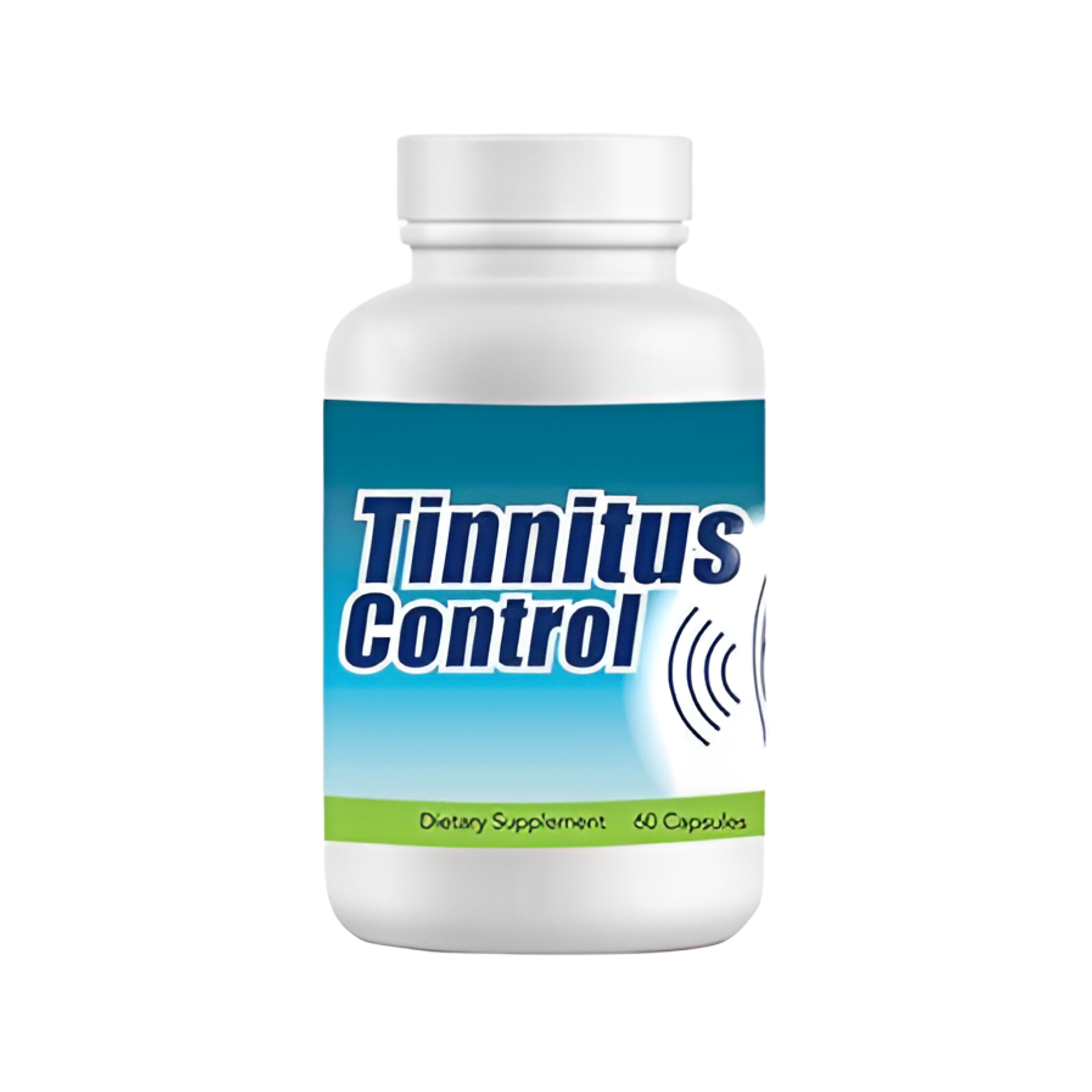
- Active ingredient(s): Homeopathic dilutions of Arnica Montana, Chininum Sulphuricum, Kali Phosphoricum, Natrum Sulphuricum, Pulsatilla, Silicea, Thiosinaminum (typically at 12X–30C potencies)
- Format: Sublingual oral spray
- Marketed claims: "Targets and reduces the severity of tinnitus symptoms such as ringing, buzzing, and hissing"
- Quality info: Manufactured in the US; specific certifications (FDA-registered facility, cGMP, third-party testing) not clearly stated on the product listing
- Price: Approx. £32 / $40.00 per bottle (one month's supply)
Setting Realistic Expectations
Tinnitus is a genuinely difficult condition, and the frustration of being told "there's nothing we can do" — which many patients report hearing — is real and understandable. But honesty about what works is ultimately kinder than false hope.
The evidence-based approaches that do have support include:
- Sound therapy — using background noise, white noise machines, or dedicated tinnitus maskers to reduce the contrast between tinnitus and silence
- Cognitive Behavioural Therapy (CBT) — the most robustly evidence-backed psychological treatment for tinnitus distress, recommended by NICE
- Tinnitus Retraining Therapy (TRT) — combines counselling with sound generators to help the brain habituate to the tinnitus signal
- Hearing aids — if hearing loss co-exists (which is common), amplification can reduce tinnitus perception
- Stress management — stress and anxiety frequently worsen tinnitus; mindfulness, exercise, and sleep hygiene all have supporting evidence
- Medical review — checking for earwax, reviewing medications (some are ototoxic), and screening for treatable underlying conditions
These approaches work not by "curing" tinnitus in most cases, but by reducing its impact on your life — which, for many people, is the real goal. Your GP can refer you to NHS audiology or ENT services, and many areas now have dedicated tinnitus clinics.
Frequently Asked Questions
Is Tinnitus Control a medicine?
No. Tinnitus Control is a homeopathic preparation and is not licensed as a medicine by the MHRA. Homeopathic products in the UK are regulated under the Human Medicines Regulations 2012 but do not require proof of clinical efficacy before sale. It should not be considered a treatment or cure for tinnitus.
What ingredients are in Tinnitus Control?
Tinnitus Control contains a blend of homeopathic dilutions including Arnica Montana, Chininum Sulphuricum, Kali Phosphoricum, Natrum Sulphuricum, Pulsatilla, Silicea, and Thiosinaminum. These are diluted to homeopathic potencies (often 12X or 30C), meaning they contain negligible or undetectable amounts of the original substance.
Are there clinical trials showing Tinnitus Control works for tinnitus?
There are no published, peer-reviewed randomised controlled trials specifically on Tinnitus Control as a branded product. The broader body of high-quality evidence does not support homeopathic preparations as effective treatments for tinnitus. A 2015 review by the Australian NHMRC concluded that there was no reliable evidence homeopathy was effective for any health condition.
Can Tinnitus Control cure tinnitus?
No. There is no evidence that Tinnitus Control — or any homeopathic product — can cure tinnitus. Tinnitus has many possible underlying causes, including noise exposure, age-related hearing loss, earwax build-up, Ménière's disease, and certain medications. A proper diagnosis from your GP or an ENT specialist is the important first step.
Is Tinnitus Control safe?
Because homeopathic dilutions contain negligible amounts of active substance, they are generally considered unlikely to cause direct harm in most adults. However, the main risk is indirect: relying on an unproven product may delay a proper medical assessment, which is important because some causes of tinnitus are treatable and a few are serious.
What actually helps tinnitus?
Evidence-based approaches include having your hearing assessed by an audiologist, addressing any underlying ear conditions, sound therapy, cognitive behavioural therapy (CBT), tinnitus retraining therapy (TRT), hearing aids if hearing loss is present, and managing stress. Your GP can refer you to NHS audiology or ENT services, and the British Tinnitus Association (tinnitus.org.uk) offers excellent free resources.
✅ The verdict
Tinnitus Control is a homeopathic oral spray containing extremely diluted plant and mineral preparations. While homeopathic products are legal to buy and generally considered safe in the sense that they are unlikely to cause direct physical harm, the fundamental issue is that there is no credible clinical evidence that this product — or homeopathy in general — reduces tinnitus symptoms. The ingredients are diluted to the point where the original substances are no longer present in the solution. Claims that the product "targets and reduces the severity" of tinnitus are not supported by published trials.
If you are living with persistent tinnitus, the most valuable first step is a proper medical evaluation — your GP can check for treatable causes, and referral to NHS audiology can open the door to evidence-based management including CBT, sound therapy, and hearing aids. If, after exploring those options, you are curious about trying a homeopathic remedy as a complementary approach and understand it is not a medicine, you can check current pricing here. We would not recommend it as a substitute for professional care.
For other evidence-based product reviews, you might find our guides to NAD+ supplements, BPC-157 supplements, and Provillus (minoxidil) for hair loss useful as well.
🛒 Reader-recommended option
Tinnitus Control is a homeopathic spray with no published clinical evidence for tinnitus. If you have explored evidence-based options and wish to try it for yourself, here is the product page.
Affiliate link — see disclosure at the top of this article. Current price approx. £32 / $40.00 per bottle.
This article is informational and contains affiliate links. It does not replace personalised advice from your GP, pharmacist, or another qualified healthcare professional. Tinnitus Control is a homeopathic product, not a licensed medicine. It is not recommended for use in place of professional tinnitus assessment and management. If you experience sudden, one-sided, or pulsatile tinnitus, or tinnitus accompanied by hearing loss or dizziness, please see your GP promptly. Not recommended for children under 12 without professional guidance. Pregnant or breastfeeding individuals should consult their GP before use. For reliable information on living with tinnitus, visit the British Tinnitus Association at tinnitus.org.uk.