Revitol Stretch Mark Cream Review 2026: Can a Cream Really Fade Stretch Marks?
Revitol Stretch Mark Cream Review 2026: Can a Cream Really Fade Stretch Marks?

⚡ Quick Answer
Revitol Stretch Mark Cream is a cosmetic formulation containing squalane, vitamins A, D3, and E, and aloe vera — ingredients commonly used for skin moisturisation and general skin health. While the ingredients can support skin hydration and may modestly improve the appearance of newer stretch marks, there is no strong clinical evidence that any topical cream can significantly reduce or remove stretch marks. It may suit readers who are comfortable with a cosmetic-grade product and want a daily moisturising routine to support skin texture, but it should not be viewed as a medical treatment for striae.
🛒 Shop the product
Approx. £32 / $40.00 per bottle — affiliate link, see disclosure above.
Stretch marks — known medically as striae — are among the most common skin concerns in the adult population. They can appear after pregnancy, rapid weight changes, growth spurts, or even intense gym training. For many people they carry an emotional weight that goes well beyond the cosmetic; surveys consistently show that stretch marks are a leading reason people seek dermatological advice, particularly women aged 25 to 45. It is no surprise, then, that an entire market of topical creams has grown up around the promise of smoother, less visible skin.
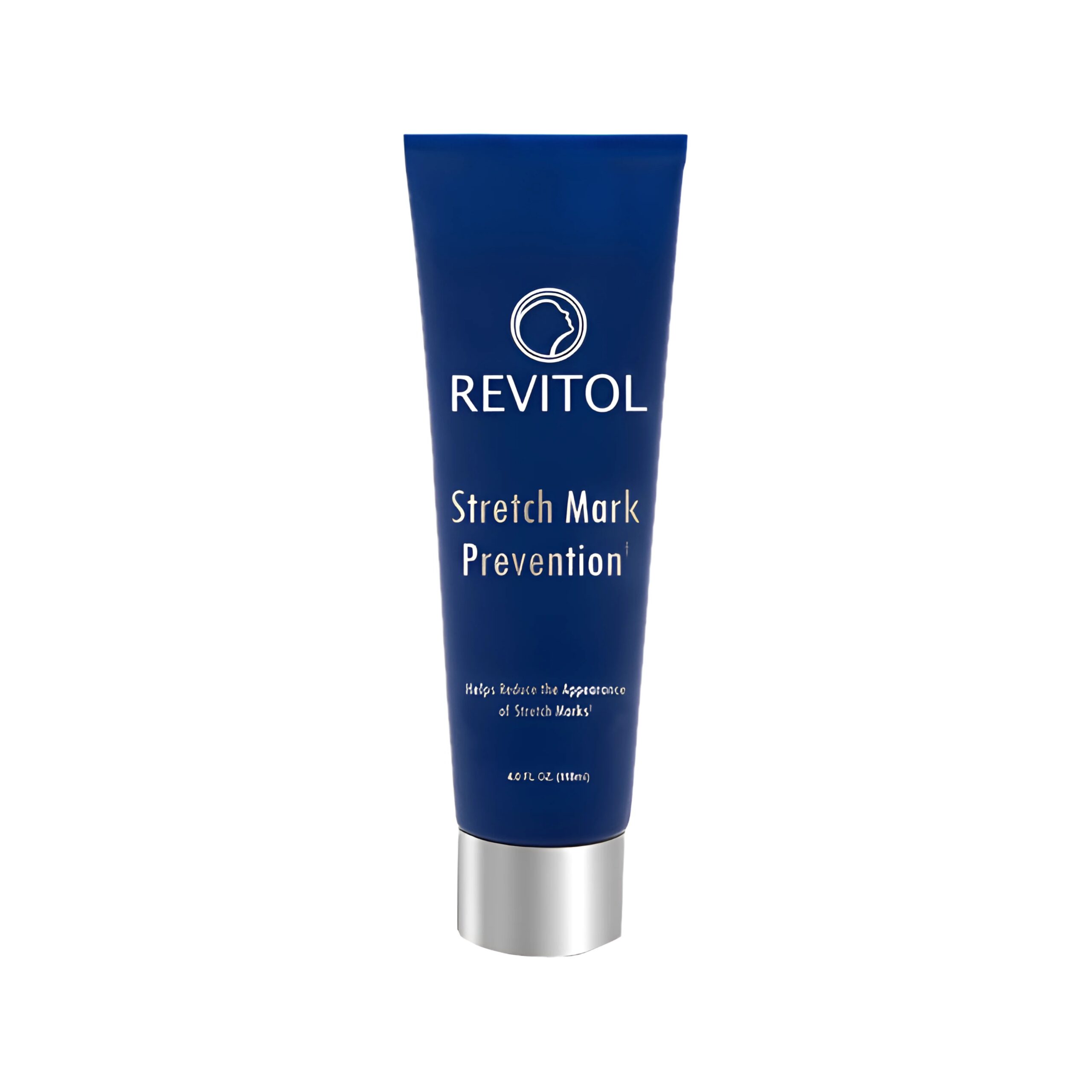
One product that has been around for several years is Revitol Stretch Mark Cream. Sold through HealthBuy's Shopify store, it markets itself as a way to reduce the appearance of stretch marks by improving skin elasticity and promoting collagen production. The claims sound appealing — but as with any cosmetic product that hints at physiological change, it is worth looking at what the ingredients can actually do before deciding whether to try it.
In this review we will examine the formula behind Revitol's stretch mark cream, look at what peer-reviewed research actually says about topical treatments for striae, consider safety — especially during pregnancy — and offer a realistic view of what you might expect from daily use over several weeks. Our aim is always to help you make a calm, informed decision rather than to sell you anything.
What Are Stretch Marks, Exactly?
Before we talk about any cream, it helps to understand what we are dealing with. Stretch marks are a type of dermal scarring. They form when the skin is stretched faster than the underlying collagen and elastin fibres can accommodate. The middle layer of skin (the dermis) essentially tears in places, and the body repairs that damage with scar tissue — which has a different texture and colour than the surrounding skin.
In the early phase — known as striae rubrae — stretch marks appear red, purple, or pink because the blood vessels beneath the surface are still visible. Over months to years they mature into striae albae, which are white or silver. Newer marks are generally more responsive to topical or procedural intervention than older ones, though even in the best-case scenario, improvements tend to be modest.
This is an important point. Because stretch marks involve structural changes in the dermis — a layer that topical products largely cannot reach — the ceiling for what any cream can achieve is inherently limited. That does not mean topical products are worthless; it means expectations should be grounded in biology rather than marketing copy.
What Is in Revitol Stretch Mark Cream?
Revitol's formula is built around several well-known cosmetic ingredients. Understanding each one helps you judge the product on its merits rather than its marketing slogans.
Key ingredients at a glance
What Revitol puts in the jar — and what the science says about each
- Squalane oil — a lightweight emollient derived from olives or sugarcane. Excellent for locking in moisture and improving skin barrier function. Well-established in dermatology.
- Vitamin E (tocopherol) — an antioxidant that protects cell membranes from oxidative damage. Widely used in scar-management products, though evidence for stretch marks specifically is thin.
- Vitamin A (retinyl palmitate) — a precursor to retinoic acid. Retinoids are among the few topical actives with some clinical data supporting modest improvement in early stretch marks, though retinyl palmitate is far weaker than prescription tretinoin.
- Vitamin D3 (cholecalciferol) — involved in skin cell differentiation and immune function. Limited evidence for topical use on stretch marks.
- Aloe vera extract — soothing and hydrating. May help with skin comfort but no direct evidence for reducing striae.
- Grapefruit seed extract — often included as a natural preservative or antimicrobial. No meaningful evidence for stretch mark reduction.
Taken together, this is a moisturising formula with some antioxidant support and a low-strength vitamin A derivative. It is a reasonable cosmetic formulation, but it is important to be clear: none of these ingredients at the concentrations likely present in an over-the-counter cream have robust, peer-reviewed clinical trials showing significant improvement in stretch marks.
What Does the Evidence Actually Say?
This is where we need to be especially honest. The evidence base for topical treatments of stretch marks is surprisingly thin given how common the concern is. Here is what the published literature tells us:
Tretinoin (prescription retinoid): A 1996 randomised controlled trial published in the Archives of Dermatology found that 0.1% tretinoin applied daily for six months produced a modest reduction in the length and width of early stretch marks compared with placebo. The effect was real but modest, and tretinoin is a prescription-only medicine with known side effects (irritation, dryness, photosensitivity). It is not the same as the retinyl palmitate found in cosmetic creams like Revitol.
Centella asiatica (gotu kola): Some evidence suggests that creams containing Centella asiatica extract and alpha-tocopherol may help prevent or reduce the severity of stretch marks during pregnancy — but the studies are small and often funded by the manufacturers of the products tested.
Hyaluronic acid: Limited data suggests early application may help with early stretch marks, possibly by supporting dermal hydration during the critical window when marks are forming. Again, the data is limited.
General moisturisers: Cochrane reviews have noted that there is insufficient high-quality evidence to recommend any specific topical product for the prevention or treatment of stretch marks. Even cocoa butter — perhaps the most widely used home remedy — failed to outperform placebo in a randomised trial.
⚠️ Reality check
Revitol's sales page uses the phrase "clinically proven." We were unable to find any peer-reviewed clinical trial specifically testing Revitol Stretch Mark Cream as a finished product. The ingredients have varying degrees of general evidence behind them — but that is not the same thing as the product itself being clinically tested. This distinction matters when you are deciding how much confidence to place in the claims.
How to Use It — If You Decide to Try It
If you have weighed up the evidence gaps and are still interested, here is the general approach that makes sense with any topical stretch mark product:
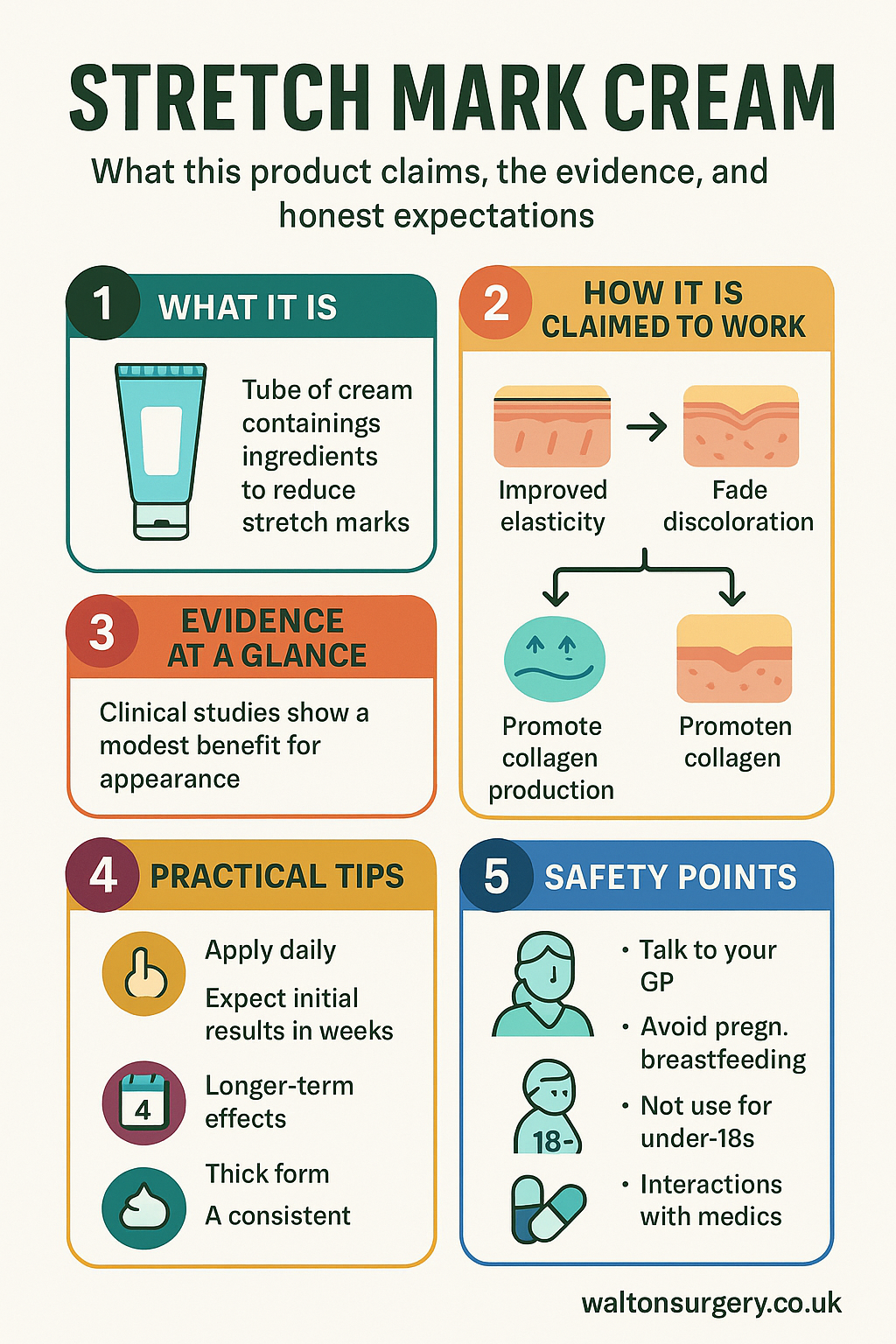
Apply the cream to clean, dry skin twice daily — typically morning and evening — massaging it gently into the affected areas. Focus on common sites: abdomen, thighs, hips, breasts, upper arms, and lower back. Consistency is more important than quantity; a thin, even layer worked into the skin will serve you better than a thick slather.
Give it a minimum of eight to twelve weeks of daily use before forming any judgement. Skin turnover takes time, and subtle improvements in texture or tone will not be visible overnight. Taking a "before" photograph under consistent lighting can help you track changes that might otherwise be too gradual to notice day-to-day.
If your stretch marks are new — still red or purple — this is the stage where topical support (however modest) has the best chance of making a small difference. Older, white stretch marks are far more resistant to topical treatment; for those, in-clinic options such as microneedling, fractional laser, or radiofrequency tend to offer more meaningful (though still imperfect) results.
Side Effects and Who Should Think Twice
As a cosmetic formulation, Revitol Stretch Mark Cream is generally well tolerated by most adults. However, there are a few important considerations:
Pregnancy and breastfeeding: The formula contains vitamin A (retinyl palmitate). Although it is a milder form than prescription retinoids, many dermatologists and midwives advise caution with any vitamin A derivative during pregnancy. If you are pregnant, trying to conceive, or breastfeeding, please discuss the product with your GP or midwife before use. When in doubt, a plain, fragrance-free moisturiser is the safest option.
Sensitive skin or eczema: Grapefruit seed extract and certain essential oils can cause contact irritation in sensitive individuals. Patch-test on a small area of inner forearm first and wait 48 hours before applying more widely.
Under-18s: This product is marketed at adults. Stretch marks in teenagers are a normal part of growth and rarely need topical intervention. If you are concerned about your teenager's skin, a conversation with the GP is a better first step.
Regulatory status: This is a cosmetic product, not a licensed medicine. It has not been assessed by the MHRA and its claims have not been verified by any UK or US medical regulator. This does not make it inherently unsafe — but it does mean the responsibility for judging the claims falls largely on you, the consumer.
A Focused Look at This Product
Revitol has been selling its stretch mark cream for a number of years through its HealthBuy online store. The brand positions the product as an accessible, non-invasive alternative to clinical procedures. Here is a clear-eyed summary of what you are actually getting:
🔬 Product snapshot — Revitol Stretch Mark Cream
- Active ingredient(s): Squalane oil, vitamin E (tocopherol), vitamin A (retinyl palmitate), vitamin D3 (cholecalciferol), aloe vera extract, grapefruit seed extract
- Format: Topical cream, applied twice daily
- Marketed claims: Reduces the appearance of stretch marks; improves skin elasticity; fades discolouration; promotes collagen production
- Quality info: Manufactured and sold by HealthBuy; no third-party testing certificates or cGMP/ISO certifications are publicly listed on the sales page
- Price: approx. £32 / $40.00 per bottle
Setting Realistic Expectations
One of the kindest things we can do in a review like this is help you avoid disappointment. Stretch marks are permanent structural changes in the skin. No cream — not Revitol, not any other — can undo that damage completely. The honest promise of a good moisturising routine is softer, better-hydrated skin that may look and feel slightly improved, with potentially a small reduction in the pinkness or discolouration of newer marks.
If you have mature, white stretch marks and are hoping for a dramatic visual change, topical products are unlikely to deliver what you are looking for. In that situation, a consultation with a dermatologist to discuss evidence-based procedures — fractional laser, microneedling, or platelet-rich plasma therapy — would be a more productive step. These procedures carry their own costs, limitations, and risks, but they have a more direct impact on the dermis where the scarring sits.
On the other hand, if your marks are relatively new, you enjoy having a structured skincare routine, and you are happy with the possibility of subtle improvement over weeks and months, a well-formulated moisturising cream can be a reasonable part of that approach — even if the evidence is modest.
Frequently Asked Questions
Can a cream actually remove stretch marks?
No topical cream can fully remove stretch marks. Stretch marks are a form of dermal scarring that develops when the skin's collagen and elastin fibres tear. Creams may help improve skin hydration, texture, and the appearance of discolouration, but they cannot rebuild the torn dermal layer. Clinical evidence for topical treatments is limited and results vary considerably between individuals.
What ingredients are in Revitol Stretch Mark Cream?
Revitol Stretch Mark Cream contains squalane oil, vitamin E (tocopherol), vitamin A (retinyl palmitate), vitamin D3 (cholecalciferol), aloe vera extract, and grapefruit seed extract. These are common skincare ingredients associated with moisturisation and antioxidant support, though none are specifically licensed for the treatment of stretch marks.
Is Revitol Stretch Mark Cream safe to use during pregnancy?
This product contains vitamin A (retinyl palmitate). While topical retinyl palmitate in cosmetic concentrations is generally considered lower risk than prescription retinoids, many healthcare professionals advise caution with vitamin A derivatives during pregnancy and breastfeeding. Speak to your midwife, GP, or pharmacist before using any new skincare product while pregnant or nursing.
How long does it take to see results from a stretch mark cream?
Most topical stretch mark products suggest a minimum of eight to twelve weeks of consistent daily use before any visible change. It is important to set realistic expectations — any improvements are likely to be subtle, involving softer skin texture and a gradual lightening of discolouration rather than a dramatic reduction in the marks themselves.
What is the difference between new (red/purple) and old (white/silver) stretch marks?
New stretch marks are typically red, purple, or pink because the blood vessels beneath the surface are still visible. This early stage (striae rubrae) is when topical treatments and certain procedures may have the best chance of modest improvement. Older stretch marks (striae albae) appear white or silver as the vessels recede and mature scar tissue forms; these are generally more resistant to topical intervention.
Is Revitol Stretch Mark Cream approved by the MHRA or a regulated medicine?
No. Revitol Stretch Mark Cream is marketed as a cosmetic product, not a medicine. It has not been assessed or licensed by the MHRA (Medicines and Healthcare products Regulatory Agency) and its marketing claims have not been evaluated by any UK medical regulator. It should not be considered a substitute for medical or dermatological treatment.
✅ The verdict
Revitol Stretch Mark Cream is a cosmetic moisturiser built around familiar skincare ingredients — squalane, vitamins A, E, and D3, and aloe vera. These ingredients can support skin hydration and general skin health, and the inclusion of retinyl palmitate gives the formula a modest theoretical link to collagen support. However, there is no published clinical trial testing this specific product on stretch marks, and the evidence base for any topical cream producing meaningful improvement in striae remains limited. The "clinically proven" language on the sales page is not backed by product-specific data that we could verify.
For readers who have newer stretch marks and are comfortable trying a cosmetic-grade moisturiser as part of a broader skincare routine, this product is a reasonable option to consider — particularly if you value having a dedicated daily ritual. If you are pregnant, breastfeeding, or on prescription skincare, check with your GP or pharmacist first. If you have mature, white stretch marks and want visible improvement, a consultation with a dermatologist about procedural options will serve you better. If you would like to check current pricing here, you can do so via the affiliate link.
You may also be interested in our reviews of NAD+ supplements and BPC-157 peptide supplements — both cover products where the gap between marketing claims and published evidence is a recurring theme.
🛒 Reader-recommended option
A moisturising stretch mark cream with squalane, vitamins A, E, and D3, and aloe vera — best viewed as a cosmetic skincare step rather than a clinical treatment.
Affiliate link — see disclosure at the top of this article. Current price approx. £32 / $40.00 per bottle.
This article is informational and contains affiliate links. It does not replace personalised advice from your GP, pharmacist, or another qualified healthcare professional. Revitol Stretch Mark Cream is a cosmetic product and is not licensed as a medicine by the MHRA or any equivalent regulator. It contains vitamin A (retinyl palmitate); if you are pregnant, breastfeeding, or planning a pregnancy, consult your healthcare provider before use. If you have a skin condition such as eczema or psoriasis, or if you are using prescription skincare, discuss with your GP or dermatologist before adding any new product to your routine. Not intended for use by under-18s.