Racism in the NHS: How It Affects Patient Health and Care
⚡ Quick Answer
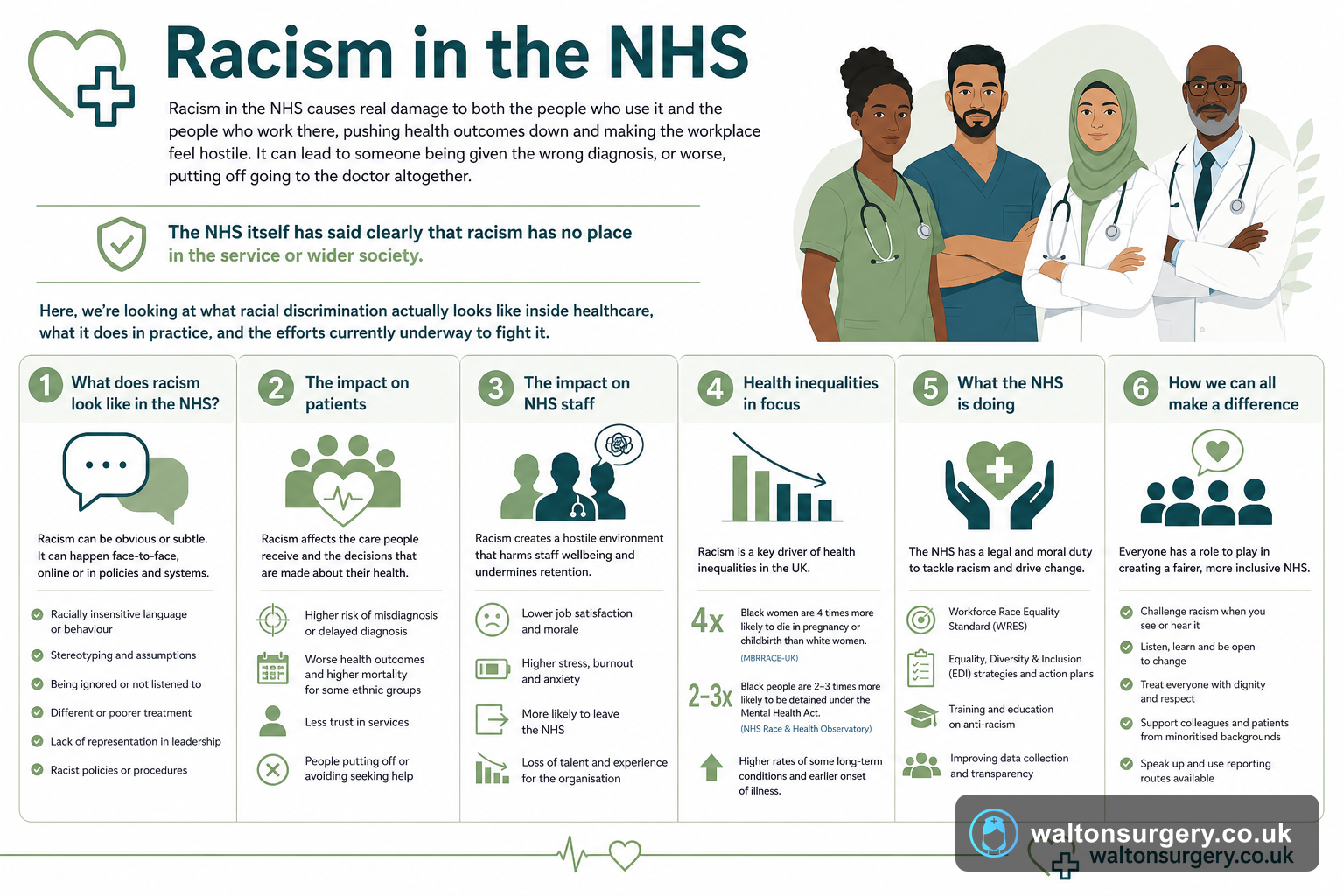
Racism in the NHS causes real damage to both the people who use it and the people who work there, pushing health outcomes down and making the workplace feel hostile. It can lead to someone being given the wrong diagnosis, or worse, putting off going to the doctor altogether. The NHS itself has said clearly that racism has no place in the service or wider society. Here, we're looking at what racial discrimination actually looks like inside healthcare, what it does in practice, and the efforts currently underway to fight it.
The problem of racism in the NHS is a heavy one. It reaches into the care patients get and chips away at the wellbeing of staff on the receiving end of it. Misdiagnosis happens. Treatment gets delayed. Trust in the whole system starts to fray. For the workforce, it means an environment that can feel unwelcoming and, frankly, damaging. A letter published by The NEN back in August 2026 put it plainly: "Racism Has No Place in Our NHS or Anywhere in Our Society." That isn't just a slogan you stick on a poster. It's a principle the health service is supposed to hold itself to, every single day.
From a patient's point of view, racial discrimination can be quite subtle or shockingly direct, but the result is always bad. You might find a doctor simply doesn't take a symptom as seriously as they should. There could be a basic lack of understanding about cultural beliefs around health. Or there are systemic barriers that make getting through the door harder than it needs to be. For healthcare workers, the experience might look like being constantly passed over for promotion, hearing slurs from colleagues or patients, or just feeling isolated in a way that's hard to shake. Getting a handle on how this issue shows its face is, honestly, the first move towards actually dealing with it.
How Does Racism Show Up in a Clinical Setting?
Racial discrimination in healthcare doesn't always announce itself. It can be baked right into attitudes, unconscious biases, and the way institutions operate. For you as a patient, this could translate to your pain being underestimated because of false ideas about biological differences between races. It might involve not having a professional interpreter available, which can lead to dangerous mix-ups with medication or what's actually wrong with you. For staff, it's the constant, draining task of feeling like you represent your entire race, or having your skills questioned in ways your white colleagues simply don't face. These behaviours eat away at the trust and professionalism the NHS says it's built on.
The Impact on Your Health as a Patient
The consequences here are direct and you can see them in the numbers. If you feel you won't be listened to or treated with respect, the natural reaction is to not seek help early. You might skip follow-up appointments. That means conditions get caught later, when they're harder to treat. This might mean a late diagnosis for something that could have been caught early with a simple NHS heartburn cancer test. On top of that, if a clinician's unconscious bias messes with their diagnostic process, you could end up with the wrong treatment or have your symptoms brushed off completely. The NHS does acknowledge that health inequalities exist, and fighting racism is central to tackling them. Discrimination is what fuels a lot of these gaps in the first place.
What Does This Mean for NHS Staff?
The NHS workforce is one of the most diverse in the country. Still, a lot of staff from ethnic minority backgrounds report that they've faced racism. This sort of behaviour hits recruitment, retention, and morale hard. When talented people feel undervalued or harassed, they're more likely to leave the profession. They might decide not to go for promotions. That creates a leadership vacuum. And the whole service suffers, because a team that doesn't feel safe and supported isn't going to deliver the best care to patients. A commitment to anti-racism, then, is also a commitment to a stronger, more effective NHS for everybody.
🔬 Key Facts
The Real-World Impact of Discrimination
- → Misdiagnosis and delayed treatment are common consequences when patients are not taken seriously due to their race.
- → Unconscious bias can directly influence a clinician's diagnostic process, leading to incorrect or incomplete care.
- → Patient trust erodes when discrimination is present, causing people to avoid seeking help and worsening health outcomes.
- → Staff retention suffers as talented professionals from minority backgrounds leave due to harassment and a hostile work environment.
Recognising Your Rights and What to Do
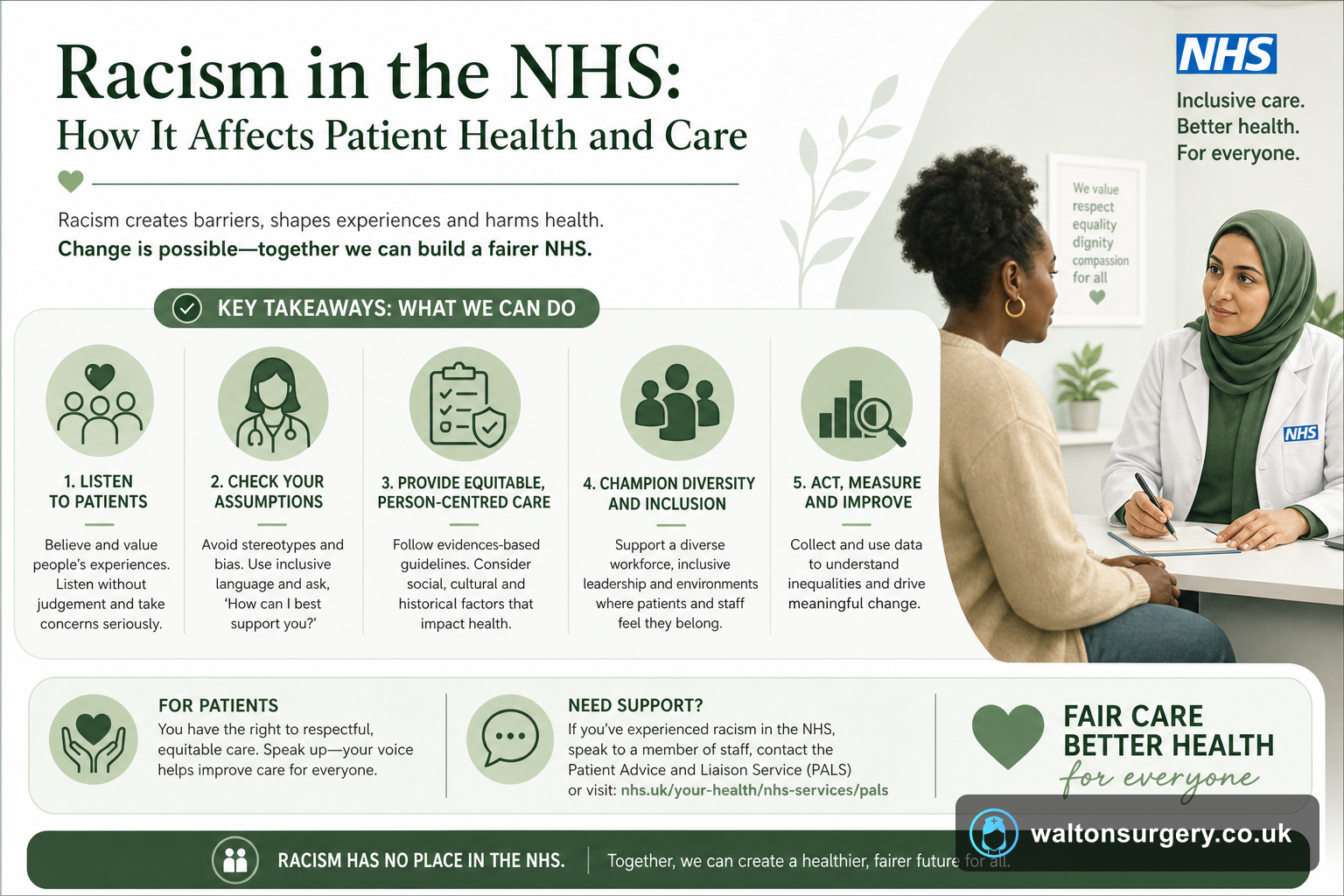
If you experience or witness racism in an NHS setting, you have every right to speak up. Every NHS organisation runs a formal complaints procedure. You can bring your concern to the Patient Advice and Liaison Service (PALS) at the hospital. Alternatively, talk to the practice manager at your GP surgery. It helps to write down dates, times, and the names of anyone involved. You can also report discrimination to the Equality and Human Rights Commission. Making a complaint can feel like a big step. But it's one of the most powerful mechanisms for pushing change and making sure people are held accountable.
What Is the NHS Doing to Tackle This?
The NHS has made its commitments to becoming an actively anti-racist organisation public. That includes initiatives like the Workforce Race Equality Standard (WRES). This standard requires NHS trusts to report data on what their ethnic minority staff experience. The idea is to spot gaps and hold leaders to account for making things better. Training on unconscious bias and cultural competency is spreading. Progress is slow, you have to be honest about that. But these structural efforts are essential for moving beyond policy statements and towards real, lived equality for both staff and patients.
The truth is that racial bias in healthcare isn't limited to one condition. It can influence decisions in cancer care, where timely intervention is critical, or in everyday screening, such as discussions about breast cancer screening for young women on the NHS. Even in wider public health conversations, bias can shape how information is received; for example, the cultural impact of celebrity health journeys, including Whoopi Goldberg's weight loss, can be viewed differently through a lens of racial perception.
Frequently Asked Questions
⭐ The Bottom Line
What this means for you
Racism inside the NHS is a complicated problem with serious knock-on effects for patient health and how staff feel at work. It goes against the core idea that care should be based on need, not on where you come from. The NHS has said it wants to be anti-racist. Meaningful change, though, needs action from everyone—from the people at the top to individual staff members and patients who are willing to speak up. If you face discrimination, using the official complaints channels is one of the most effective ways you can help push for that change and contribute to a fairer health service for all of us.
Last updated: 2026-08-05 · Written by the Walton Surgery editorial team · Medical information is for educational purposes only and does not replace advice from a qualified healthcare professional.