Postnatal Amnesia: Why New Parents Forget Everyday Things
⚡ Quick Answer
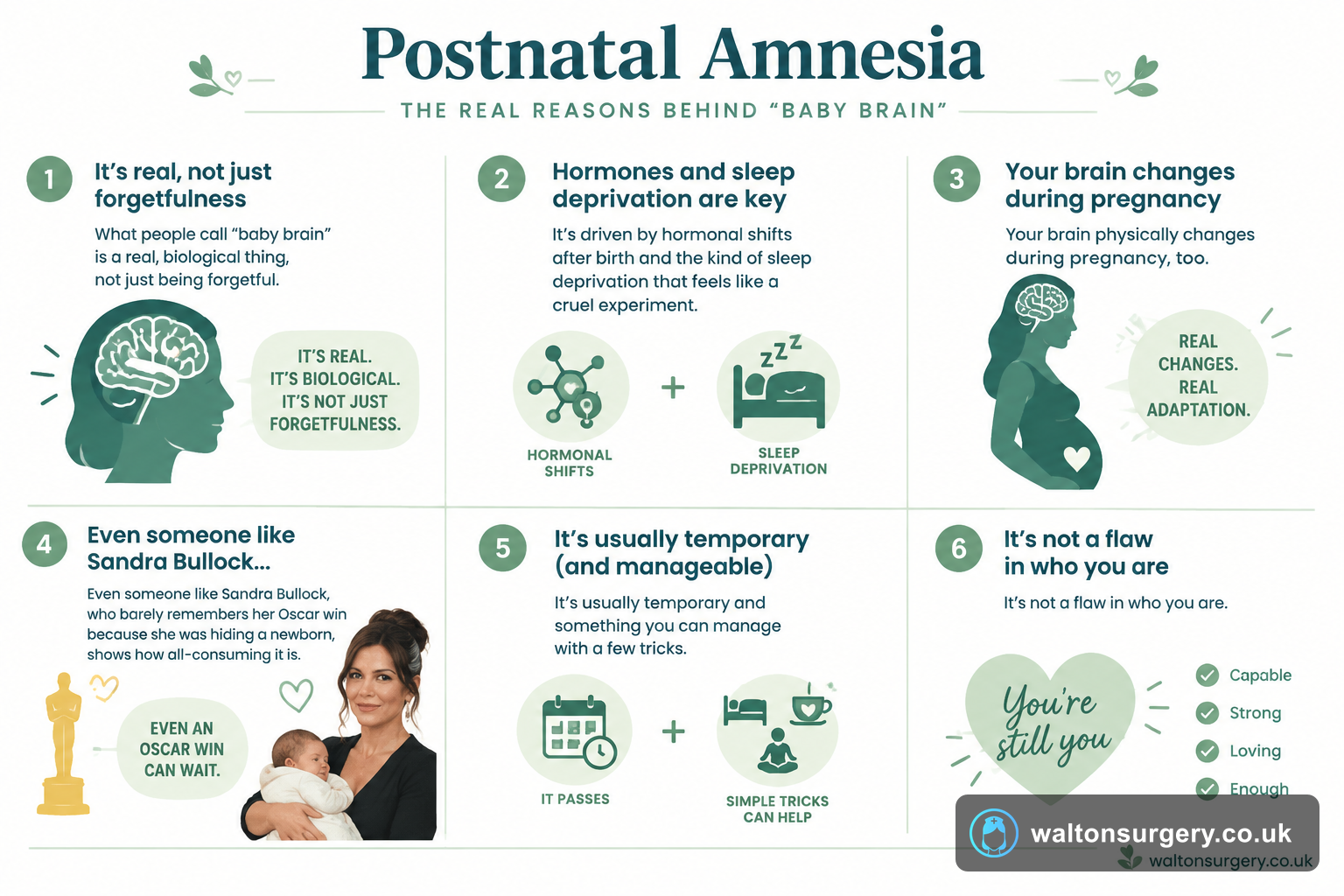
What people call 'baby brain' is a real, biological thing, not just being forgetful. It's driven by hormonal shifts after birth and the kind of sleep deprivation that feels like a cruel experiment. Your brain physically changes during pregnancy, too. Even someone like Sandra Bullock, who barely remembers her Oscar win because she was hiding a newborn, shows how all-consuming it is. It's usually temporary and something you can manage with a few tricks. It's not a flaw in who you are.
Forgetting where you put your keys, walking into a room and having no idea why, losing your train of thought mid-sentence—this is the reality of postnatal amnesia. It's not just tiredness. The hormonal crash that follows childbirth combined with nights shattered by feeds and cries creates a genuine biological fog. Your brain is responding to a massive physical and situational upheaval. This isn't a personal failing or a sign you're not coping.
It's so common that even people in the spotlight talk about it. Sandra Bullock has said she can barely remember winning an Oscar, because at the time she was focused entirely on hiding her newborn. That really puts it in perspective. The intense, survival-mode focus on a tiny baby can eclipse everything else, even the biggest moments of your life.
What Exactly Is 'Baby Brain'?
'Baby brain' is the catch-all term for the cognitive changes many experience during pregnancy and the months after birth. The symptoms are pretty consistent: forgetfulness, trouble concentrating, losing things, and struggling for words. It's not a clinical diagnosis you'll find in a medical textbook, but it's a widely shared reality. The experience clusters around a set of cognitive symptoms tied to becoming a parent. People joke about it, but for the person going through it, it can be genuinely frustrating and sometimes a bit scary.
The Main Causes of Postnatal Amnesia
Several things work together to cause these memory blips. Understanding what's behind them can make you feel less like you're losing your mind and more like you're having a normal response.
Hormonal Whiplash
Right after birth, your oestrogen and progesterone levels plummet. They were sky-high during pregnancy, and these hormones are involved in brain functions like memory. The NHS points to this rapid hormonal adjustment as a primary physical reason for the mental fog. Your brain is literally trying to recalibrate while running on empty, and that messes with how it stores and fetches information.
The Impact of Severe Sleep Deprivation
A newborn doesn't care about your sleep cycle. This leads to fragmented rest for weeks, often months. According to the International Society of Sports Nutrition (ISSN), even moderate chronic sleep loss affects the brain in ways similar to being drunk. For a new parent, it's not a choice—it's a requirement of keeping a tiny human alive. The brain needs consolidated sleep to file away memories properly, so constant waking up directly attacks your ability to recall what you had for lunch yesterday. This kind of extreme physiological stress can cascade in surprising ways—for example, similar shock to the body can trigger multiple organ failure causes treatment scenarios in other contexts. There's more on this in our what causes sudden weight loss and thirst explainer.
Your Brain Is Physically Rewiring
Pregnancy itself changes your brain's structure. Research shows grey matter volume can shrink in certain areas, especially those linked to social cognition and understanding others' thoughts. This isn't damage. It's more like a pruning process, thought to make the brain better at reading a baby's cues. The downside? This reorganisation can temporarily knock other skills, like verbal memory, leading to that 'baby brain' feeling.
Cognitive Load and Task Overload
Think about it. Suddenly you're juggling feeds, nappy changes, sleep schedules, health visitor appointments, plus everything else in your life. Your brain is now an unpaid project manager for an incredibly demanding new client. This massive load pushes everyday information to the back of the queue. Your mind prioritises the urgent, survival stuff, which is why remembering to defrost the chicken for dinner can feel like solving a complex equation.
🔬 Key Facts
Why Postnatal Amnesia Happens
- → Hormonal Whiplash — Oestrogen and progesterone plummet after birth, directly affecting memory storage and retrieval.
- → Sleep Deprivation — Chronic fragmented sleep affects the brain similarly to being drunk, preventing proper memory filing.
- → Brain Rewiring — Grey matter shrinks in areas linked to social cognition, temporarily knocking verbal memory.
- → Cognitive Overload — The brain prioritises urgent baby-related tasks, pushing everyday info to the back of the queue.
Is Baby Brain Permanent?
For most people, no. The worst of it tends to fade as hormones settle and, importantly, as sleep stretches out a bit. Many parents find their mental sharpness returns noticeably when their baby starts sleeping for longer blocks, often around six months. The brain's rewiring is also an ongoing adaptation process. We cover this in more depth in why do i sweat so much when i workout uk causes when to worry.
When Should You Talk to Your GP?
While some forgetfulness is normal, there are red flags. Book an appointment if your memory problems are severe, getting worse, or come with other concerning signs. These might include intense anxiety, feeling detached from your baby, persistent low mood, or struggling with basic daily tasks like showering or eating. These could signal postpartum depression or anxiety, conditions that need and deserve professional help.
Practical Ways to Cope with Forgetfulness
Work with your new brain, not against it. These strategies are about reducing daily friction, not achieving perfection.
Embrace External Memory Aids
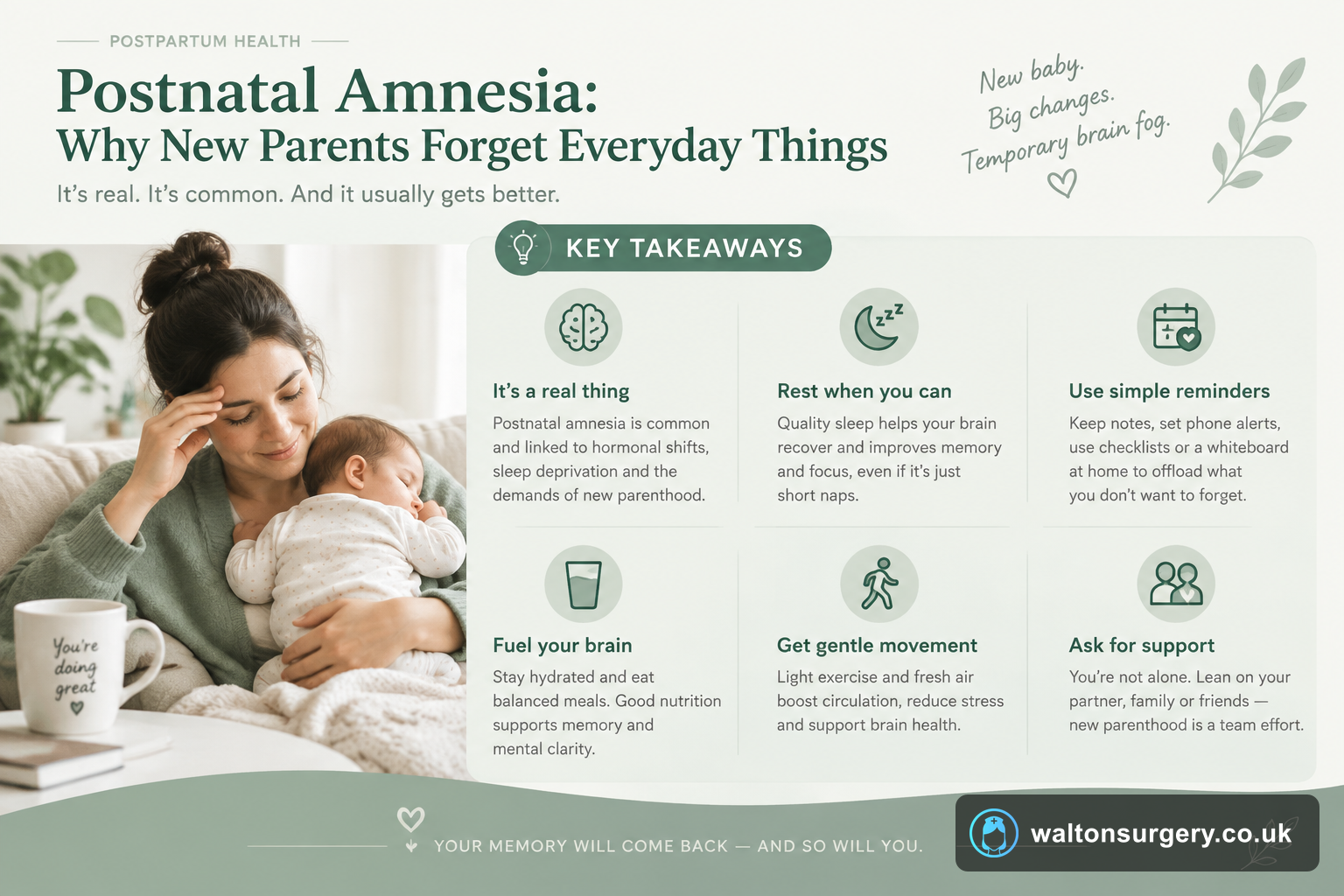
Stop trusting your brain to remember. Use your phone's calendar for everything. Stick a whiteboard on the fridge for lists. Get one dedicated notebook for all baby-related notes—feed times, medicine doses, questions for the doctor. Make writing things down your automatic habit.
Simplify Your Routines
Cut down on decisions. Prep meals on the weekend. Lay out clothes the night before. Set up subscription deliveries for nappies and wipes. Every decision you remove frees up mental space for what actually matters.
Protect Sleep Where You Can
You might not get eight hours, but you can aim for better quality. Follow safe sleep guidance for your baby—it helps your peace of mind too. When the baby naps, try to sleep, even if it's just twenty minutes. Share night feeds with a partner if you can, using expressed milk or formula. Prioritising rest is one of the most direct ways to help your brain function.
Frequently Asked Questions
⭐ The Bottom Line
What this means for you
Postnatal amnesia is a real, temporary biological state, not a sign of lesser intelligence. Sandra Bullock's honest take shows just how all-consuming new parenthood is for everyone. Focus on practical coping—lists, routines, grabbing sleep. Be kind to yourself. If memory issues feel severe or come with mood changes, your GP is the right person to talk to. They can offer support and rule out anything else.
Last updated: 2026-09-18 · Written by the Walton Surgery editorial team · Medical information is for educational purposes only and does not replace advice from a qualified healthcare professional.