Nitazenes: What Are These Dangerous Synthetic Opioids?
⚡ Quick Answer
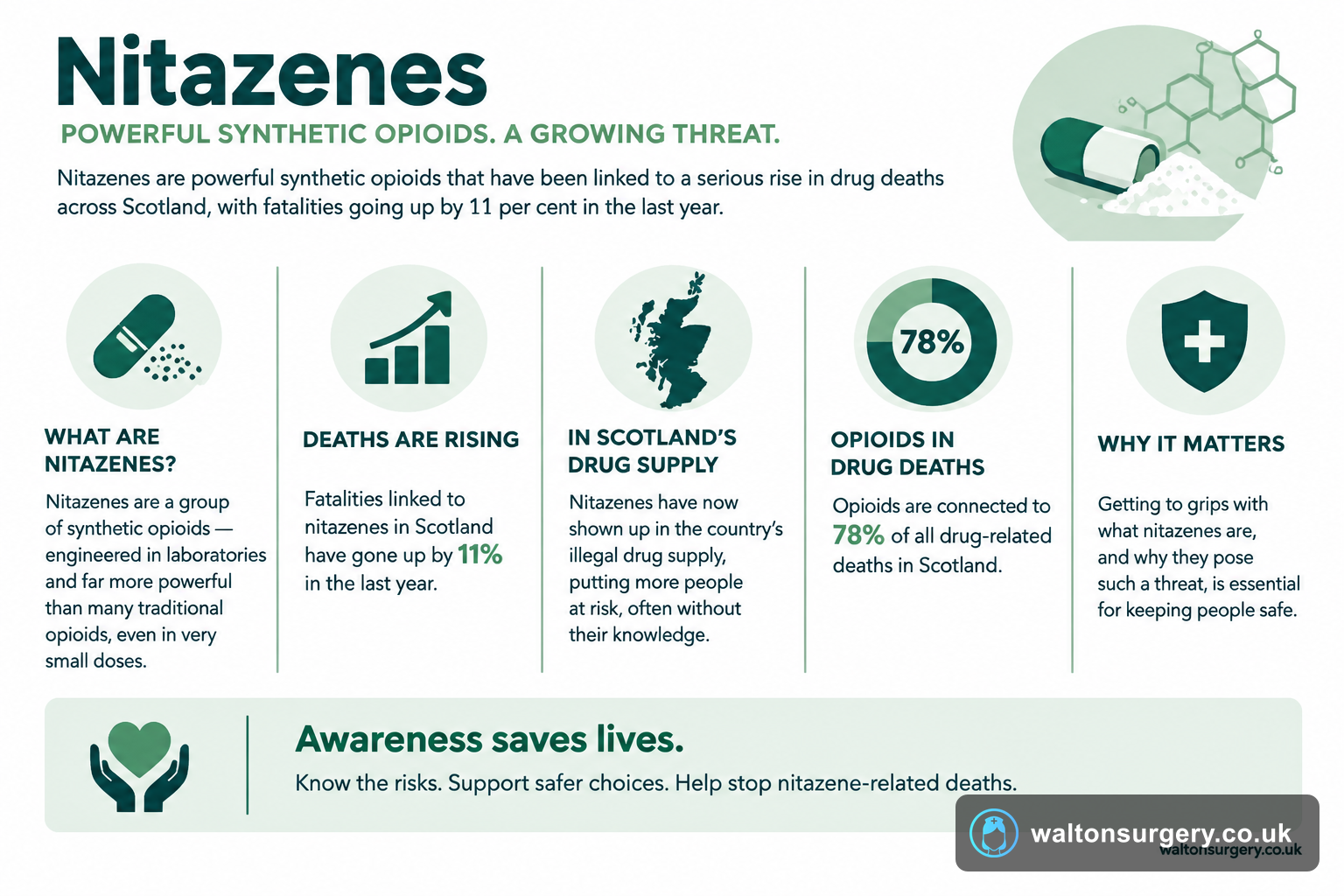
Nitazenes are powerful synthetic opioids that have been linked to a serious rise in drug deaths across Scotland, with fatalities going up by 11 per cent in the last year. These substances have now shown up in the country's illegal drug supply, and opioids are connected to 78% of all drug-related deaths. Getting to grips with what they are, and why they pose such a threat, is essential for keeping people safe.
A recent report has pointed to powerful synthetic opioids as a main driver behind an 11% jump in drug deaths in Scotland over the past year. The substances in question are called nitazenes, and they've made their way into the illegal drug market here.
Data from National Records of Scotland, the most recent available, indicates that opiates and opioids—heroin being the most well-known—were involved in 78 per cent of all drug deaths last year. The fact that nitazenes are now circulating adds a dangerous new dimension to a situation that was already deeply concerning. This is a pattern seen in other medication dangers too, such as the risks highlighted by the weight loss drug counterfeit dangers uk.
What exactly are nitazenes?
These are a group of very strong synthetic opioids. Scientists first made them back in the 1950s, thinking they could work as painkillers, but they were shelved because the risk of stopping someone's breathing was just too high.
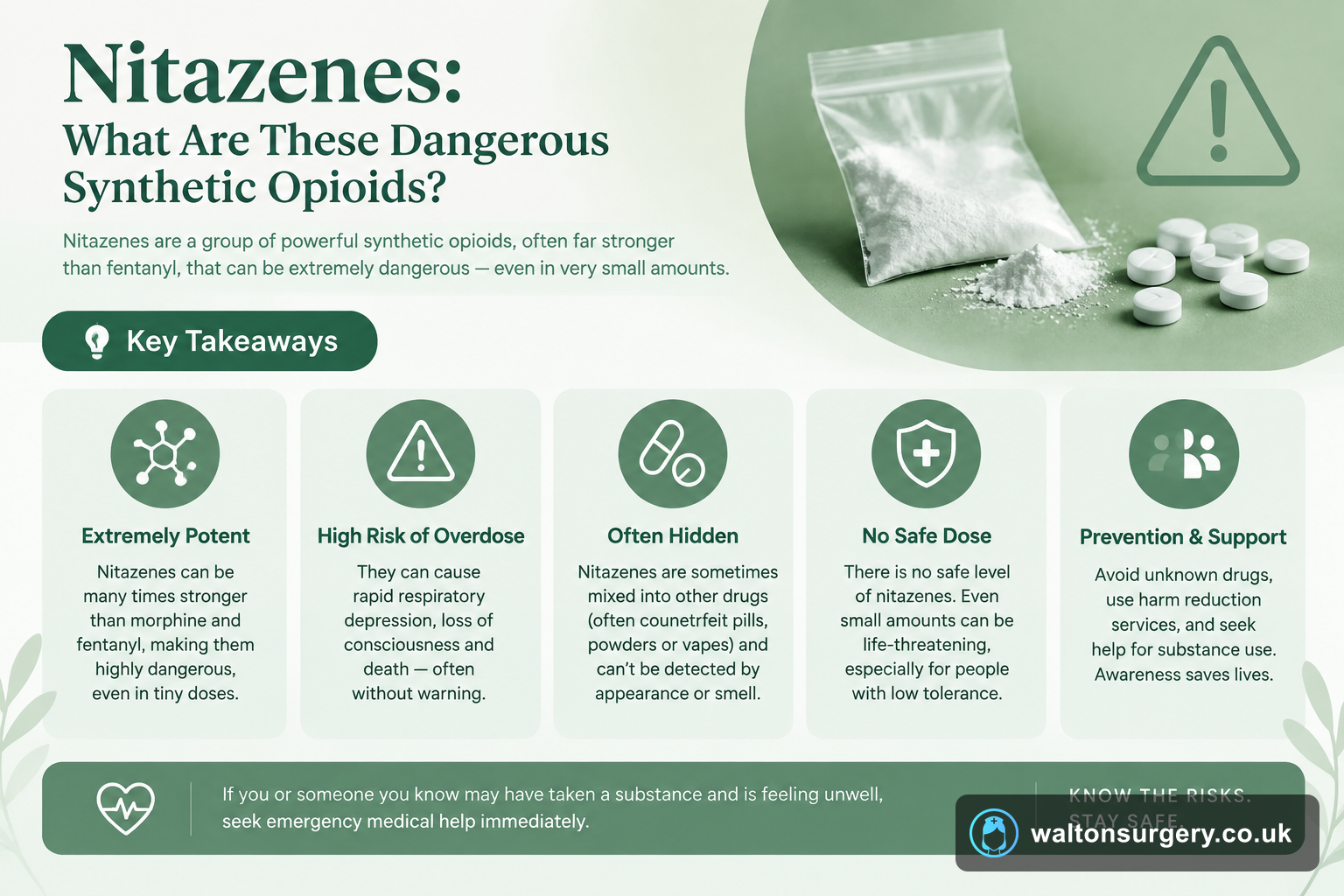
Heroin comes from the opium poppy; nitazenes don't. They're built entirely in a lab, which makes them far cheaper and simpler to cook up illegally. Their strength can dwarf heroin's, sometimes outpacing even fentanyl. You're talking about a quantity so small you'd struggle to see it, and that amount could end a life.
🔬 Key Facts
Understanding Nitazene Strength
- → Origin: Entirely synthetic, made in a lab, not derived from plants.
- → Potency: Can be dozens or even hundreds of times more powerful than heroin.
- → Risk Factor: Originally shelved in the 1950s due to high risk of respiratory failure.
- → Dosage Danger: A fatal amount is often invisible to the naked eye.
Why are they causing a crisis in Scotland?
The appearance of nitazenes in Scotland's illegal drug scene is directly tied to the recent increase in deaths. Figures from National Records of Scotland confirm an 11% rise in fatalities, and these new synthetic opioids are being flagged as part of the reason why. Similar systemic concerns about health and safety were raised in relation to recent celebrity deaths july 2026 health conditions.
The core problem is this: someone buys what they think is heroin or another familiar substance, but it's been cut with nitazenes without their knowledge. Given how potent these drugs are, that accidental switch massively raises the chance of a fatal overdose. People are taking a gamble without even knowing the rules have changed.
How to recognise the signs of an opioid overdose
Spotting an overdose quickly can genuinely be the difference between life and death. You might notice their breathing has slowed right down, become very shallow, or stopped altogether. The lips and fingertips can start to look a bit blue or greyish.
Pinpoint pupils are another tell-tale sign, alongside a body that feels completely limp. They may be out cold, not responding to loud shouts or being shaken. If you witness any of this, calling 999 straight away is the most important thing you can do.
What to do in an emergency
Your first move, always, should be to dial 999 and get an ambulance on the way. If you have a naloxone kit to hand, use it while you're waiting.
Naloxone is a medicine that can temporarily block the effects of an opioid overdose, buying precious time. You can get it without a prescription from many pharmacies and drug services across Scotland. Using it, and giving rescue breaths if you're able, helps keep the person's body going until the paramedics get there.
The wider context of Scotland's drug death figures
That 11% increase in deaths is a blunt reminder of the public health crisis Scotland continues to face. Opiates and opioids were implicated in 78 per cent of all drug-related deaths last year, which puts them in a category of their own when it comes to lethality. While healthcare innovation continues, such as the development of a new heart drug NHS patients, the challenge of illicit substances remains severe.
Dropping nitazenes into this mix just piles on another layer of risk. This isn't happening in a vacuum—it's tied up with addiction, mental health struggles, and deep-rooted social problems, all of which need long-term, joined-up support to address properly.
Frequently Asked Questions
⭐ The Bottom Line
What this means for you
Nitazenes—these extremely strong synthetic opioids—are now in Scotland's drug supply and connected to the 11% rise in deaths last year. Their potency is unpredictable and severe, which turns any use of illicit drugs into a life-threatening risk. Knowing the signs of an overdose, carrying naloxone, and being aware of what's out there are straightforward steps that can and do save lives. This article is meant for general awareness and isn't a replacement for proper medical advice. If you're worried about drug use, talk to your GP or get in touch with a local support service.
Last updated: 2026-09-25 · Written by the Walton Surgery editorial team · Medical information is for educational purposes only and does not replace advice from a qualified healthcare professional.