Counterfeit Weight-Loss Drugs: What You Need to Know About the Risks
PART C — HTML body: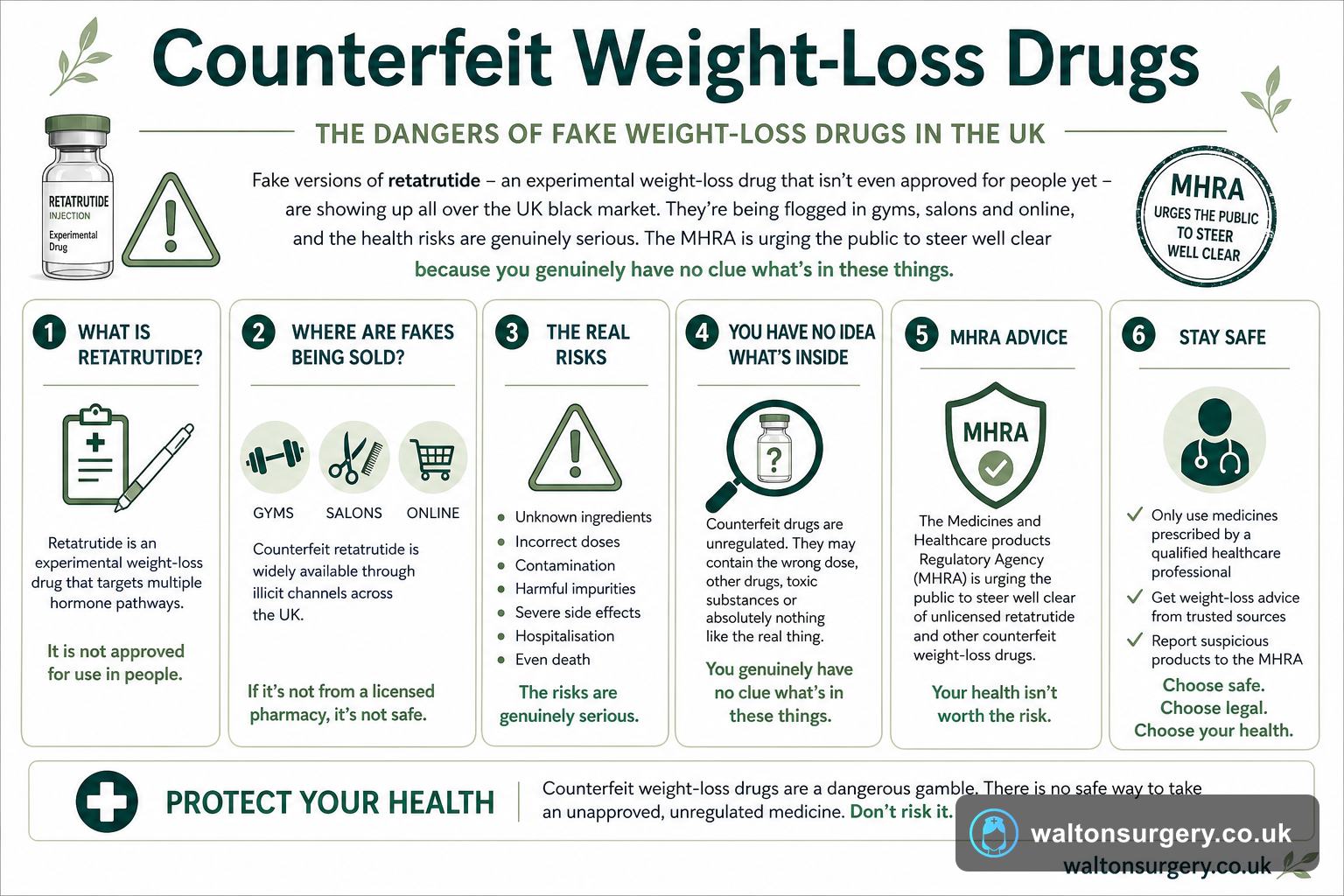
⚡ Quick Answer
Fake versions of retatrutide – an experimental weight-loss drug that isn't even approved for people yet – are showing up all over the UK black market. They're being flogged in gyms, salons and online, and the health risks are genuinely serious. The MHRA is urging the public to steer well clear because you genuinely have no clue what's in these things.
There's a real buzz around new weight-loss drugs right now, and that excitement has birthed a pretty grim market in fakes. Retatrutide, which is still being tested in clinical trials, is already being knocked off and sold illegally throughout the UK. The MHRA is worried sick about how fast these counterfeit injections are spreading – they offer zero guarantees on safety, quality, or whether they even work. People desperate to lose weight are gambling with their health every time they buy one of these unregulated products.
The scramble to get hold of unproven medications really does point to a troubling trend. Pharmacist Sehar Shahid has called the whole thing "mad," and honestly she's not wrong – people are literally injecting an illegal substance without having the faintest idea what's in it. Here, we'll walk through the specific dangers of these fake weight-loss drugs, how to recognise them, and where you can actually get safe, proper advice.
What is Retatrutide and Why is it in the News?
So retatrutide is a new weight-loss medication being developed by Eli Lilly. It hasn't been approved for use by any regulatory body – not the MHRA here in the UK, not the FDA, nobody. The drug is still in clinical trials, which means researchers are still figuring out whether it's safe and whether it actually works long-term. And yet, despite the fact it's still experimental, counterfeit versions have already flooded the black market. The BBC covered this on 5 September 2026, and their reporting pointed out that this appears to be one of the very first times a drug still in trials has been copied and sold illicitly on such a massive scale.
How Are Fake Weight-Loss Drugs Being Sold?
The BBC's investigation turned up counterfeit retatrutide vials being shifted through a frankly alarming number of illegal channels. They found the stuff in gyms, nail and beauty salons, hairdressers, and being pushed on social media. Street sellers have even been spotted offering it – flower vendors, of all people. When a product is that easy to get hold of, it starts to feel normal to buy it, which is exactly what makes this so dangerous. Tom Davies, speaking for the MHRA, has been quite vocal in warning people about these sales routes.
What's Actually in These Counterfeit Vials?
The single biggest risk here is that you haven't a clue what you're sticking into your body. These counterfeit products aren't made in clean, controlled, sterile environments. They might contain the wrong dose, absolutely no active ingredient whatsoever, or genuinely harmful contaminants. There's no oversight, no testing, no verification – you can't know what the substance is, how it was manufactured, or whether it's remotely safe to inject.
🔬 Key Facts
Inside the Counterfeit Vials
- → No sterile or controlled manufacturing – products are made in unregulated environments.
- → Unknown doses and contents – you might get the wrong dose, no active ingredient, or harmful contaminants.
- → Zero oversight or verification – no testing means no way to confirm safety or composition.
- → Serious injection risk – injecting unknown substances can cause infections, allergic reactions, or organ damage.
What Are the Health Risks of Taking Fake Medications?
The health risks, frankly, are severe and pretty much impossible to predict. One man – Tom, as he told the BBC – accidentally took eight times the intended dose of a fake retatrutide product and very nearly ended up in hospital. Unknown substances can trigger dangerous allergic reactions, cause infections, or wreak toxic havoc on your organs. Getting the dose wrong with any potent medication can make you seriously ill. And because nobody's supervising you when you're using black-market drugs, the danger just compounds.
Why Would Someone Take an Unapproved Drug?
The want for fast weight loss can push people towards risks they wouldn't normally take. News coverage of promising early trial results tends to generate hype, and that feeds a kind of fear of missing out. Celebrity transformations, whether it's whoopi goldberg weight loss or other high-profile stories, often spark public curiosity that can lead people down dangerous paths. But the trial process exists for very good reason: it's how we establish what's safe. Something that appears to work in a tightly controlled trial setting may not be safe at all for the general public, and a counterfeit copy of that drug is a completely different – and far more dangerous – proposition altogether.
How Can You Spot a Counterfeit Weight-Loss Drug?
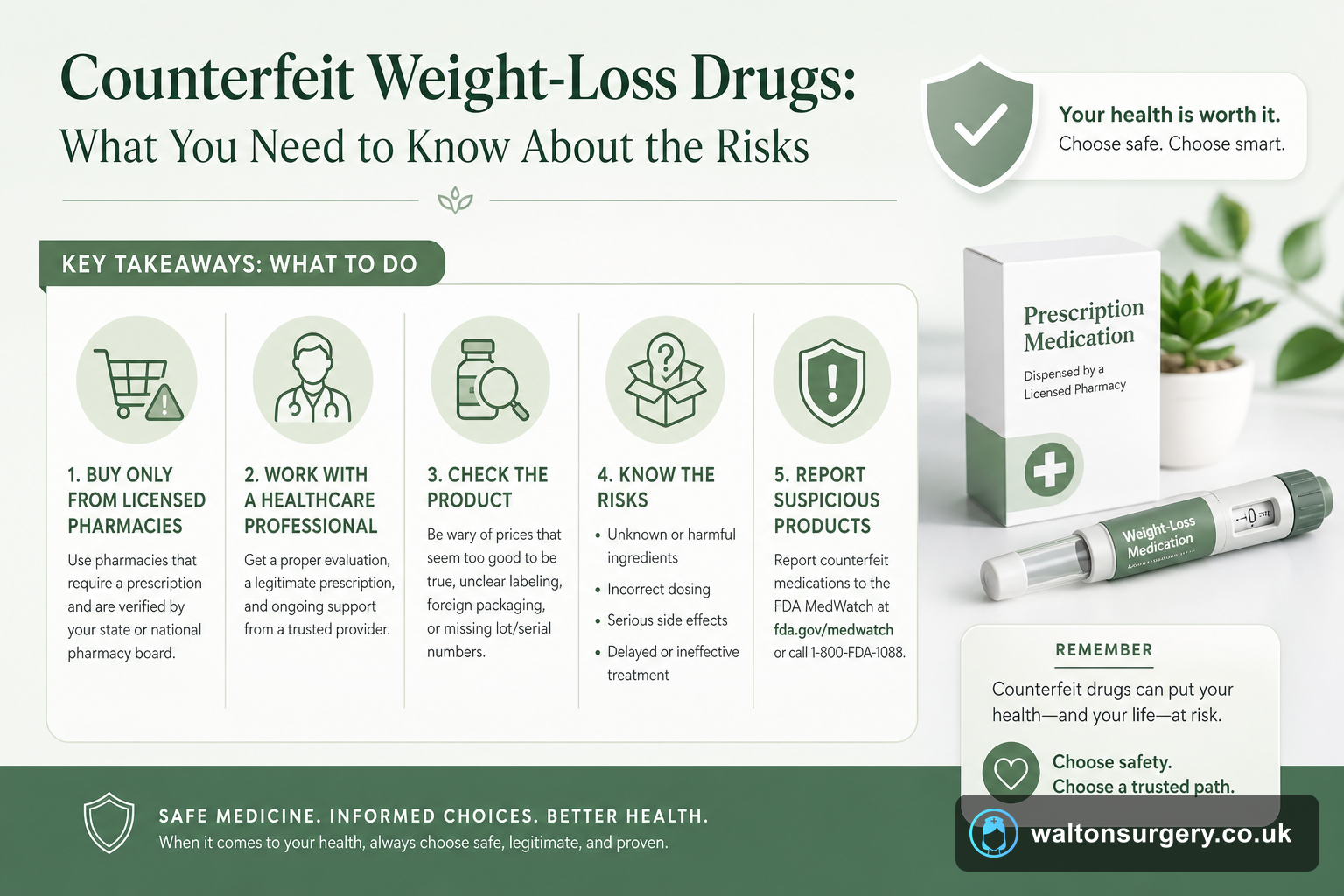
There are some pretty obvious red flags to watch for. If a product isn't available through the NHS or a registered UK pharmacy with a proper prescription, then it's illegal and it's dangerous. Be suspicious of anything sold on social media, in beauty salons, or by anyone who isn't a qualified medical professional. Legitimate medications come in proper packaging that includes manufacturer details and batch numbers. If the price looks too good to be true, or if someone tells you it's a "research chemical," you should treat that as a massive warning sign – it isn't a safe or legal treatment. If you're unsure where to start with approved options, understanding GLP-1 weight loss medication UK guidelines can help you have a more informed conversation with your doctor. It's also worth remembering that unexplained weight changes can sometimes signal other health conditions, so if you're noticing symptoms like increased thirst alongside weight loss, it may be worth reading about what causes sudden weight loss and thirst to understand when to seek medical advice.
Frequently Asked Questions
⭐ The Bottom Line
What this means for you
The only genuinely safe route to weight-loss medication runs through a proper consultation with a healthcare professional – your GP, for instance – who can prescribe an approved treatment. Buying drugs from unregulated sources, particularly experimental ones like retatrutide, is essentially gambling with your health. The counterfeit market thrives on hope, but the risks of serious harm massively outweigh any supposed benefit. If weight-loss medication is something you're thinking about, start by having that conversation with your doctor.
Last updated: 2026-09-05 · Written by the Walton Surgery editorial team · Medical information is for educational purposes only and does not replace advice from a qualified healthcare professional.