GLP-1 Medications for Weight Loss: What You Need to Know
PART C — HTML Body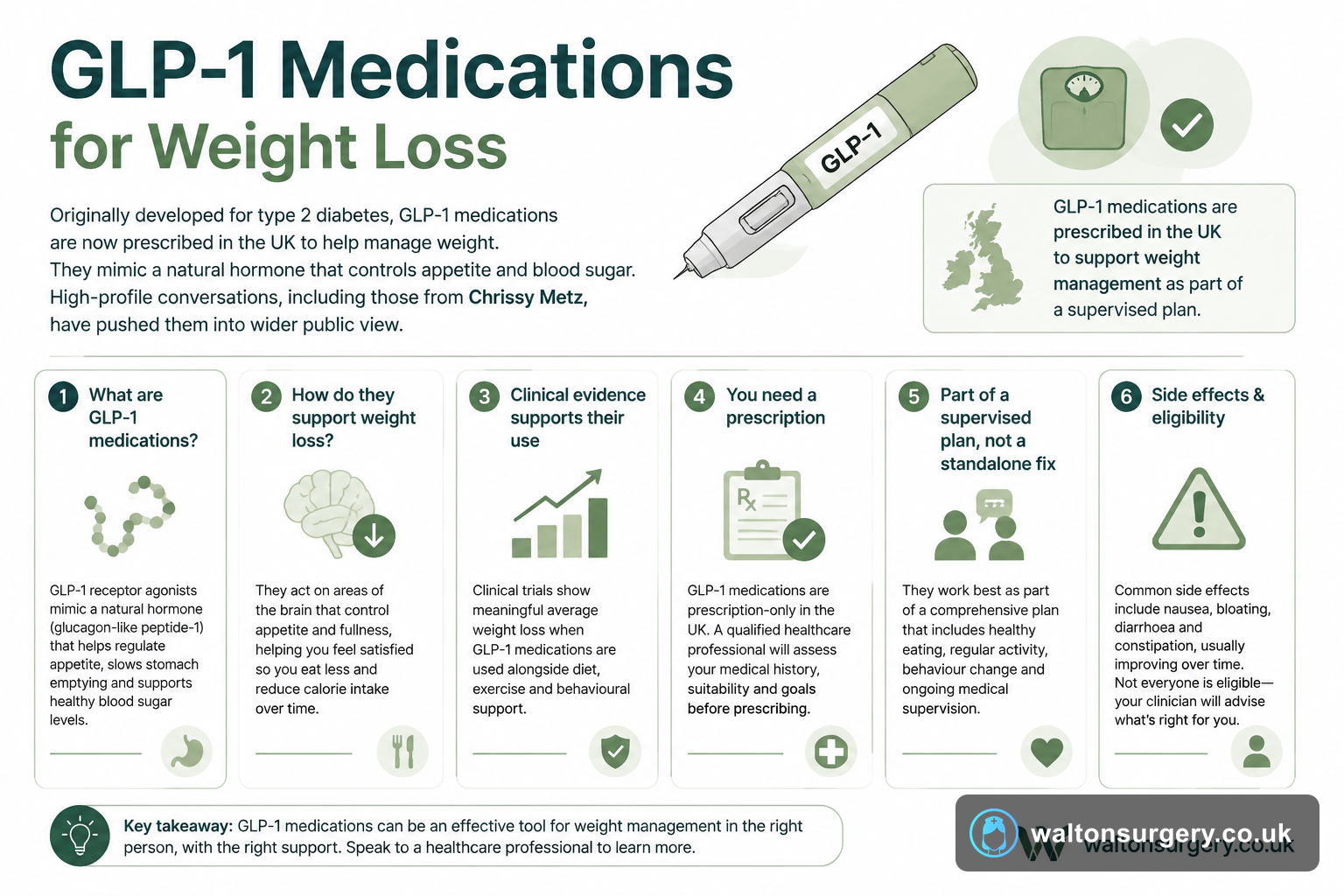
⚡ Quick Answer
Originally developed for type 2 diabetes, GLP-1 medications are now prescribed in the UK to help manage weight. They mimic a natural hormone that controls appetite and blood sugar. High-profile conversations, including those from Chrissy Metz, have pushed them into wider public view. You need a prescription, and they're meant to be part of a supervised plan rather than a standalone fix. Clinical evidence backs their use for weight loss, though side effects and eligibility rules do apply.
A class of prescription drugs known as GLP-1 receptor agonists are now being used to help people manage their weight. They work by copying the action of the GLP-1 hormone, which plays a role in controlling appetite and how your body releases insulin. Public figures like actor Chrissy Metz have spoken openly about using them, which has brought a lot more attention to these medications.
You can access them through certain NHS pathways or through private clinics here in the UK, but a prescription is always needed. They're meant to be used together with changes to your diet and exercise habits, forming part of a wider health strategy. In this article, we'll cover how they actually work, who qualifies for them, and what you should think about before starting.
What Exactly Are GLP-1 Medications?
So GLP-1 is short for glucagon-like peptide-1 — it's a hormone your body makes naturally once you've eaten. What it does is send a signal to your brain that you're full, and it also helps keep blood sugar levels in check. The medications are synthetic copies of this hormone, engineered to stick around and keep working for longer than the natural version would.
These drugs were originally created to treat type 2 diabetes, as the NHS points out. Doctors noticed that patients were losing weight on them, which was a welcome side effect, and that led to more research and eventually specific licences for weight management. You take them as an injection, either once a week or once a day depending on the particular drug.
How Do They Promote Weight Loss?
The main thing these medications do is suppress your appetite. They activate GLP-1 receptors in the brain, which means you start feeling full earlier in a meal and you're less hungry between meals. For most people, that naturally leads to eating fewer calories without really having to think about it too hard.
Your stomach also empties more slowly when you're on them, so that satisfied feeling after eating lasts longer. NICE — the National Institute for Health and Care Excellence — has looked at specific GLP-1 drugs for weight management and found they can work well when they're given as part of a specialist weight management service. Not just handed out on their own, in other words.
Who Is Eligible for a Prescription in the UK?
The rules around who can get these are pretty strict. On the NHS, they're generally considered for adults with a BMI of 35 or higher, or a BMI of 30 if you also have at least one weight-related health condition — things like high blood pressure or sleep apnoea count. You'll also need to have already tried other approaches to weight management without enough success.
Private clinics might set the bar differently, but you'll still go through a full medical assessment either way. A GP or specialist will look at your overall health, your medical history, and whether this treatment actually makes sense for you. It's not something you can get for cosmetic reasons — there has to be a genuine clinical need.
What Does the Treatment Process Involve?
Before you get a prescription, expect a detailed conversation with your doctor. They'll want to know about your weight history, your current state of health, and what you're hoping to achieve. You'll be shown how to give yourself the injection, told roughly when to expect results, and reminded how important it is to make lifestyle changes at the same time.
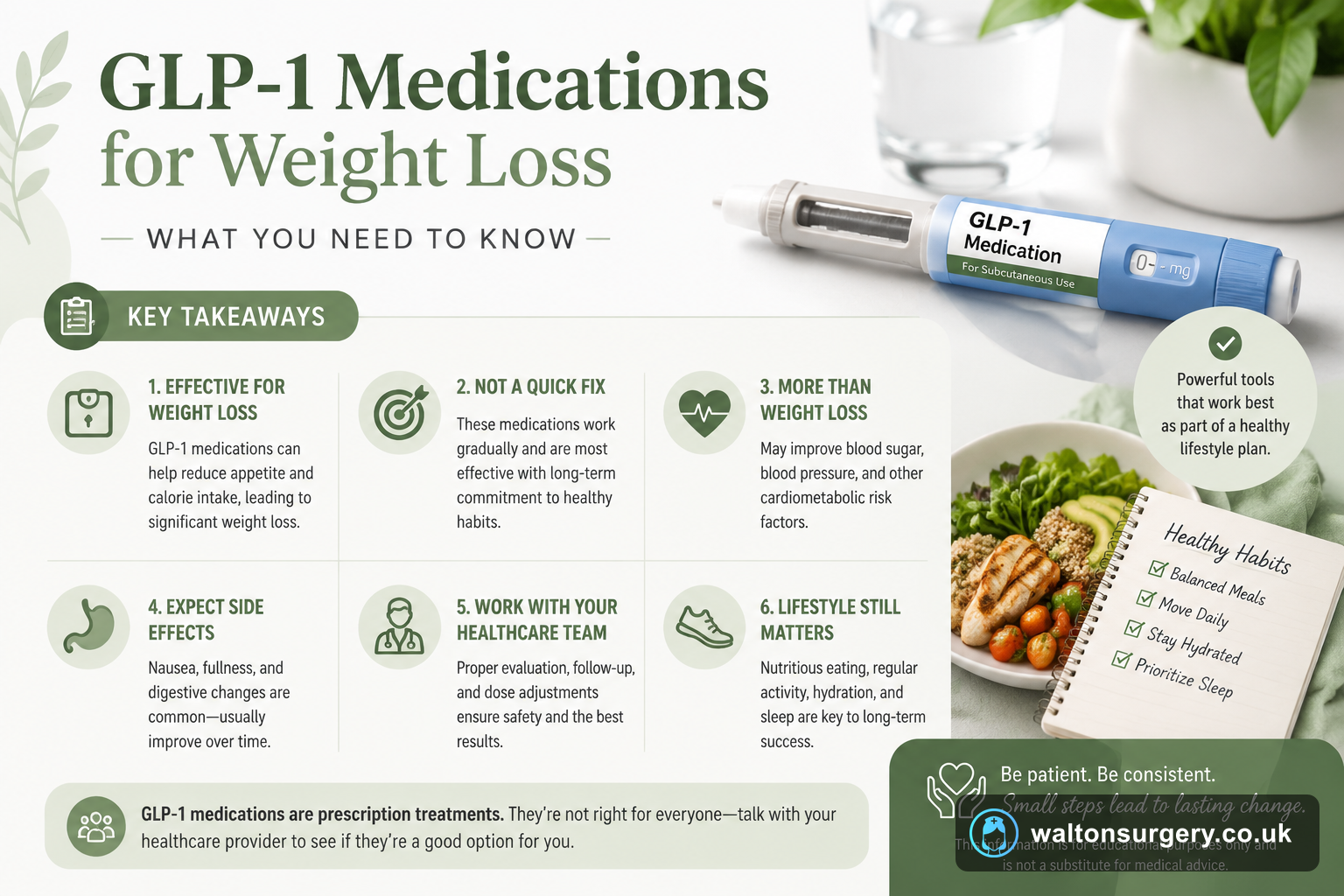
Once you're on the medication, you'll have regular check-ins. These appointments are there to see how you're progressing, deal with any side effects that come up, and tweak the dose if needed. The NHS is clear about one thing: these aren't a quick fix. They're a tool that helps support long-term changes in behaviour, but only when there's proper medical oversight involved.
Understanding the Potential Side Effects
Every medication comes with possible side effects, and GLP-1 drugs are no different. The ones people report most often are stomach-related — nausea, vomiting, diarrhoea, constipation. These tend to ease off as your body gets used to the drug over a few weeks, though the first couple of weeks can be rough.
There are rarer but more serious risks too, including pancreatitis and problems with the gallbladder. Your prescribing doctor should go through all of these with you before you start. If you get any symptoms that feel severe or just won't go away, contact your healthcare provider straight away — don't wait for your next scheduled appointment.
How Do They Fit into a Broader Health Plan?
These drugs are designed to work alongside diet and exercise, not replace them. The NHS says they should be part of a specialist weight management programme that also covers dietary advice, support with physical activity, and behavioural therapy. That combination is what makes the difference.
The idea is that the appetite-suppressing effect of the medication makes it easier to build and stick to healthier habits. Once you stop taking the drug, those habits are what prevent the weight from creeping back on. It's a supportive tool — helpful, but it doesn't do the work for you. Healthy living still has to be the foundation.
🔬 Key Facts
Eligibility & Prescription Rules in the UK
- → NHS eligibility requires a BMI of 35 or higher, or a BMI of 30 with a weight-related health condition.
- → You must have already tried other weight management approaches without sufficient success.
- → A full medical assessment by a GP or specialist is always required before a prescription is issued.
- → These medications are not available for cosmetic reasons — a genuine clinical need must be established.
Frequently Asked Questions
⭐ The Bottom Line
What this means for you
For eligible people in the UK, GLP-1 medications represent a clinically supported option for managing weight. They reduce appetite and are prescribed as part of a broader plan that includes dietary changes and exercise. A prescription is required, along with ongoing medical supervision. Celebrity stories might have brought them to your attention, but the decision to try them should come from a conversation with your GP or a specialist who can assess whether they're a safe and appropriate choice for your particular health circumstances.
Last updated: 2026-08-26 · Written by the Walton Surgery editorial team · Medical information is for educational purposes only and does not replace advice from a qualified healthcare professional.