Ferritin face: can you spot iron deficiency in a face?
PART C — HTML BODY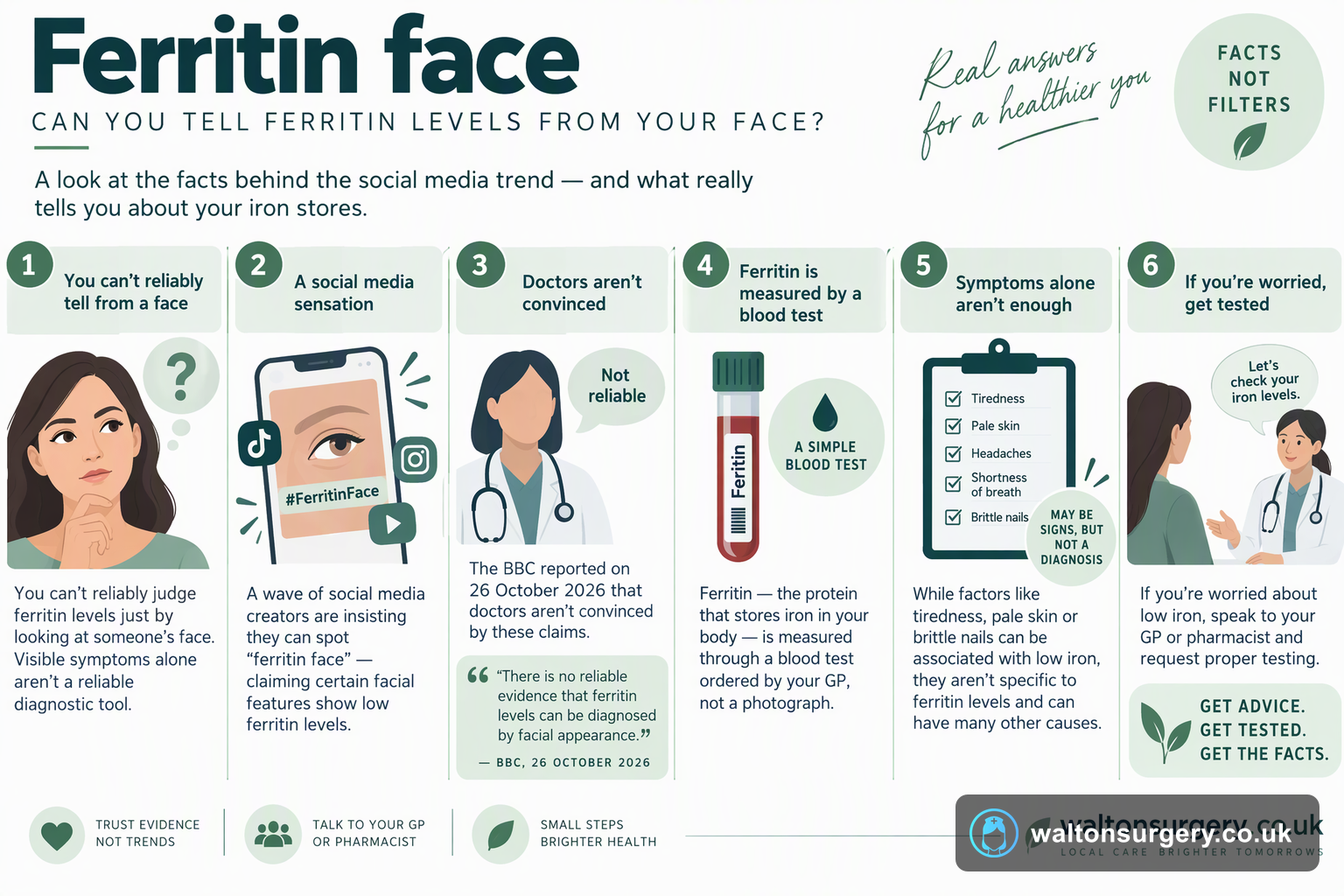
⚡ Quick Answer
You can't reliably judge ferritin levels just by looking at someone's face. A wave of social media creators are insisting they can spot "ferritin face", though the BBC reported on 26 October 2026 that doctors aren't convinced by these claims. Ferritin — the protein that stores iron in your body — is measured through a blood test ordered by your GP, not a photograph. Visible symptoms alone aren't a reliable diagnostic tool. If you're worried about low iron, speak to your GP or pharmacist and request proper testing.
A handful of social media creators reckon they can pick out "ferritin face" — a cluster of visible facial signs that supposedly give away low iron stores. Honestly though, the short answer is no: ferritin levels can't be read off someone's face. The BBC published an article on 26 October 2026 titled "Can you tell ferritin levels from your face?", in which doctors raised doubts about all this.
The BBC also put out a short video going further into how to spot low iron levels properly. If these claims have turned up on your TikTok or Instagram feed and left you wondering whether they apply to you, here's what you should actually know about ferritin and how iron is tested. It sits alongside other health myths we've looked at recently, such as whether does salmonella come from salmon — a question that, like "ferritin face", turns out to need proper evidence rather than a catchy headline.
What is ferritin, and why does it matter?
Ferritin is a protein your body uses to store iron. Picture it as the reserve tank for iron sitting inside you. That iron goes towards making haemoglobin, which is the stuff in red blood cells responsible for ferrying oxygen round your body. Let the reserves run down and you can end up with iron deficiency — and if it carries on, iron deficiency anaemia.
It's worth grasping that ferritin reflects stored iron rather than the iron currently floating around in your bloodstream. That is precisely why a ferritin blood test can flag up low stores before anaemia has set in, which is exactly why proper testing matters. You can't measure this from the outside.
What's happening on social media?
People creating content on TikTok, Instagram and similar platforms have started claiming they can pick up low ferritin from a photograph of someone's face. "Ferritin face" is the term doing the rounds, with users rattling off supposed visual clues. Part of the appeal is obvious — it hints you can self-diagnose for nothing, using nothing but your phone camera.
But popularity isn't evidence. The BBC article published on 26 October 2026 asked the question directly — "Can you tell ferritin levels from your face?" — and reported that doctors aren't so sure about these claims. Which is a fairly gentle way of putting that none of it has clinical backing behind it.
Can you tell ferritin levels from your face?
What the BBC reported
In the Health subsection on 26 October 2026, the BBC published its article, flagging explicitly that doctors aren't convinced by "ferritin face" claims. Alongside it came a one-minute-and-six-second video titled "Can you tell ferritin levels from your face?", which looks at how to spot low iron levels. The piece was tagged under "Diet nutrition" and the Health section.
Why visual diagnosis doesn't work
Faces can look pale or knackered for a whole range of reasons — poor sleep, stress, bad lighting, or plain genetics. Ferritin is a protein storing iron inside your cells and bloodstream, and there is no visual readout of that storage tank on your skin, eyes, or lips. Only a blood test can measure ferritin, because it's a concentration of protein in your blood, not a colour or a shape you can see.
🔬 Key Facts
Why "ferritin face" fails as a diagnostic tool
- → Faces can look pale or knackered for many reasons — poor sleep, stress, bad lighting, or plain genetics.
- → No visual readout exists of iron stores on the skin, eyes, or lips.
- → Ferritin is a blood concentration, not a colour or shape you can see.
- → GPs rule out other conditions first — symptom history, medical background, diet, then bloods.
Ruling out other conditions comes into diagnosing iron deficiency too. A GP doesn't glance at you and declare "ferritin face" — they take a symptom history, ask about your medical background, ask about your diet, and then order bloods. That's the difference between social media content and medical assessment.
How is ferritin actually tested?
The blood test
Ferritin levels get measured through a blood test. Your GP can order one if you're showing symptoms or have risk factors. What the lab does is measure the concentration of ferritin protein in your blood sample, and that produces a number your GP reads alongside other iron studies.
Talking to your GP or pharmacist
Worried about your iron? Book a GP appointment. Chatting to your pharmacist first is also fine if you only want general guidance on iron supplements, though supplements aren't right for everyone — too much iron can be harmful, and there are different forms with different absorption rates. This article is general information, not personalised medical advice. Your GP or pharmacist is the person to speak to for anything specific to you.
What should you do instead of trusting "ferritin face"?
Skip the self-diagnosis
Social media content tends to be built for grabbing attention rather than diagnosing anything. A tidy-sounding hook like "look at someone's face and you'll know their ferritin" is exactly the sort of thing that performs online. Performance, though, doesn't turn into medical fact just because it gets shared a lot. If you're worried about protecting your skin and general health properly, it pays to know what are uv levels uk actually are, rather than guessing from how things look.
Get proper testing
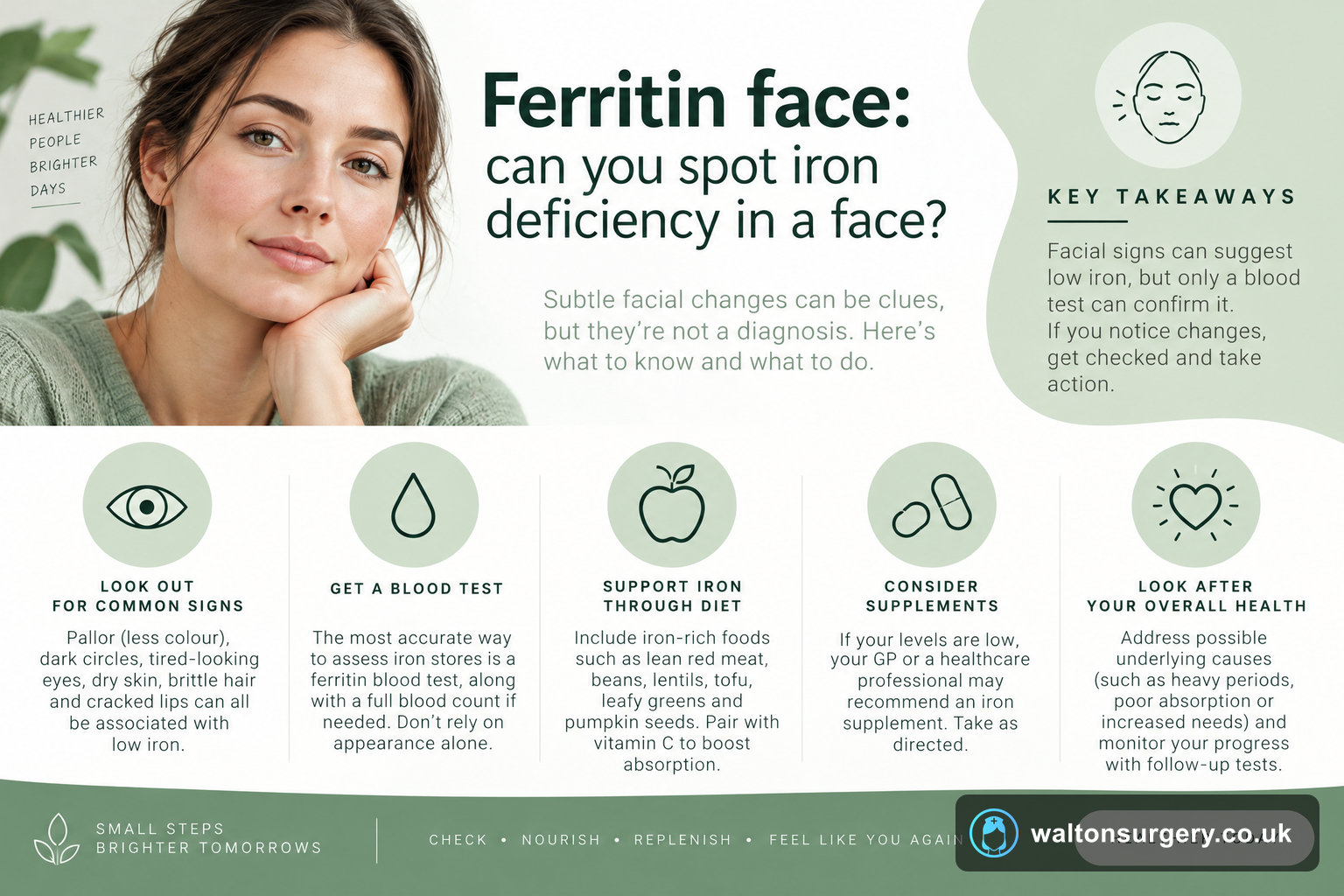
The practical route is straightforward: if you reckon your iron might be low, go and see your GP. Bring up the symptoms (tiredness, shortness of breath, feeling cold, hair changes, or whatever else you've noticed) and ask about iron studies. The BBC's video on spotting low iron levels, published alongside its article on 26 October 2026, sets out the signs that ought to push you towards getting tested — rather than self-diagnosing from a mirror. And while you're at it, it's worth knowing how to get water out of your ear safely uk nhs guidance for the smaller day-to-day health issues that are far better served by reliable information than by viral claims.
Be cautious with self-treating
You can buy iron supplements anywhere, but that doesn't mean they're automatically suitable. Taking iron your body doesn't want can create its own problems. Have a word with a pharmacist or GP before you start on supplements, particularly if you have an existing health condition or are on other medicines.
Frequently Asked Questions
⭐ The Bottom Line
What this means for you
No matter what social media says, ferritin levels can't be picked out of someone's face. "Ferritin face" isn't a clinical diagnosis, and the BBC reported on 26 October 2026 that doctors aren't convinced by these claims. Think you might be low on iron? Skip the camera and see your GP. A blood test is the only way to know your ferritin level. This article is general information — speak to a GP or pharmacist for advice specific to you.
Last updated: 2026-10-26 · Written by the Walton Surgery editorial team · Medical information is for educational purposes only and does not replace advice from a qualified healthcare professional.