Coping with Grief: How to Support Your Mental Health After Loss
PART C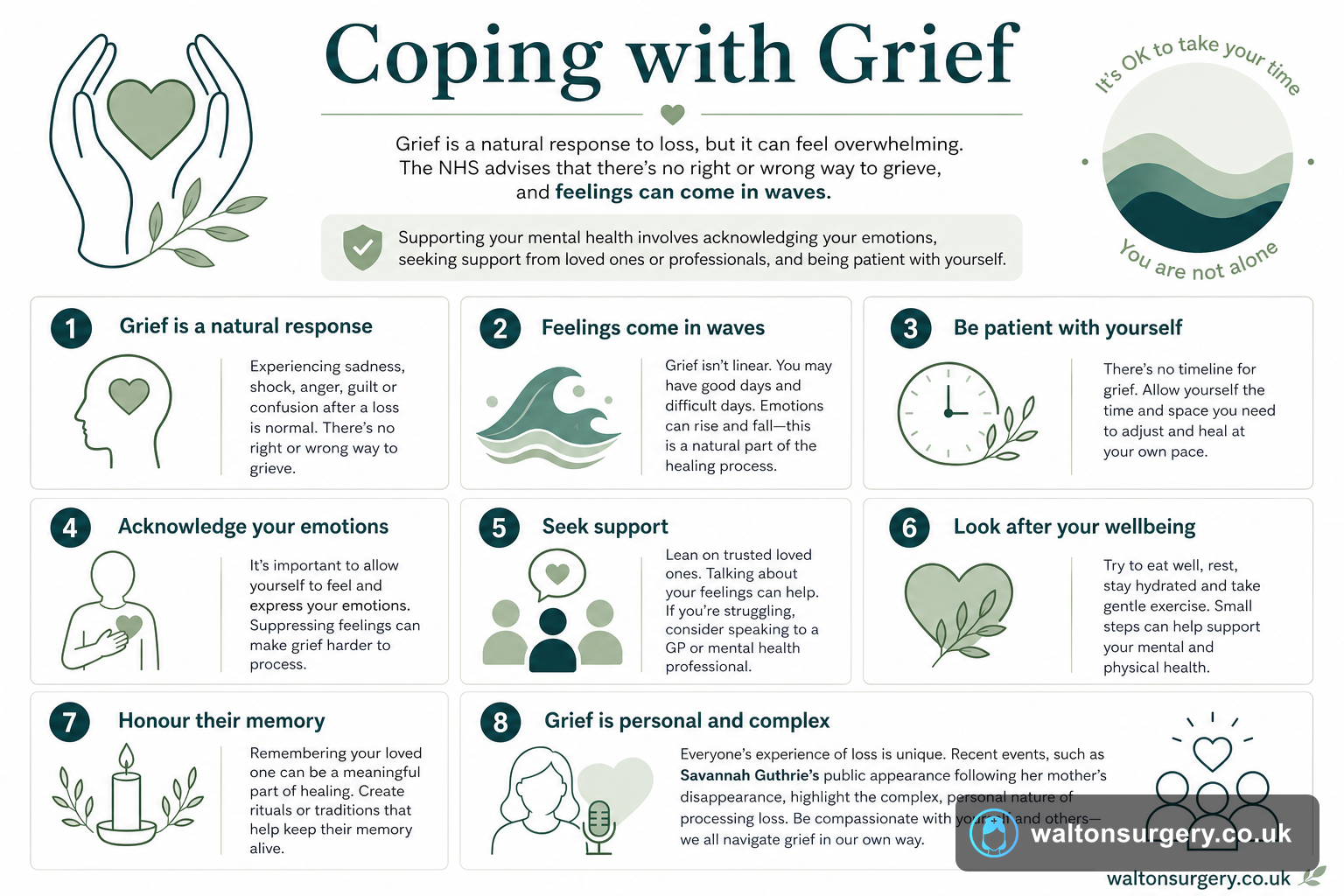
⚡ Quick Answer
Grief is a natural response to loss, but it can feel overwhelming. The NHS advises that there's no right or wrong way to grieve, and feelings can come in waves. Supporting your mental health involves acknowledging your emotions, seeking support from loved ones or professionals, and being patient with yourself. Recent events, such as Savannah Guthrie's public appearance following her mother's disappearance, highlight the complex, personal nature of processing loss.
Losing someone — whether through death or the painful uncertainty of a disappearance — is something that hits every person differently. The NHS makes clear there's no "normal" way to respond, and whatever you're feeling right now is valid. Grief doesn't follow a schedule, and it certainly doesn't look the same for any two people.
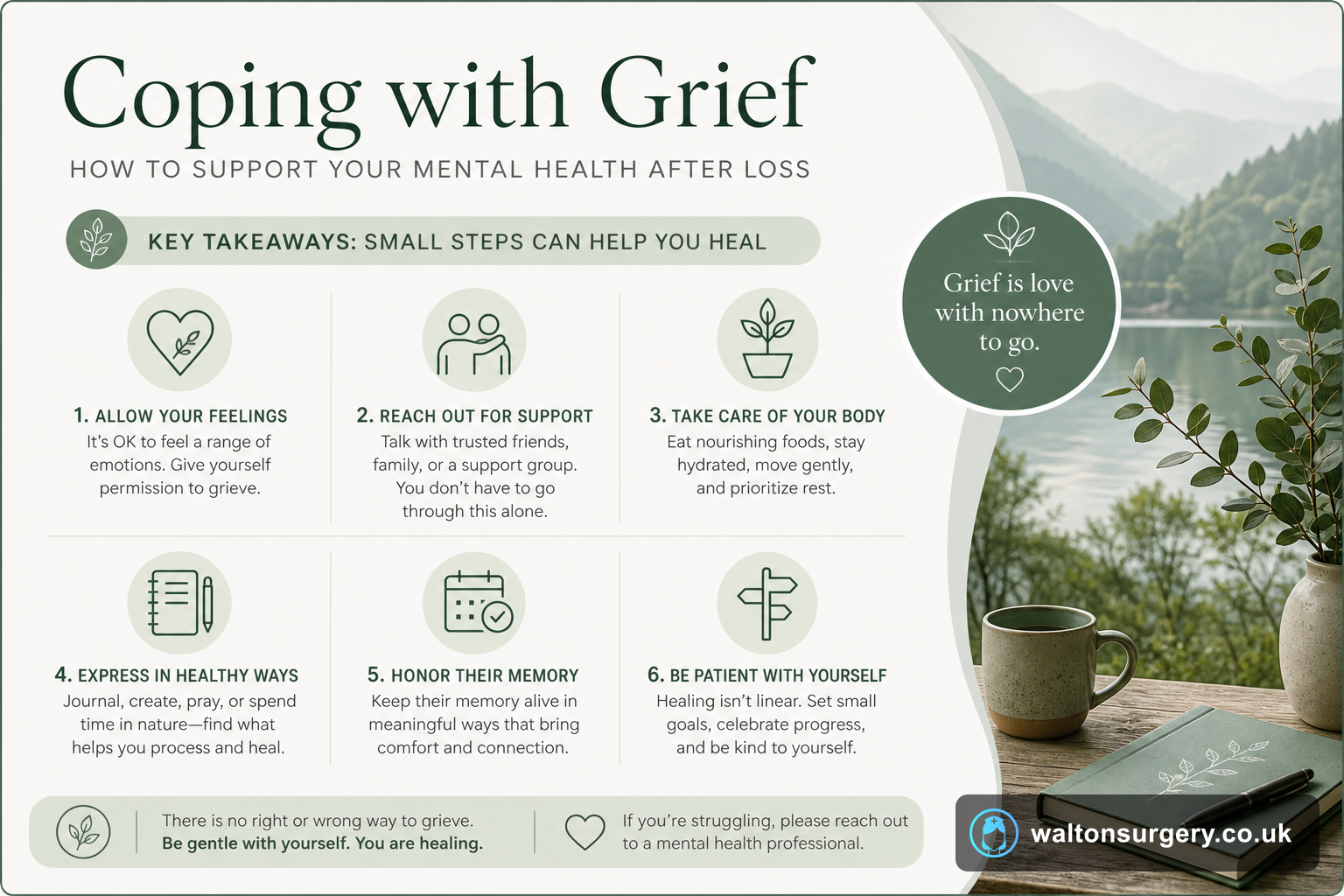
Taking care of your mental health matters during this time, even though it might feel impossible. That means letting yourself feel things without judging yourself for them, and knowing when it's time to ask for help. There are practical things you can do that make getting through each day a bit more manageable, even while you're mourning.
What Does Grief Actually Feel Like?
According to the NHS, grief can bring up a whole mix of emotions — shock, numbness, sadness, anger, guilt, anxiety, sometimes even relief. They can hit hard and shift without warning. Your body might react too: trouble sleeping, not wanting to eat, or just feeling generally rough.
These reactions are normal. There's no deadline for grief, no point where you should be "over it." You might feel alright on Tuesday and completely fall apart on Wednesday. That unpredictability is just part of how grief works, and it doesn't mean you're failing at coping.
How Can You Support Yourself Day-to-Day?
Looking after the basics is a form of self-care when you're grieving. Try to eat something regularly, even if food feels pointless. Drink water. A short walk might help, though don't force it. The NHS page on bereavement, which was updated not too long ago, suggests keeping some kind of routine going — it can give you something to hold onto when everything else feels shaky.
Steer clear of alcohol, cigarettes, or drugs as a way to numb what you're feeling. They might take the edge off for an evening, sure, but they tend to make anxiety and depression worse over time, and they stop you from actually working through your emotions. If you're concerned about how other health factors might be affecting your wellbeing, such as what causes sudden weight loss and thirst, it's always worth speaking to your GP.
Is It Okay to Feel Angry or Guilty?
Absolutely. Anger shows up a lot in grief. You might be furious at the situation, at doctors, at yourself, or even at the person who died. Guilt is just as common — those "if only I'd..." thoughts that circle round and round. Both are painful, but both are normal.
The NHS recommends you acknowledge these feelings instead of shoving them down. Talking to someone you trust about what's going on inside your head can really help. If anger or guilt starts to feel like too much, or it just won't shift, booking in with your GP is a sensible move.
How Do You Cope with Ambiguous Loss?
When someone disappears and there's no clear answer, grief takes on a different shape entirely. There's no finality to cling to, which makes processing things incredibly hard. Broadcaster Savannah Guthrie's experience — returning to work after her mother Nancy's disappearance — shows just how complicated this kind of loss can be. Without answers, the grieving process can feel frozen.
Support becomes even more important in these cases. Counselling services that work specifically with trauma and ambiguous loss can offer strategies for living with the uncertainty. Support groups where you meet others going through something similar might ease that feeling of being completely alone in it.
When Should You Seek Professional Help?
Sometimes grief develops into something more serious — depression, or what's now called prolonged grief disorder. The NHS says you should see your GP if you feel you're not coping, if daily tasks have become a real struggle, or if you're having thoughts of self-harm.
A GP can talk through what you're experiencing and point you towards the right support, whether that's counselling or therapy. This isn't weakness. It's actually one of the most proactive things you can do for yourself when life has thrown something this difficult at you. It's worth noting that mental and physical health are deeply connected — for instance, celebrity health journeys like whoopi goldberg weight loss often bring wider health conversations into the public eye.
🔬 Key Facts
When to See Your GP About Grief
- → Prolonged grief disorder is now recognised as a condition where grief becomes persistent and debilitating.
- → Daily tasks becoming a struggle is a key sign that professional support may be needed.
- → Thoughts of self-harm require immediate contact with a GP or crisis service.
- → Seeking help is proactive, not a sign of weakness — GPs can refer you to counselling or therapy.
How Can You Support Someone Else Who Is Grieving?
If someone you know is bereaved, the best thing you can do is just be there. Listen to them without trying to fix anything. Skip the clichés — "they're in a better place" and "time heals" don't help the way people think they do. Something like "I'm so sorry" or "I'm here whenever you need me" lands much better.
Offering practical help goes a long way too. Cook them something, help sort out paperwork, or just sit with them in silence. And remember: grief doesn't have a timeline. Keep checking in weeks and months later, not just in those first few days when everyone else is around. Sometimes, broader health concerns can also affect someone's capacity to cope — understanding topics like GLP-1 weight loss medication UK can help you be more informed when supporting someone through a difficult period.
Frequently Asked Questions
⭐ The Bottom Line
What this means for you
Grieving is personal, often painful, and there's no manual for it. The NHS advice comes down to this: be kind to yourself and let your feelings exist without trying to judge or control them. Lean on the people around you, keep up with the basics of looking after yourself, and reach out to your GP if things feel like too much. Whether your loss is straightforward or tangled up in ambiguity — like a disappearance — help is out there. You don't have to get through this alone.
Last updated: 2026-08-31 · Written by the Walton Surgery editorial team · Medical information is for educational purposes only and does not replace advice from a qualified healthcare professional.