The Celebrity Traitors: What the Hit Show Teaches Us About Trust
PART C — HTML Body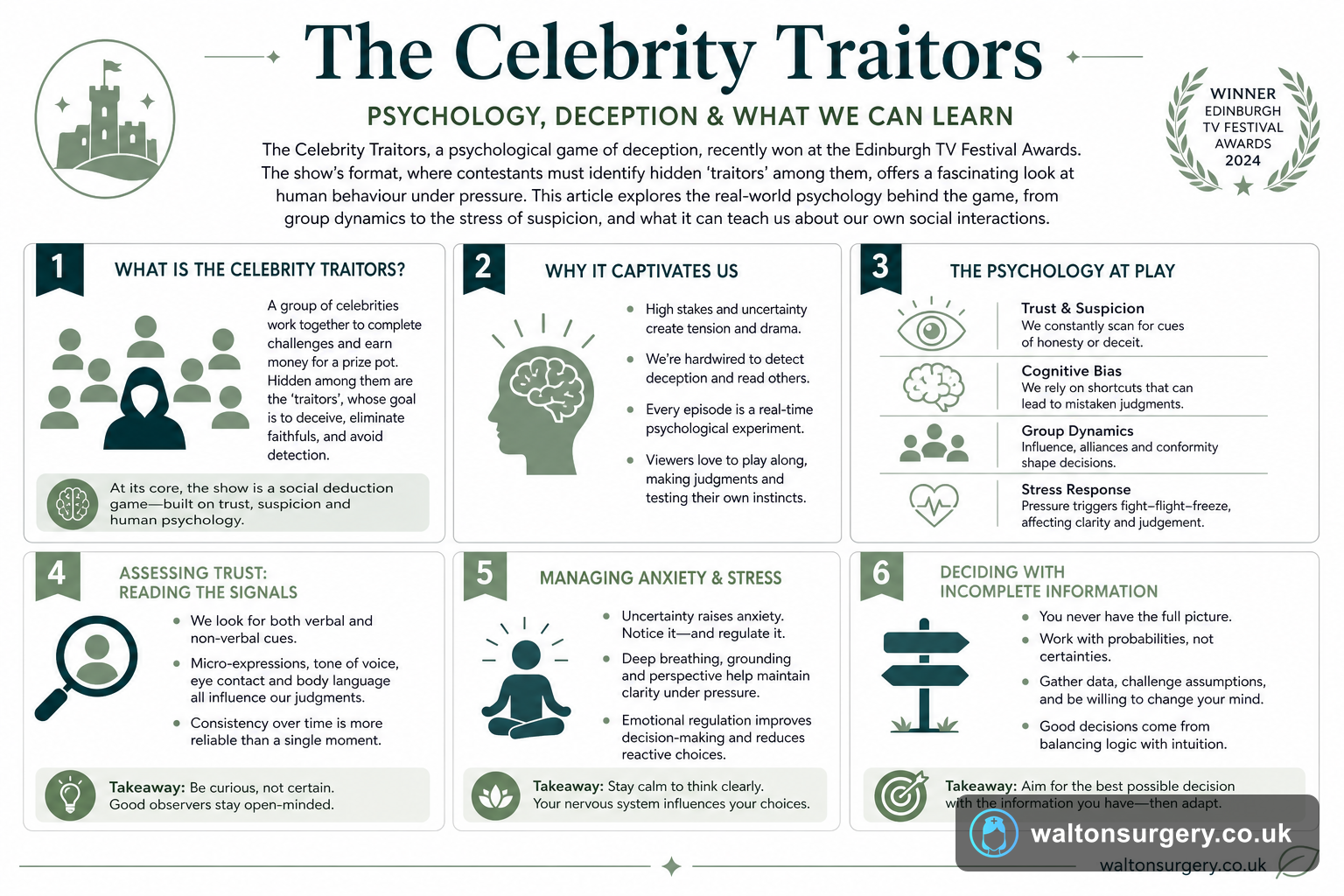
⚡ Quick Answer
The Celebrity Traitors, a psychological game of deception, recently won at the Edinburgh TV Festival Awards. The show’s format, where contestants must identify hidden 'traitors' among them, offers a fascinating look at human behaviour under pressure. It highlights how we assess trust, manage anxiety, and make decisions with incomplete information. This article explores the real-world psychology behind the game, from group dynamics to the stress of suspicion, and what it can teach us about our own social interactions.
A show built on suspicion and lies has taken home a prize from the Edinburgh TV Festival Awards. The Celebrity Traitors puts a group in a situation where they have to figure out who among them is secretly working against the group. It's a high-pressure setup that makes for a fascinating watch, but it's also a live demonstration of human psychology. The game forces everyone, contestants and viewers, to constantly question who they can believe.
This isn't just a bit of fun on the telly. It's a mirror to the social dynamics we all deal with. The tension on screen taps into real anxieties about who to trust and what to do when you feel exposed, much like the stress seen in celebrity divorce stress health effects. By looking at the strategies and emotional reactions on display, we can learn something about the basic ways we build and break trust in our own lives.
What Exactly Is The Celebrity Traitors?
The Celebrity Traitors is a reality competition where famous people live together and work on challenges to build up a cash prize. The twist is that a few of them are secretly chosen as 'Traitors'. Every night, these Traitors 'murder'—that is, eliminate—one of the 'Faithful' contestants. The people left then have a meeting to discuss and banish someone they think is a Traitor. The game finishes when either all the Traitors have been found and kicked out, or when the Traitors outnumber the Faithfuls. The show's recent win at the Edinburgh TV Festival Awards shows how much it's connected with people and how powerful its psychological game is.
The Psychology of Suspicion and Anxiety
Living with that kind of suspicion hanging over you, like the contestants do, is a massive source of stress. The NHS points out that not knowing what's going to happen and feeling like you have no control are common things that set off anxiety. In the game, every chat gets picked apart, and every little action could be a clue. This kind of environment can make your body's stress response kick in harder, things like a faster heartbeat and being on constant high alert.
For us watching at home, the tension is second-hand but it still feels real. Seeing other people deal with that pressure can trigger our own stress responses through empathy. It's a good reminder that places full of distrust, whether that's at work or in your friend group, can actually affect your mental health. The show makes the internal feeling of being suspicious visible and dramatic for everyone to see.
How Do We Decide Who to Trust?
Trust isn't a simple maths problem; it's a messy social judgment. The people on The Celebrity Traitors use a combination of what someone says and how they act to make their calls. They listen for when stories don't quite add up, watch for fidgety body language, and see how someone acts during group tasks compared to when they're talking one-on-one.
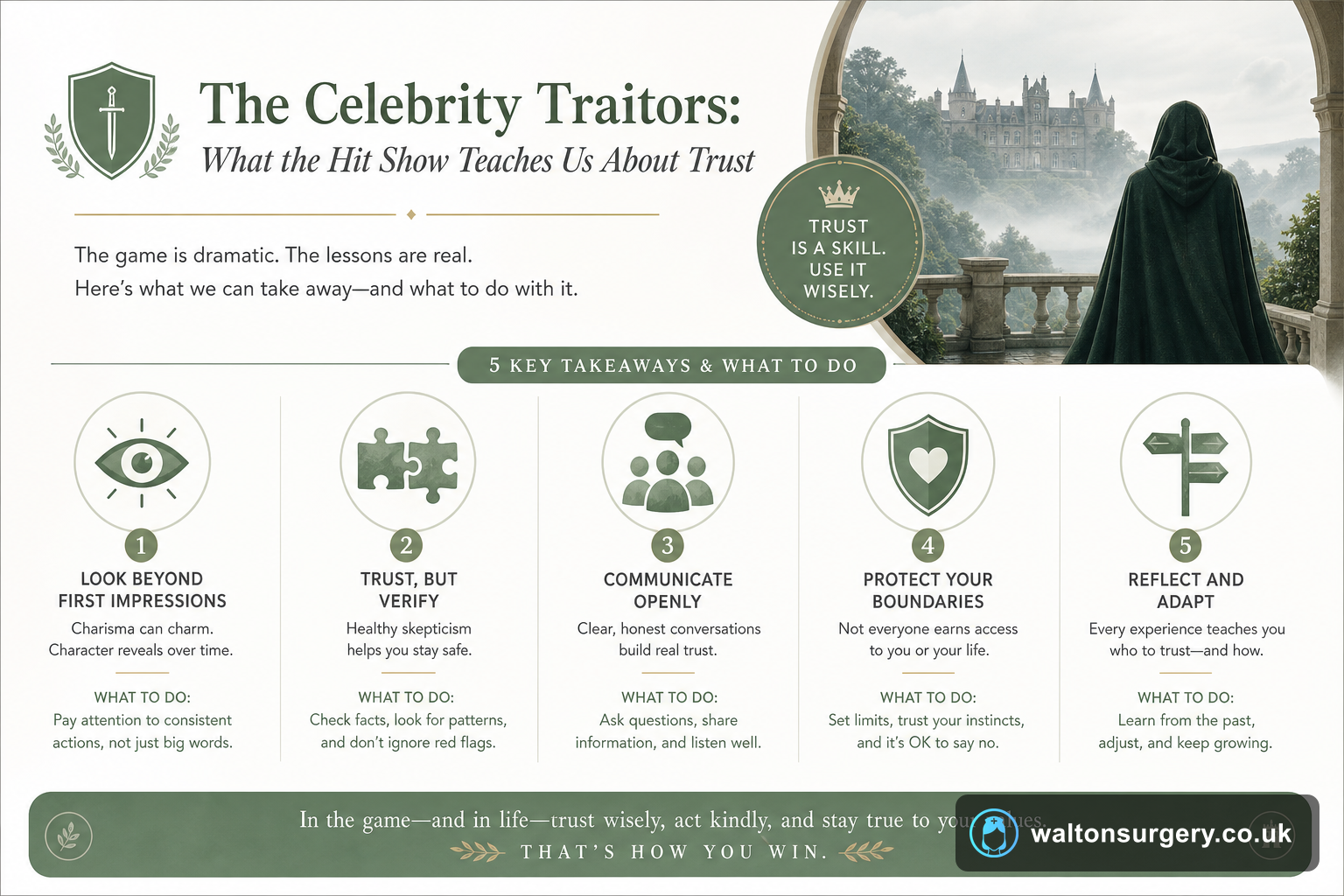
We do the same thing in our daily lives, just usually without the cameras. We lean on past experiences, what we've heard about someone, and that gut feeling. The show proves that trust often comes down to seeing consistency and reliability. When what a person says doesn't match what they do, or their behaviour changes out of the blue, it sets off alarm bells. That's a rule that works way beyond a TV game.
Group Dynamics Under Pressure
The banishment round is a textbook example of how groups make decisions when they're stressed. With not much to go on, the group has to agree. This often leads to alliances forming, rumours spreading, and something called 'groupthink', where everyone wants to get along so much that they stop looking at the options properly.
The British Psychological Society has noted that these kinds of dynamics can lead to bad choices, because people who disagree might keep quiet. In the show, a really convincing but wrong accusation can take off, and an innocent Faithful gets banished. It's the same in real life, from jury rooms to company boardrooms, where pressure from others can mess with good judgment.
The Role of Deception and Self-Presentation
For the Traitors, the whole game is about keeping up a lie. They have to be really careful about how they come across, watching their words, their tone, and their body language so they don't get caught. This takes a lot of mental energy and emotional control.
From a psychology point of view, this is about 'impression management'. We all do it a bit, changing how we act depending on who we're with. But the Traitors have to do it with a secret aim. Watching their tactics—like pointing the finger at someone else or pretending to be upset—can make us more aware of the subtle ways people present themselves in everyday life, a dynamic also seen in discussions around celebrity health privacy boundaries.
What Can We Learn About Our Own Behaviour?
The show acts like a mirror for our own habits. Are you someone who trusts easily, or are you always a bit doubtful? How do you react when you feel accused? The Celebrity Traitors shows that our reactions to suspicion are pretty deep-seated. Some people get more cooperative, looking for proof, while others get more aggressive or just shut down.
It also shows how powerful a good story can be. The contestants who spin the most convincing tale about who the Traitors are often win the group over, even if the facts don't back them up. That's a useful lesson in thinking critically: to tell the difference between a persuasive story and evidence you can actually check. We can use that when we're looking at the news or information we come across every day, from celebrity cancer fundraising claims to viral social media posts.
🔬 Key Facts
The Psychology of Suspicion
- → Stress Response: Uncertainty and lack of control are common anxiety triggers, causing physical symptoms like a faster heartbeat.
- → Empathetic Stress: Watching others under pressure can trigger our own stress responses through empathy.
- → Groupthink: Pressure to conform can lead to poor decision-making, as dissenting voices are silenced.
- → Impression Management: Traitors use significant mental energy to control their self-presentation and avoid detection.
Frequently Asked Questions
⭐ The Bottom Line
What this means for you
The Celebrity Traitors, which won at the Edinburgh TV Festival Awards, is more than just a game. It's a gripping look at trust, anxiety, and how groups behave that hits home because it shows real social dynamics. The stakes might be fake, but the psychological reactions are genuine. Watching it can be a lesson in thinking for yourself and knowing yourself better, a nudge to question the stories we're told and understand our own reactions to suspicion. If the themes hit too close to home and cause you distress, it's always a good idea to have a chat with your GP.
Last updated: 2026-09-02 · Written by the Walton Surgery editorial team · Medical information is for educational purposes only and does not replace advice from a qualified healthcare professional.