Can Anyone Get Breast Cancer? Risk and Symptoms Explained
⚡ Quick Answer
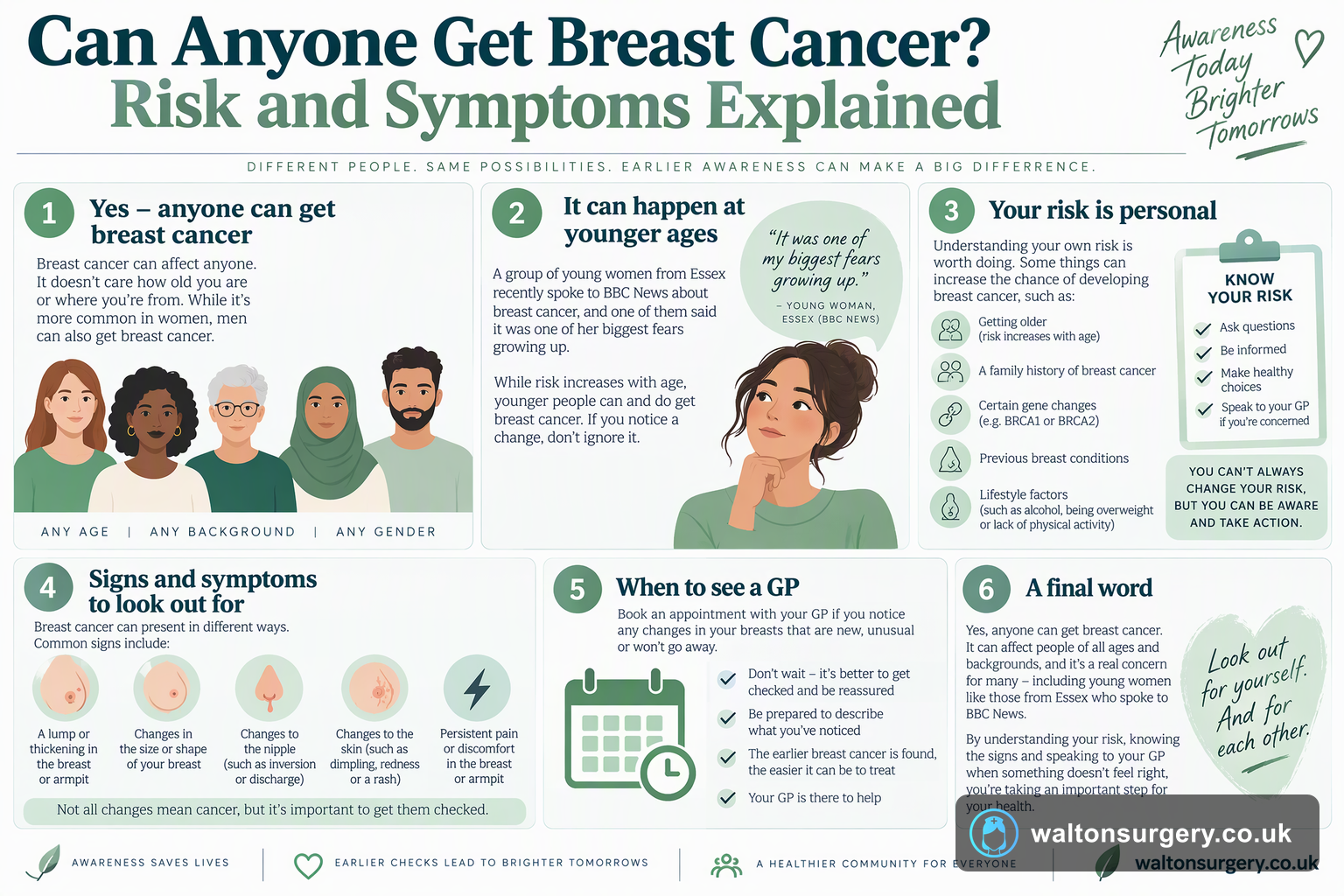
Yes, anyone can get breast cancer. It doesn't care how old you are or where you're from. A group of young women from Essex recently spoke to BBC News about it, and one of them said breast cancer was one of her biggest fears growing up. Which is exactly why understanding your own risk is worth doing. What follows covers who gets affected, what signs to watch out for, and when you should book in with a GP.
Anyone. Any age, any background. That's the short answer. Harriet Tsadioti, one of the young Essex women featured in a recent BBC News report, put it like this: "Always remember, cancer doesn't discriminate." Breast cancer was one of her biggest fears while growing up, and that fear is shared by plenty of people.
If you've been Googling your own risk at two in the morning, that quote is probably a useful thing to hold on to. Here we look at what's known about who gets breast cancer, why being young doesn't protect you, and what to do if something doesn't feel right.
What Does "Anyone Can Get Breast Cancer" Actually Mean?
There's no single profile. No one type of person who gets breast cancer and nobody else who doesn't. People of all ages, all backgrounds, all lifestyles can be affected. The young women in that BBC News report were — as the headline makes plain — young, and what they went through shows that breast cancer isn't something that only happens to older women.
For Harriet Tsadioti the fear was there long before the diagnosis. And that fear isn't irrational, though it isn't a reason to panic either. It's more of a nudge. Once you accept that anyone can be affected, sensible next steps follow: learn the signs, go to screening when you're invited, and tell a GP if something changes. For anyone following high-profile diagnoses in the news, our jessie j cancer free breast cancer mastectomy update 2026 covers what recovery can look like.
Who Gets Breast Cancer?
Age is a factor — but not a shield
Different life stages, different risks — breast cancer shows up across the board. The BBC News piece centred on young Essex women precisely because their diagnoses went against the grain of the assumption that this is purely an older person's illness. Young doesn't equal safe.
Background and lifestyle
Bluntly: cancer doesn't discriminate, and Harriet Tsadioti is right to hammer that point. It won't skip you because of your postcode, your job, or the fact that you feel well. Talking about "the type of person" who gets breast cancer tends to mislead, and frankly your attention is better spent on what your own body is doing than on trying to match a stereotype.
🔬 Key Facts
Who gets breast cancer — the realities
- → No single profile exists — people of all ages, backgrounds and lifestyles can be affected
- → Young doesn't equal safe — the BBC News report featured young Essex women whose diagnoses went against the grain
- → Men get breast cancer too — the same symptoms and the same need for prompt assessment apply
- → Cancer doesn't discriminate — as Harriet Tsadioti told BBC News: "Always remember, cancer doesn't discriminate"
Can Men Get Breast Cancer Too?
Yes. Men get breast cancer too, which is part of what "anyone can get breast cancer" means in practice. The symptoms and the need for prompt assessment are the same whether you're male or female. A change in the chest or nipple area is something your GP would want to hear about, regardless of your sex.
Why Awareness Matters More Than Reassurance
What the Essex women's accounts share is this: for them, breast cancer was lived experience, not a line on a chart. For Harriet Tsadioti it was a lifelong worry, and then it happened anyway. Worry on its own doesn't protect you. Awareness does.
On a practical level that comes down to three things: get to know how your breasts normally look and feel, don't brush off a change just because of how old you are, and don't sit back hoping something will "settle down" by itself. Speaking to a GP early always beats speaking to them late. Always. Understanding the different forms the disease can take also helps — our explainer on luminal breast cancer what is it sets out one of the most common types.
What Should You Look Out For?
The NHS page on breast changes, which is kept fairly up to date, sets it out plainly: get familiar with the normal look and feel of your breasts so any change jumps out. Worth mentioning to a GP:
• A new lump or thickening in your breast or armpit
• A change in the size, shape or feel of your breast
• Skin changes such as puckering, dimpling, redness or a rash on the breast
• Changes to the nipple, including pulling inward, a rash, or discharge you haven't had before
• Pain that's new, persistent and in one area
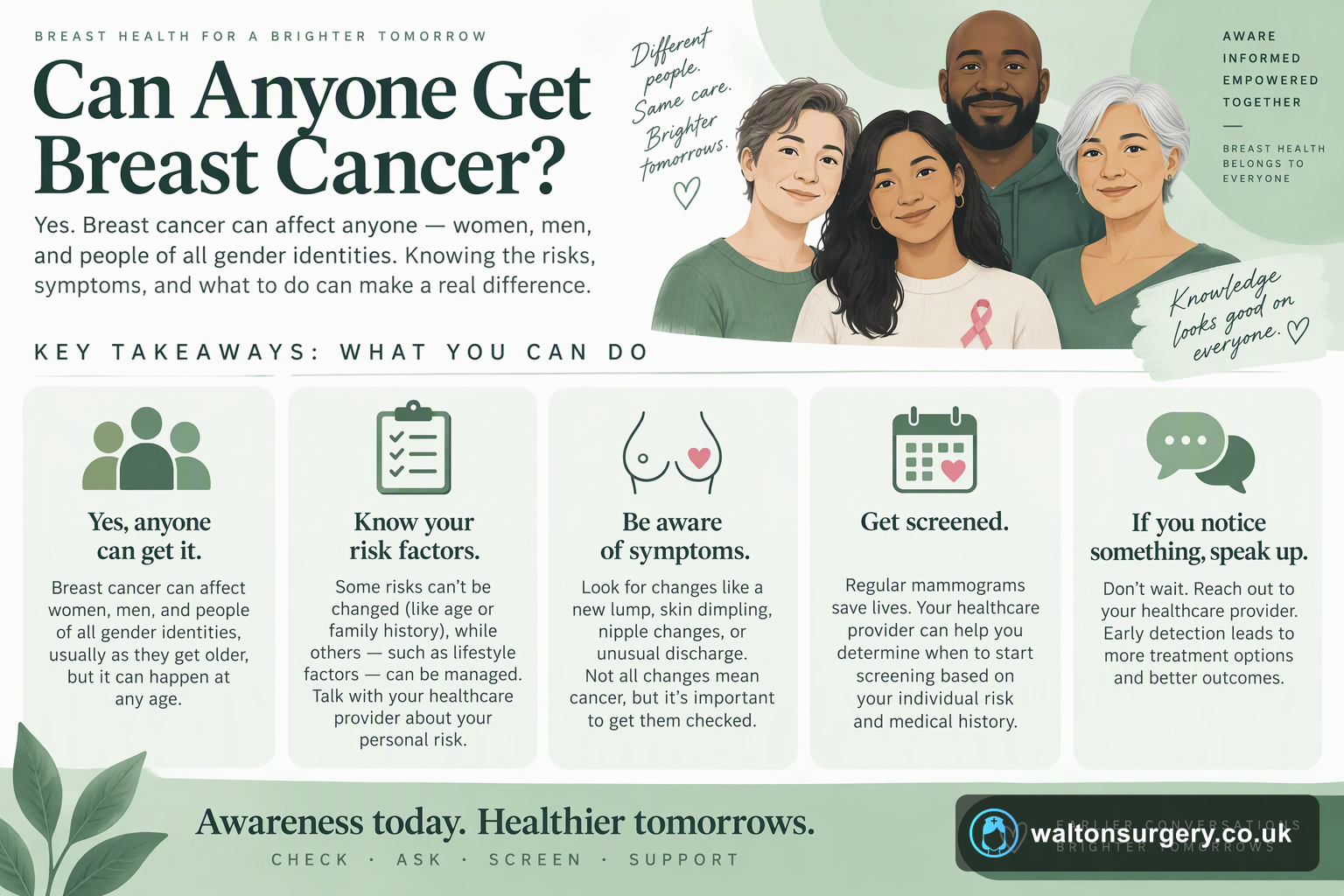
The vast majority of breast changes aren't cancer. Only a GP can tell you that with any certainty though. This piece is general information and not medical advice aimed at you personally — if something's nagging at you, get an appointment booked.
Should You See a GP or Wait?
Book in with a GP as soon as you notice anything new or unusual. You don't need to be certain it's something serious. Nor do you need to sit and wait for a screening letter to drop through the door. GPs deal with breast changes day in, day out, and they would far rather see you sooner than later. For context on how the national programme works and what the latest government plans mean for breast cancer screening UK, see our news explainer.
Don't fancy starting with your own GP? NHS 111 can point you in the right direction. Pharmacists are worth a word for minor skin or breast-related things too, although any lump, any persistent change, or any nipple change needs to be assessed by a doctor.
Frequently Asked Questions
The Bottom Line
Anyone can get breast cancer. "Always remember, cancer doesn't discriminate," as Harriet Tsadioti told BBC News. And that isn't an instruction to live in fear. It means knowing your body, not waving away a change because of your age, and going to a GP when something feels different. Turn up for your screening invitations too. All of this is general information, not advice tailored to you.
⭐ The Bottom Line
What this means for you
Anyone can get breast cancer. "Always remember, cancer doesn't discriminate," as Harriet Tsadioti told BBC News. And that isn't an instruction to live in fear. It means knowing your body, not waving away a change because of your age, and going to a GP when something feels different. Turn up for your screening invitations too. All of this is general information, not advice tailored to you.
Last updated: 2026-10-23 · Written by the Walton Surgery editorial team · Medical information is for educational purposes only and does not replace advice from a qualified healthcare professional.