Breast Milk Donation: How It Works and Who It Helps in the UK
PART C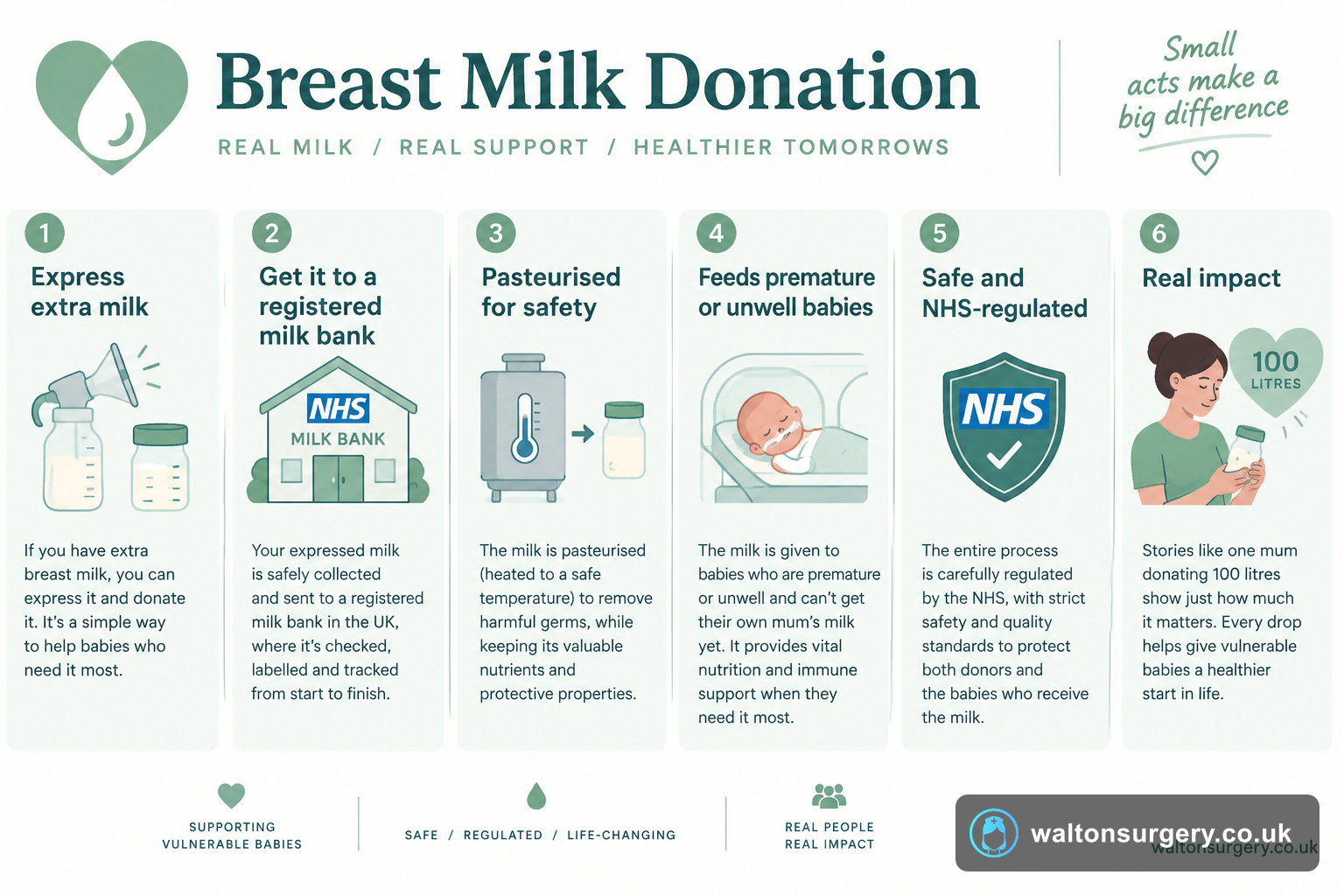
⚡ Quick Answer
Donating breast milk in the UK is all about expressing any extra you have and getting it to a registered milk bank. There, it's pasteurised and given to babies who are premature or unwell and can't get their own mum's milk yet. It's a safe, NHS-regulated process, and stories like one mum donating 100 litres really show how much it matters.
So you're breastfeeding and making more milk than your little one needs. That surplus could make a real difference for a newborn who's struggling. Here in the UK, the whole thing runs through milk banks that work with the NHS. Your expressed milk gets pasteurised, then sent out to neonatal units where babies need it most. If you are looking for related health information for your family, our guide on breast cancer signs and symptoms is a great place to start.
Emma from Birmingham made the news after she donated an astonishing 100 litres of breast milk. She called it "such a worthwhile thing to do." Her case is exceptional, sure, but it does highlight something that doesn't get talked about enough. There are quiet, generous donors up and down the country, and their milk genuinely helps babies in hospital.
What Is Breast Milk Donation and Why Does It Matter?
When you donate breast milk, you're giving your expressed milk to a registered milk bank rather than keeping it all for your own baby. The milk bank takes over from there. They pasteurise it to kill off any bacteria or viruses, and then it gets sent to hospitals that need it.
Why should anyone care? Well, some newborns, especially those born early or with health problems, can't get their mother's milk right away. In those situations, donated human breast milk is genuinely the best alternative. It carries antibodies and nutrients and protective stuff that formula just doesn't match. Not the same thing, no matter what the tin says.
The NHS treats donor breast milk as an important part of neonatal care. It's used when a baby's mother is poorly herself, hasn't begun producing milk, or simply isn't making enough. For very tiny or premature babies, human milk can lower the chances of a nasty gut problem called necrotising enterocolitis, or NEC. That's not a small thing.
Who Can Donate Breast Milk in the UK?
It's not true that you need some sort of super-supply to qualify. The criteria are actually wider than most people think. Typically, UK milk banks will consider you if you meet these conditions:
- Are in good general health
- Are breastfeeding a baby under 12 months old (some banks accept up to 15 months)
- Don't smoke or use nicotine replacement products
- Aren't taking certain medications (your milk bank will check this)
- Are willing to have a small blood test to screen for infections
You absolutely don't need to be pumping litres a week. Mothers with modest surpluses can help too. Emma's 100 litres is something else entirely, but every donation has value. Some people manage just a few litres over several months, and that milk still gets to the babies who need it. It all counts.
How the Milk Donation Process Works Step by Step
Honestly, the process is simpler than a lot of people expect.
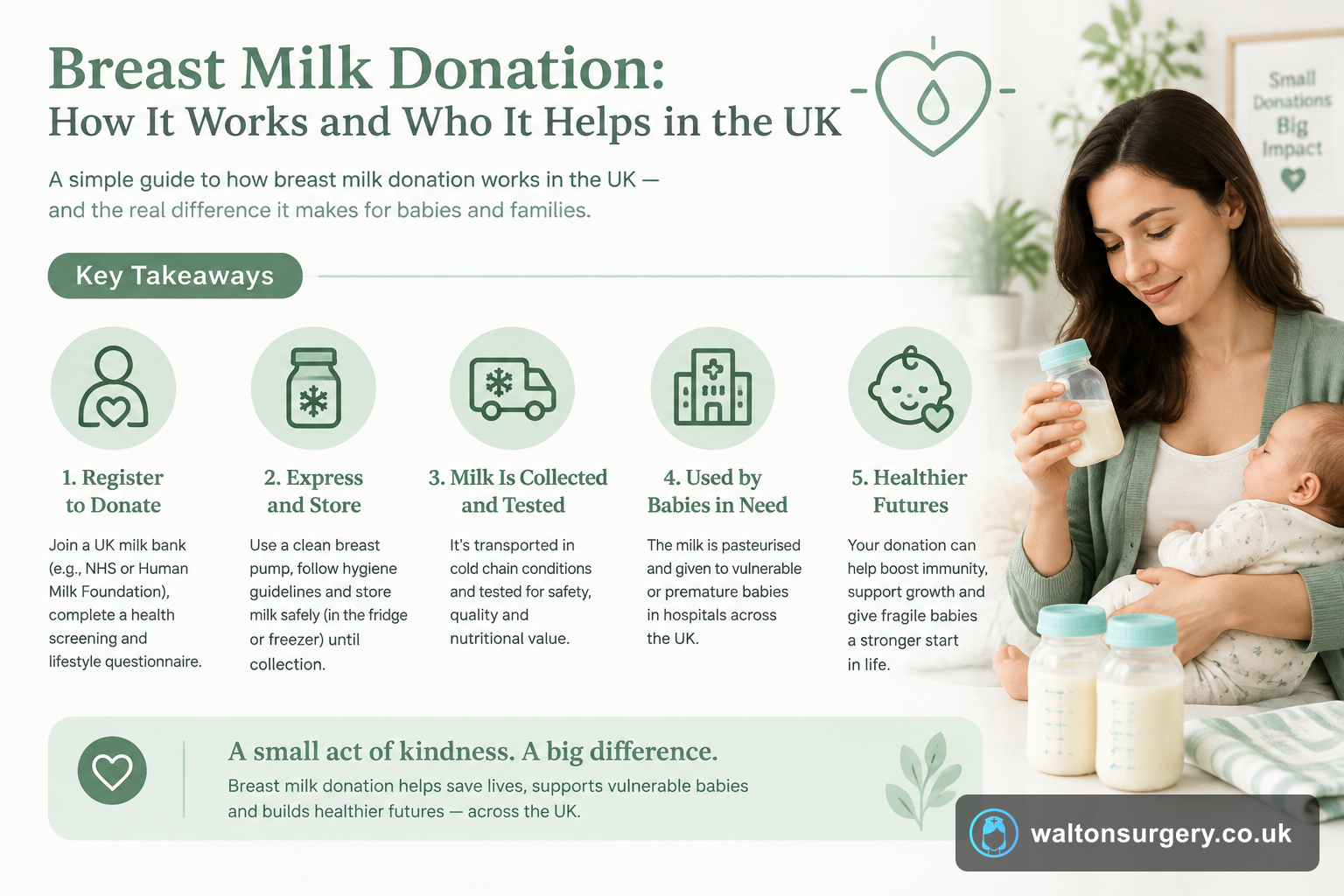
First thing to do is get in touch with your nearest NHS milk bank. The UK Association for Milk Banking, or UKAMB, has a list on their website. Alternatively, ask your midwife or health visitor. You'll fill out a health questionnaire and usually get a blood test arranged through your GP or hospital. That's the screening bit. Awareness of your own health is important, and for further reading on this topic, you might find our guide to clea shearer breast cancer diagnosis helpful.
Once you're approved, the milk bank sends you sterilised containers and gives you clear instructions on expressing and storing milk safely at home. You express whenever it fits into your day, freeze the milk, and then either arrange for someone to collect it or drop it off yourself at a designated point.
The milk bank then pasteurises what you've donated. They use something called Holder pasteurisation, which heats the milk enough to kill harmful organisms but keeps a lot of the good stuff intact. After that, it's frozen and stored until a hospital puts in a request.
Where Does Your Donated Milk Go?
Your donated breast milk ends up mainly in neonatal intensive care units and special care baby units around the UK. The babies in these places are often very premature or they're getting over surgery or dealing with some illness.
It doesn't just get handed out to any baby on the ward. Hospitals ask for it for particular patients where the clinical team has worked out there's a genuine need. The priority is always the most vulnerable infants. That means babies born before 32 weeks, babies with very low birth weight, or babies who are having gut or feeding difficulties.
Some milk banks do help with community cases too, though that happens less often. If you want to know roughly where your donations end up going, your milk bank should be able to tell you. They won't usually give names, obviously, but they can give you a general idea.
What Are the Benefits of Donated Breast Milk?
Donor breast milk isn't exactly the same as what a mother makes for her own baby, but it's a whole lot closer to it than any formula. For premature babies specifically, it can:
- Lower the risk of necrotising enterocolitis (NEC), a dangerous bowel condition
- Support the development of the immune system
- Be easier to digest than formula, especially for very small babies
- Provide beneficial bacteria that help colonise the infant gut
🔬 Key Facts
Benefits for Vulnerable Babies
- → Lowest NEC Risk: Human donor milk significantly lowers the risk of necrotising enterocolitis (NEC), a dangerous bowel condition common in premature babies.
- → Immune Support: It provides crucial antibodies and nutrients that formula cannot replicate, supporting a baby's developing immune system.
- → Easier Digestion: Donated milk is gentler on tiny tummies, making it ideal for very small or ill babies who struggle with digestion.
- → Gut Health: It contains beneficial bacteria that help colonise the infant gut, promoting long-term digestive health.
The NHS and bodies like UKAMB point to these advantages as the main reason donor milk gets used in neonatal care. It's not meant to replace a mother's own milk when that's available, but it bridges the gap when there's nothing else. And that gap matters more than people realise. It is also crucial for mothers to stay on top of their own health; for instance, you can learn more about breast cancer screening young women nhs through our other resources.
Frequently Asked Questions
The Bottom Line
⭐ The Bottom Line
What this means for you
Giving your breast milk through the UK system is safe, properly regulated, and honestly one of the most direct things you can do for a vulnerable newborn. If you've got surplus milk and you meet the basic health criteria, your local NHS milk bank will walk you through it. Emma's story is proof that even regular, modest donations build into something remarkable. It won't suit every mother. But for those who it does suit, it's hard to think of a more tangible way to support a baby's earliest days.
Last updated: 2026-10-01 · Written by the Walton Surgery editorial team · Medical information is for educational purposes only and does not replace advice from a qualified healthcare professional.