Braille Literacy: Why Reading with Fingers Matters for Blind Children
PART C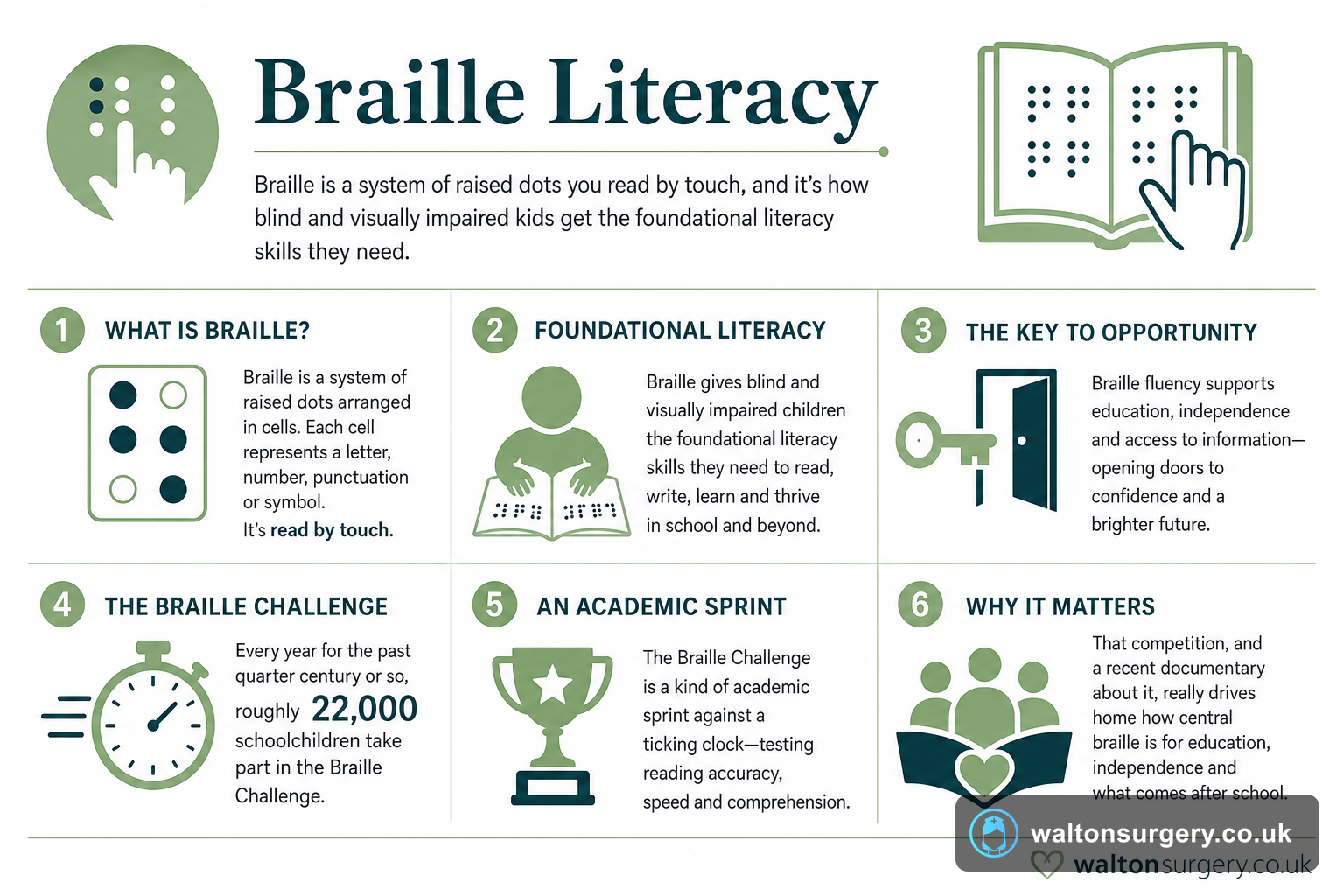
⚡ Quick Answer
Braille is a system of raised dots you read by touch, and it’s how blind and visually impaired kids get the foundational literacy skills they need. Every year for the past quarter century or so, roughly 22,000 schoolchildren take part in the Braille Challenge — a kind of academic sprint against a ticking clock. That competition, and a recent documentary about it, really drives home how central being fluent in this system is for education, independence, and what comes after school.
For blind and visually impaired children, Braille is basically a direct line to literacy. It’s the foundation that makes education and independence possible. Using just the pads of their fingers, these kids can decode a tactile system of raised dots, giving them a way into the same written world that sighted people access through print.
How big a deal is this skill? Look at something like the Braille Challenge. For 26 years running, this event has drawn around 22,000 blind and visually impaired schoolchildren from across the globe, all treating Braille fluency as something worth competing over — a serious, academic thing.
What Exactly Is the Braille System?
So, Braille itself is just a grid of raised bumps arranged in small rectangular cells. Each cell stands for a letter, a number, or a piece of punctuation. A person moves their fingers across these cells to read what’s there. It’s been around since the 1800s, and it’s not a language on its own — it’s a code that can be used to write any language.
For a young child, picking up Braille is actually pretty similar to the process a sighted kid goes through with print. They start by memorising what each dot pattern means for each letter, and over time they move on to recognising whole words at a glance and grasping how sentences are put together.
Why Is Early Exposure So Important?
Getting children familiar with Braille early on is, honestly, one of the most important things you can do for building fluency. Think about how sighted children are surrounded by written words everywhere they look — the same principle applies here. Blind kids do better when their environment is full of Braille-labeled things and tactile books from a young age.
It’s not just about learning letters. Early contact builds up the tactile sensitivity and the mental pathways that make reading feel natural later. It makes Braille seem like the normal way to communicate and learn, which is exactly the mindset that sets a child up to do well in school.
The Braille Challenge: Turning Literacy into a Competition
If you want a real demonstration of how much Braille matters, the Braille Challenge is it. For 26 years, this event has brought together about 22,000 blind and visually impaired schoolchildren worldwide. It’s a serious test of literacy, and the clock is always ticking, quite loudly.
Think of it as having the spectacle of a Model UN gathering but with the academic pressure of a final exam. Students are tested on reading comprehension, spelling, proofreading — the kind of skills that push them to sharpen their abilities and actually take pride in what they can do.
🔬 Key Facts
The Braille Challenge by the Numbers
- → 26 years running — a quarter-century of competition history.
- → 22,000 participants — schoolchildren join worldwide annually.
- → Core skills tested: Reading comprehension, spelling, and proofreading.
- → A recent documentary ‘Brailled It’ captured the event's intensity.
More Than Reading: Building Confidence and Community
But structured events like the Braille Challenge don’t just measure what you know. They also build you up, giving blind children a real sense of community and self-belief. Connecting with other kids who are also good at Braille can cut through the loneliness some feel, and it shows them what hard work can actually achieve.
A recent documentary called ‘Brailled It’ was created by blind students who followed participants in the Challenge. According to reports, the film’s creators were “stunned by the footage” — amazed by the sharp focus and ability on display. The whole project points to something powerful: that Braille literacy gives children the tools to share their own experiences with the world. However, external pressures still exist; for example, the effects of racist abuse mental health effects children can compound the isolation that visually impaired children sometimes face.
How Can Parents and Carers Support Braille at Home?
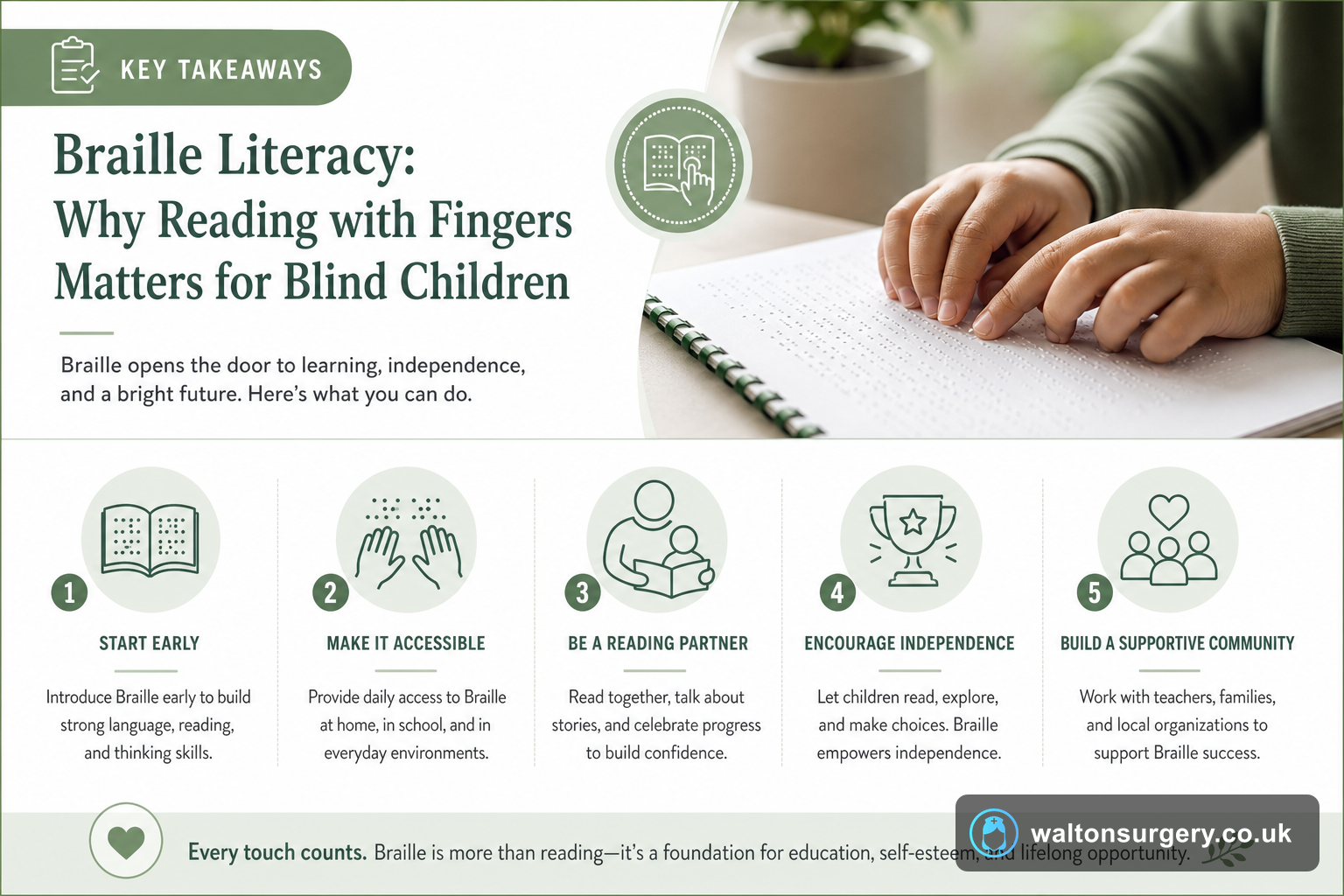
You really don’t need to be a specialist to make a difference at home. A good first step is making sure your house has Braille resources. This might mean labelling things around the kitchen — like tins in the pantry or the light switches — with Braille stickers. Audiobooks are great, obviously, but they’re a supplement to tactile reading, not a replacement.
Your local authority’s sensory service is a good place to start for support, and charities like the Royal National Institute of Blind People (RNIB) can help too. They can point you toward resources, give advice, and even help you find schools and teachers who are properly trained in Braille instruction. Regular, shorter practice sessions tend to work better than long ones you only do now and then, so keep that in mind. Of course, physical safety is just as crucial as educational support; understanding common risks like e scooter injuries children can help keep active kids safe during their downtime.
Frequently Asked Questions
⭐ The Bottom Line
What this means for you
Braille is the bedrock of literacy for blind children, opening the door to education and independence the way print does for everyone else. The fact that events like the Braille Challenge pull in participants from all over the world just shows how relevant and powerful it still is. Helping a child on their Braille path, with support from groups like the RNIB and local services, is one of the clearest ways you can help build their confidence and capability for the long run, much like you would when considering topics such as sunscreen spf 50 nhs guidance children for their physical wellbeing.
Last updated: 2026-09-07 · Written by the Walton Surgery editorial team · Medical information is for educational purposes only and does not replace advice from a qualified healthcare professional.