How AI Can Spot Heart Disease from a Routine ECG in Seconds
PART C — HTML Body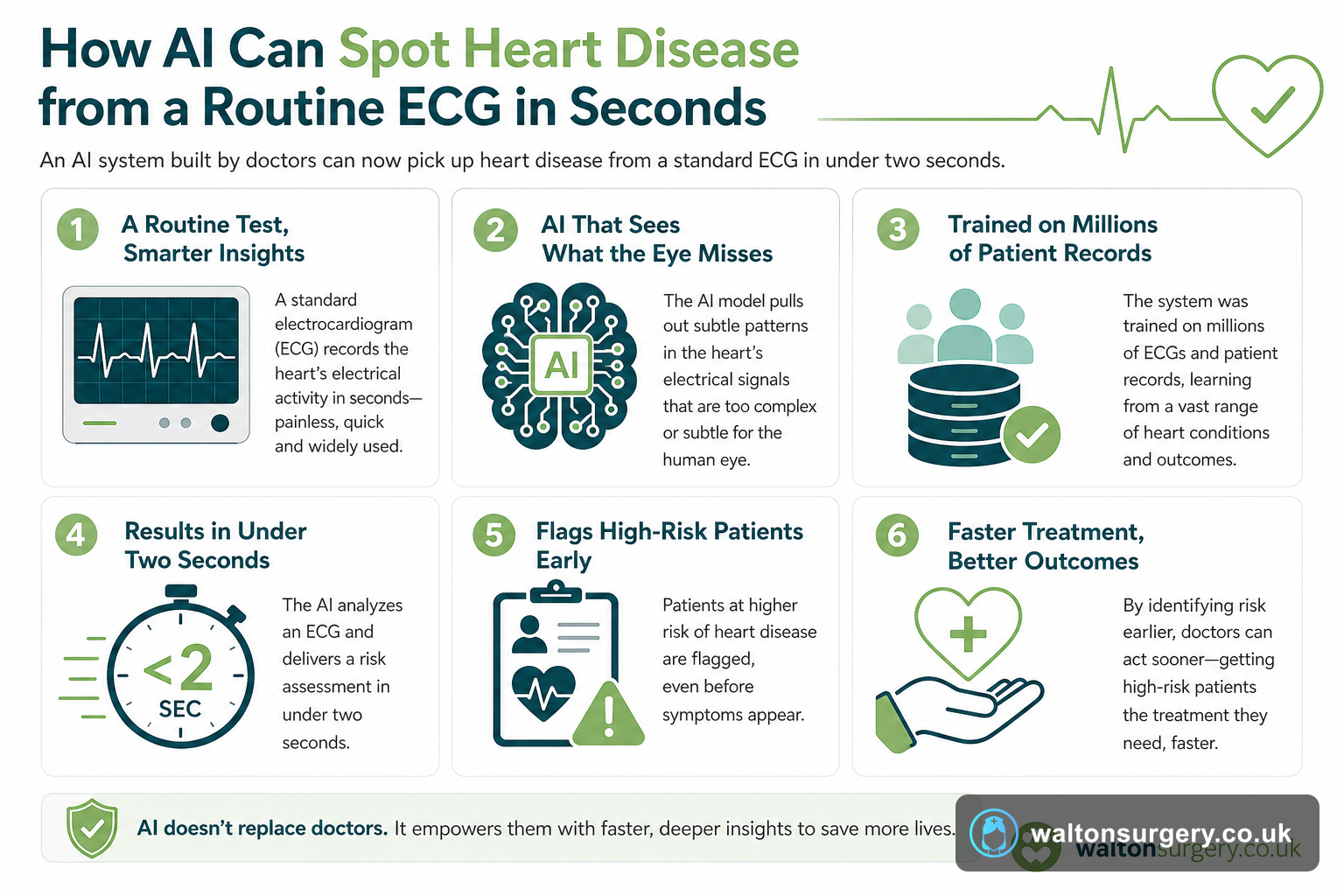
⚡ Quick Answer
An AI system built by doctors can now pick up heart disease from a standard ECG in under two seconds. It was trained on millions of patient records and pulls out patterns from the heart's electrical signals that the human eye usually misses. The idea is to get high-risk patients flagged and into treatment faster. There's more on this in our heart drug NHS patients explainer.
Doctors have built an AI tool that spots heart disease from a routine ECG — and it does it in less than two seconds. The system learned from millions of real patient ECGs, picking up on patterns that are basically invisible when a clinician reads the trace normally.
For heart screening across the UK, this could be a real shift. The AI quickly identifies who's at higher risk, which means those patients could get referred and treated sooner. That early intervention, in theory, leads to better outcomes for a lot of people.
What Exactly Is This AI Heart Detection Tool?
It's an artificial intelligence system built specifically to read electrocardiogram results. You probably know an ECG as that painless test where they stick electrodes on your chest — it records the electrical activity going through your heart. Most people have had one at some point, whether at a GP check-up or in hospital.
The training process involved feeding the AI millions of ECG traces taken from real patients. Over time, it started recognising faint patterns and oddities in the heart's electrical signals. Some of those patterns point to underlying heart disease, even when they're too subtle or complicated for a doctor to catch during a standard reading.
How Does It Work So Quickly?
Speed comes down to how the tool is designed. It processes the numerical data from an ECG trace almost the instant it receives it. The algorithms compare incoming data against the enormous library of patterns the system absorbed during training.
From start to finish — receiving the data, running the analysis, producing a result — it all happens in under two seconds. This isn't about cutting corners on a doctor's assessment. It's raw software processing power. The system can check for several potential problems simultaneously, which would take a human considerably longer to do by hand.
Why Is This Different from a Standard ECG Reading?
When a doctor or specialist reads an ECG, they're very good at catching certain things. Clear patterns that signal arrhythmias, for instance, or evidence of a previous heart attack. Those are well-established markers. But some subtler signs of disease can slip through.
That's where this AI comes in. It's built to pick up on those hidden signals. As the research describes, the tool extracts more information from a routine ECG than a human reader would normally get. It doesn't replace what the doctor does — think of it more as a powerful second opinion that flags traces worth a closer look.
Who Could Benefit from This Technology?
People most likely to benefit are those at risk of heart disease who go through routine ECG screening. That includes anyone with a family history of cardiac problems, people managing high blood pressure, or individuals who've noticed symptoms like palpitations or chest discomfort.
The whole point is to fast-track high-risk patients into treatment. If the AI flags something, it could push a GP to refer the patient for further tests or a specialist appointment much earlier than would otherwise happen. Honestly, catching heart disease early is one of the most important things you can do for managing it well.
Is This AI Tool Available in the UK Now?
From what's been reported, this particular "superhuman" AI tool is still in development. It's been covered as a new piece of technology, but it isn't part of standard NHS diagnostic pathways yet.
Medical tech like this goes through serious testing and approval before it shows up in clinics. The research looks promising, sure, but validating it, getting it approved, and weaving it into routine care — that all takes time. If you're curious about new screening tools, have a chat with your GP.
What Does This Mean for Your Heart Health Check?
For the moment, the ECG you'd get at your GP surgery or in hospital is still the standard. It's a valuable test, read by trained professionals. This new AI represents what diagnostic capability might look like down the line.
Worried about your heart? The advice hasn't changed: talk to your GP. They'll look at your symptoms, weigh up your risk factors, and decide what tests make sense. If this AI becomes available one day, it would be one more tool in the kit — not a substitute for proper medical advice.
🔬 Key Facts
How the AI Works
- → Speed: Processes an ECG and produces a result in under two seconds.
- → Training: Learns from millions of real, anonymised ECG records paired with confirmed diagnoses.
- → Capability: Identifies subtle patterns in the heart's electrical signals that are often invisible to the human eye.
- → Purpose: Acts as a powerful second opinion to flag high-risk patients for earlier treatment.
Frequently Asked Questions
⭐ The Bottom Line
What this means for you
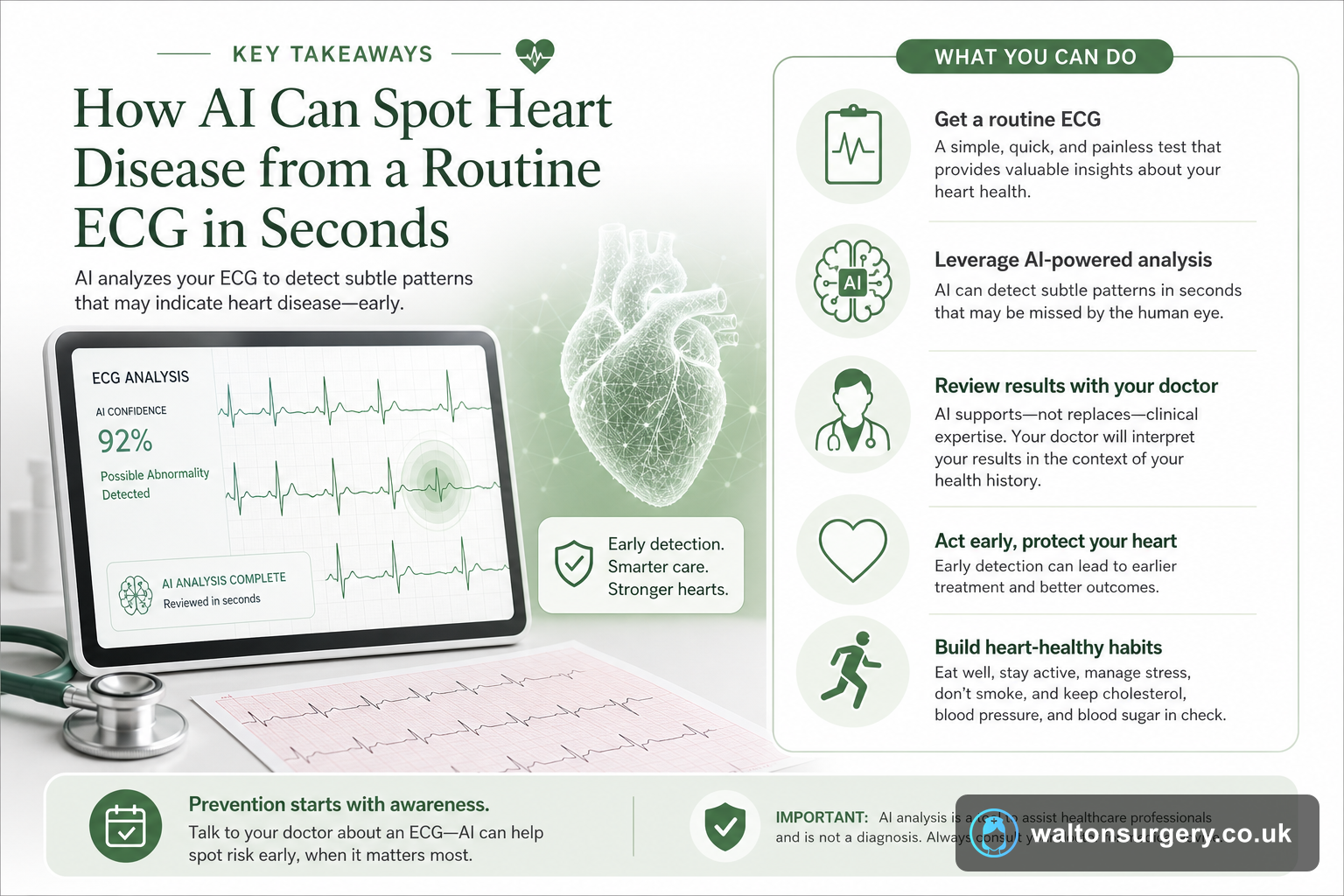
An AI that reads an ECG in under two seconds is a genuinely notable step forward in medical technology. It holds real promise for spotting heart disease faster, which could get high-risk patients into treatment sooner. That said, this tool isn't in routine use yet. If you're worried about your heart, your best move right now is still to see your GP and go through the established diagnostic routes.
Last updated: 2026-09-01 · Written by the Walton Surgery editorial team · Medical information is for educational purposes only and does not replace advice from a qualified healthcare professional.