What Does 'Notifiable Disease' Mean for Cancer? Explained
PART C — HTML Body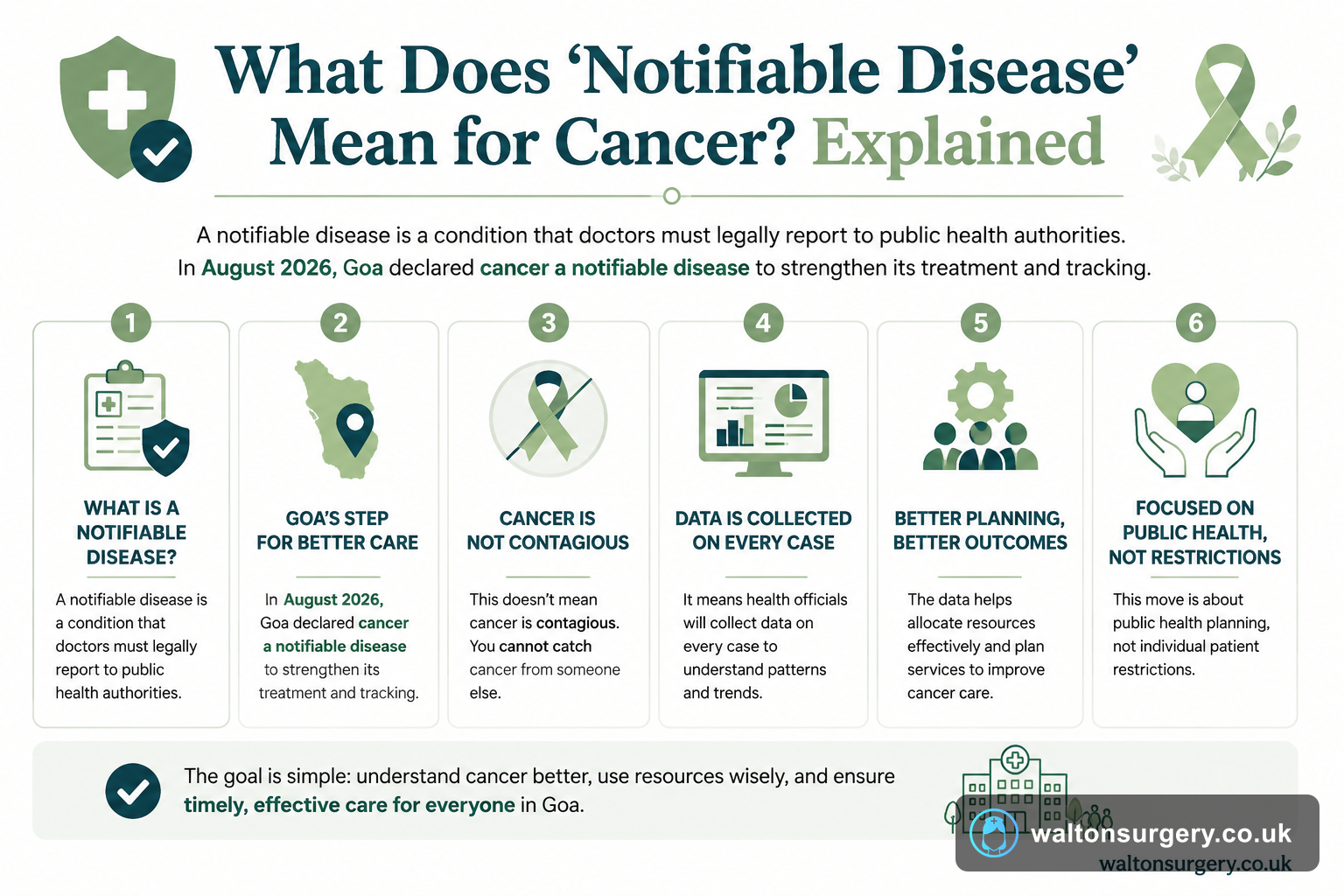
⚡ Quick Answer
A notifiable disease is a condition that doctors must legally report to public health authorities. In August 2026, Goa declared cancer a notifiable disease to strengthen its treatment and tracking. This doesn't mean cancer is contagious. It means health officials will collect data on every case to understand patterns, allocate resources, and improve care. The move is about public health planning, not individual patient restrictions.
So what does it actually mean when something gets labelled "notifiable"? Put simply, if a doctor diagnoses you with one of these conditions, they're legally obliged to tell the authorities about it. The system was built for things like TB and measles — infectious stuff that spreads between people. But in August 2026, the Indian state of Goa did something unusual. They added cancer to their notifiable list, hoping to get a better grip on treatment and tracking across the region.
It's worth being clear about what this isn't. The declaration is purely a public health measure, designed to build up a complete picture of cancer cases so services can improve. Cancer isn't catching. Nobody's putting patients under any new restrictions. It's really just about gathering information so healthcare planning can work better.
What Exactly Is a Notifiable Disease?
By law, when someone's diagnosed with a notifiable disease, the doctor has to report it to government health authorities. That reporting system is basically the backbone of how public health keeps an eye on things. Officials use it to watch how diseases spread, spot outbreaks early, and figure out how to respond. You'll find COVID-19, food poisoning, and various rare infections on these lists — they've been there for years.
The actual process is fairly simple. A doctor or lab confirms the case, then submits a report to whichever public health body covers that area. Everything gets anonymised and lumped together. The data lets people track trends — say, whether a disease is showing up more often in a particular region or age group. For the patient themselves, nothing about the diagnosis changes. But their case feeds into a bigger understanding of what's happening health-wise in the community.
Why Has Goa Declared Cancer a Notifiable Disease?
Mid-Day reported on the Goa declaration back in August 2026, and the reasoning behind it is pretty specific. The state wants to strengthen its cancer treatment infrastructure. By requiring every diagnosed case to be reported, the government guarantees itself access to complete data. That data then forms the basis of a centralised cancer registry.
And a complete registry is genuinely useful for planning. It shows which cancers are most common, where patients live, and what stage they're at when diagnosed. Armed with that kind of information, health authorities can make smarter decisions. Funding gets allocated more effectively. New treatment centres go where they're actually needed. Gaps in screening or early diagnosis services become visible. It's a strategic play — using real numbers to build better healthcare infrastructure. The news comes at a time when high-profile cancer stories, such as the jessie j cancer free breast cancer mastectomy update 2026, are raising public awareness about the importance of early detection and comprehensive care.
🔬 Key Facts
Goa's Cancer Notification Declaration
- → Announced in August 2026 to strengthen cancer treatment infrastructure.
- → Creates a centralised cancer registry with data on every diagnosed case.
- → Enables smarter resource allocation for treatment centres and screening services.
- → Does not mean cancer is contagious — it is a data collection measure only.
Does This Mean Cancer Is Contagious?
No. Full stop. This is a worry that comes up understandably, but it rests on a misunderstanding. The notifiable disease label is a reporting mechanism. It says nothing whatsoever about how a disease spreads. Cancer is not an infectious condition. You cannot catch it from another person.
The confusion happens because lots of notifiable diseases are infectious ones. That's where the association comes from. But the system covers non-infectious conditions too, when tracking them serves public health. Some countries, for instance, require reporting of certain poisonings or occupational illnesses. The point is always the same: collect data to protect and improve community health. Not to suggest contagion.
What Does This Mean for Patients in Goa?
If you're diagnosed with cancer in Goa, your day-to-day treatment experience really shouldn't look any different. Your oncologist and medical team still manage your care in the same way. The change is an administrative one — your diagnosis now gets reported to the state health department.
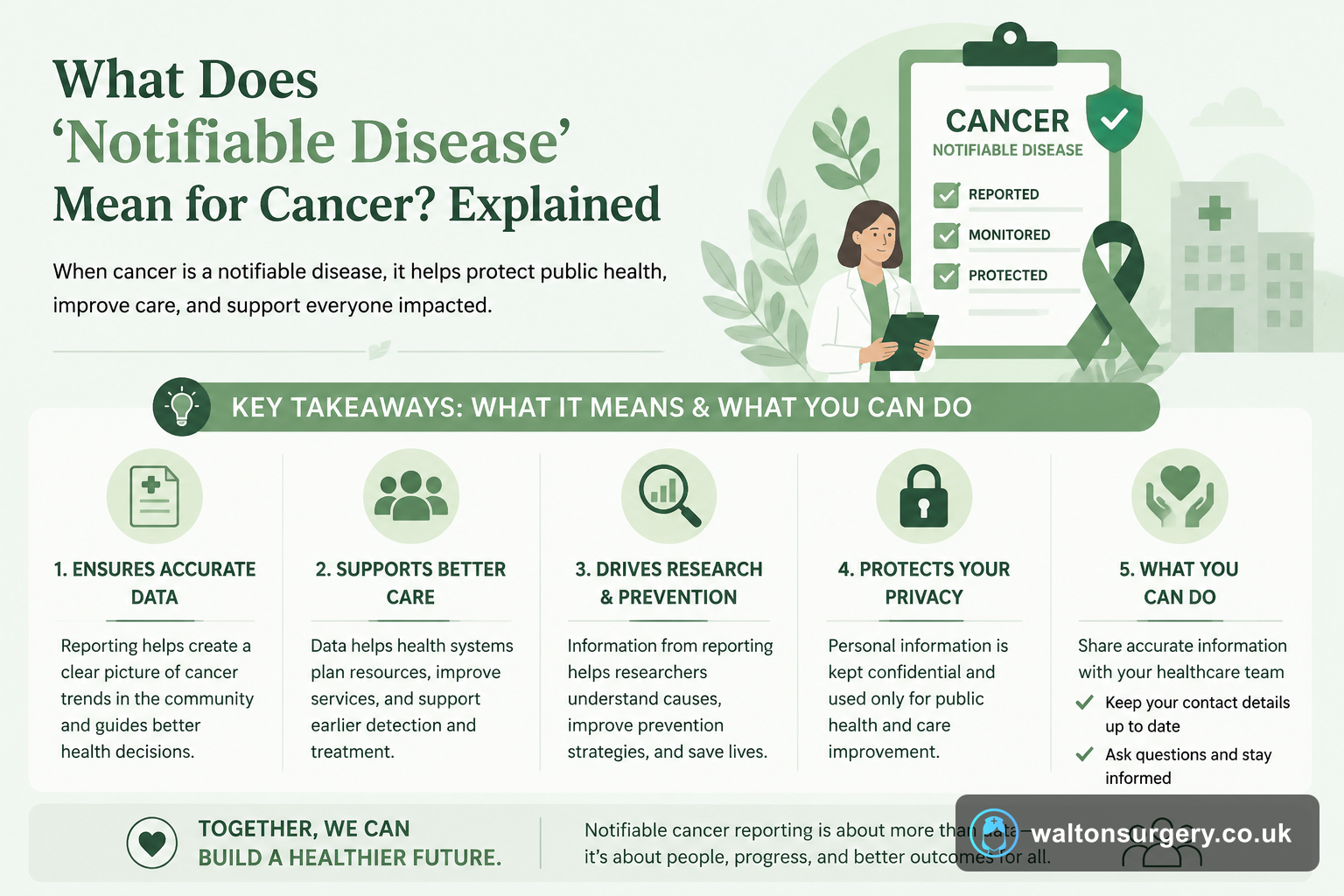
That reporting is confidential. It's statistics we're talking about, not your personal details splashed across a public database. The potential upside for patients plays out over the longer term. As the data builds a clearer picture, cancer services should get better resourced. More specialists could be hired. Access to radiotherapy might improve. Support services could expand. It's a system-level shift, aimed at lifting care quality for everybody.
How Does Cancer Surveillance Work in the UK?
The UK already tracks cancer through well-established systems, though they don't work quite like a simple notifiable disease list. In England, the NHS handles this through the National Cancer Registration and Analysis Service, or NCRAS. Part of NHS England, this service has been recording cancer cases for decades now.
When you get a cancer diagnosis in the UK, your information automatically goes into the national cancer registry. Organisations like Cancer Research UK and NHS England then use that data to monitor trends, plan services, and support research. It's a mature setup — one that informs everything from screening programme priorities to whether new treatments get approved. The underlying principle matches what Goa is trying to do: use data to make public health outcomes better. This focus on data-driven care is vital, whether for common conditions or for rare cases like those requiring snake cancer surgery veterinary expertise.
Frequently Asked Questions
⭐ The Bottom Line
What this means for you
Making cancer a notifiable disease — which is what Goa has done — is fundamentally a public health strategy built around data collection. It maps the burden of cancer and strengthens healthcare planning. It doesn't mean cancer is contagious, and it doesn't directly alter individual patient care. In the UK, similar tracking already happens through established cancer registries. The core idea is straightforward: use accurate data to build a health system that's stronger and more responsive for everyone. This principle applies across the board, from major public health initiatives to individual stories like the recent lucy davis cancer diagnosis news, reminding us why robust data and support systems matter.
Last updated: 2026-08-24 · Written by the Walton Surgery editorial team · Medical information is for educational purposes only and does not replace advice from a qualified healthcare professional.