Understanding Cancer-Related Malnutrition: Causes and Support
⚡ Quick Answer
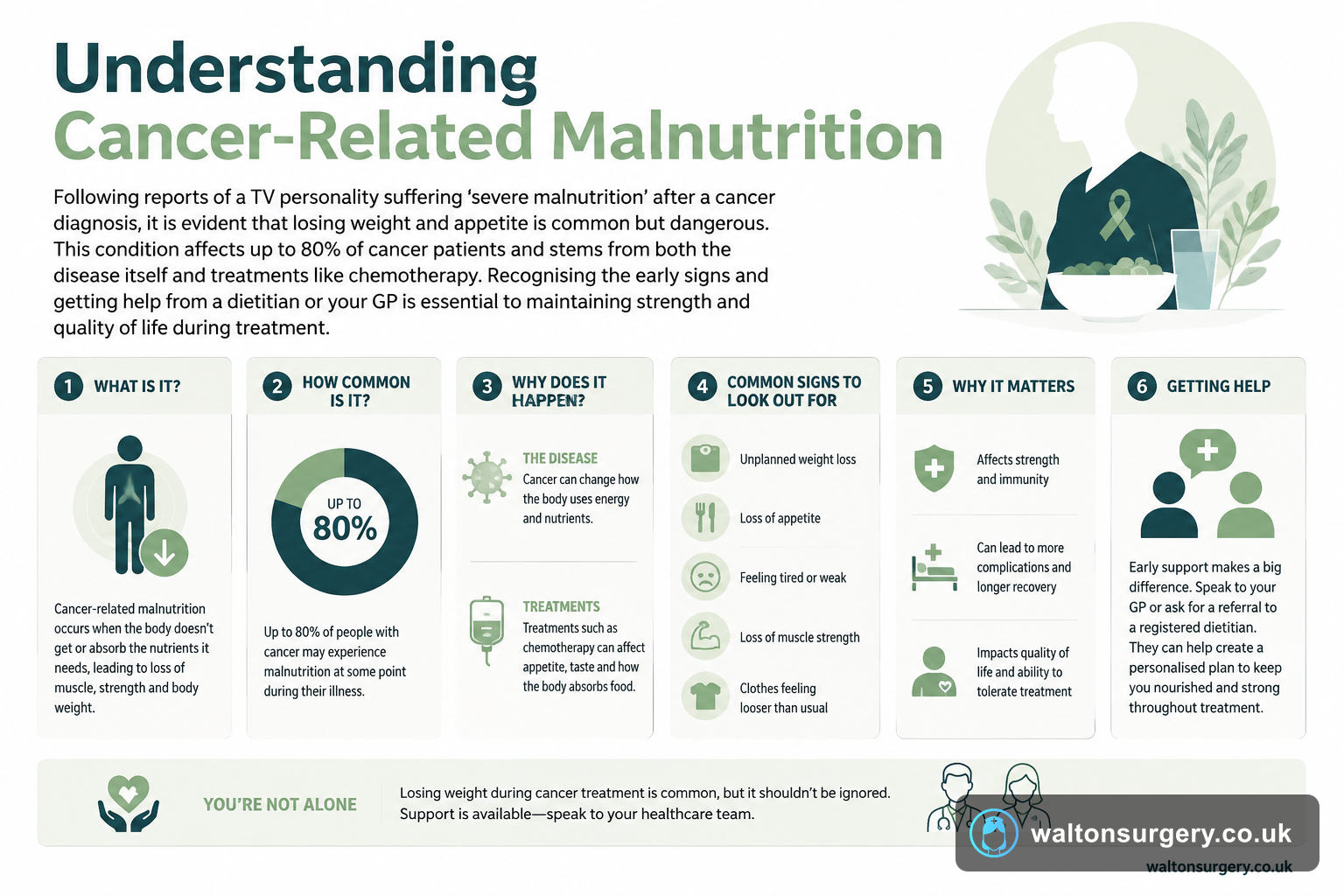
Following reports of a TV personality suffering 'severe malnutrition' after a cancer diagnosis, it is evident that losing weight and appetite is common but dangerous. This condition affects up to 80% of cancer patients and stems from both the disease itself and treatments like chemotherapy. Recognising the early signs and getting help from a dietitian or your GP is essential to maintaining strength and quality of life during treatment. We cover this in more depth in cancer diagnosis what happens next.
A recent news report brought attention to a familiar TV star's health battle after they were diagnosed with 'severe malnutrition' following a cancer diagnosis. It's a tragic case, but it has thrown a spotlight on a complication that is surprisingly common yet often gets overlooked. This is a risk that is consistently highlighted following high-profile health events, such as news of a king charles cancer diagnosis update, or indeed a trump family member cancer diagnosis. Malnutrition isn't just about dropping a few pounds. It is a medical state where your body is missing the nutrients it needs to work properly, which then knocks on to your strength, your immunity, and how well you recover.
Why does this happen? Because cancer fundamentally changes how your body uses food, and it can also crush your desire to eat. Understanding the reasons behind this, and knowing what you can do about it, can genuinely affect your health and your ability to get through treatment. In this article, we'll look at what causes cancer-related malnutrition, how to spot it, and the ways it can be managed.
Why Does Cancer Cause Malnutrition?
Forgetting to have lunch isn't what we're talking about here. In cancer, malnutrition is a complicated physiological problem, driven by your body's reaction to the disease. Cancer Research UK explains that the cancer itself can change your metabolism, that's the process where your body turns food into energy. The upshot is, you could be eating what seems like a normal amount, but your body is burning through calories at a much higher rate.
Where the cancer is located also has a huge part to play. A tumour in the head, neck, oesophagus, or stomach can physically block parts of your digestive tract or make swallowing painful. This means eating enough food becomes a real struggle, even if you still feel hungry. You end up with a situation where your body needs more energy but you're taking in less, and that gap is what leads to malnutrition.
How Do Treatments Affect Your Appetite?
The disease itself is one thing, but the treatments used to fight it can also hammer your appetite and digestion. Chemotherapy and radiotherapy are made to kill fast-growing cancer cells, but they can't tell the difference very well. They end up damaging healthy cells too, especially the ones lining your mouth and your gut.
Side effects that feed into malnutrition are things like nausea, vomiting, changes to how food tastes (everything can taste metallic or just bland), and a sore mouth or throat. The NHS points out that these effects can make the very thought of eating feel unpleasant. And then there's fatigue. Being utterly exhausted is a massive issue. When you feel that wiped out, the effort of going to the shops, cooking a meal, and cleaning up can feel completely impossible. So you skip meals, or you rely on easy, convenient food that probably isn't giving you the nutrition you actually need.
The Hidden Danger: Why Weight Loss Matters
Loads of people in the UK think losing weight is a good thing, but with cancer, unintentional weight loss is a warning sign. When your body doesn't get enough fuel, it starts to break down its own tissues, both fat and muscle, to keep your vital organs running. This process has a name: cachexia.
The British Dietetic Association (BDA) makes the point that losing muscle mass is especially bad news. You need muscle strength just to do everyday things and to bounce back from surgery or chemo. If someone becomes severely malnourished, they might be too weak to even have their treatment. Doctors could end up having to delay chemotherapy or lower the dose, and that can seriously affect how well the cancer care plan works.
Recognising the Symptoms in Yourself or Others
Spotting malnutrition isn't always straightforward, particularly if you're the one going through it. Most people only step on a scale now and then, but you might notice your clothes fitting differently first. Rings getting loose, trousers feeling baggy, needing to tighten your belt another notch, these are classic tells that weight is dropping off.
The NHS page on this, last updated a while back, puts it plainly: there are other signs beyond the scale. Things like:
- A constant lack of energy or feeling tired all the time.
- Picking up illnesses more easily and taking longer to shake them off, because your immune system is weakened.
- Wounds that are slow to heal.
- Poor concentration, or feeling cold a lot.
If you see these signs, or if you've been eating less than usual for more than a few days, it is time to have a chat with your healthcare team. Don't sit and wait for a doctor to spot it. You know your own body better than anyone.
Who Is Most at Risk?
Any cancer patient can end up malnourished, but some groups are more at risk. People with cancers of the digestive system, stomach, bowel, or pancreatic cancer, for example, face a higher chance because the disease directly messes with how your body absorbs nutrients. Head and neck cancers are another big one, as they make the physical act of eating painful or difficult.
Older adults are more vulnerable too, simply because they tend to start with lower muscle reserves. But here's a common myth: it is not only underweight people who suffer from malnutrition. Someone can be overweight or obese and still be malnourished if their diet is missing the specific nutrients needed to fix tissues and support immune function. What matters is the quality of what you're eating, not just what number you see on the scales.
🔬 Key Facts
Malnutrition Risk Factors
- → Prevalence: Affects up to 80% of cancer patients.
- → Location Risk: Cancers of the head, neck, oesophagus, and stomach increase risk by obstructing digestion.
- → Metabolism: The disease alters metabolism, meaning patients burn calories faster even while eating normally.
- → Weight Myth: Overweight individuals can still suffer from malnutrition if nutrient quality is poor.
Managing Nutrition During Treatment
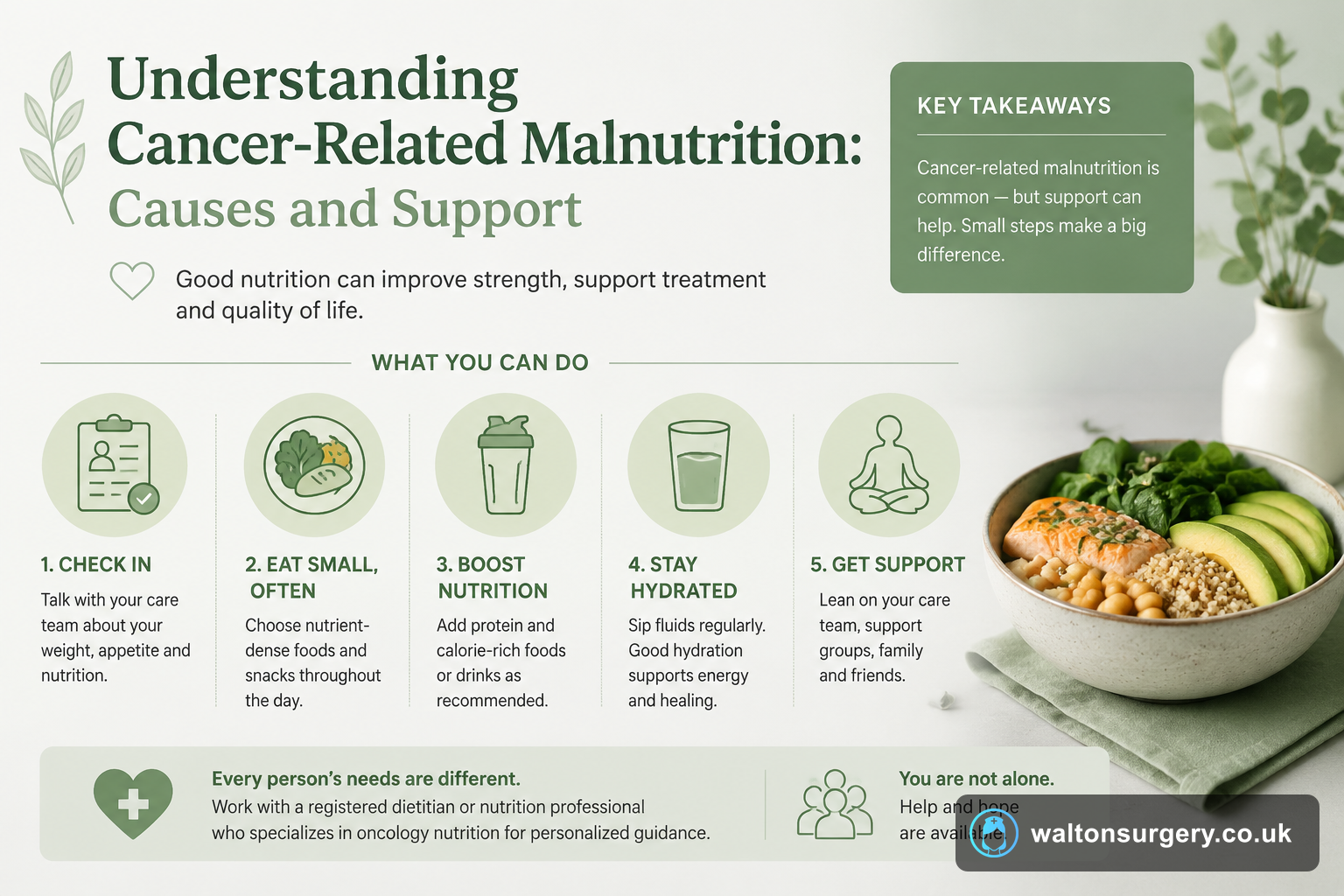
Trying to follow a super strict "clean eating" plan or some detox while you're having cancer treatment is not the point. The real goal is to keep your weight and energy levels up so you can handle your treatment. The British Dietetic Association suggests you focus on energy-dense foods.
If your appetite is tiny, try to make every mouthful work harder for you. That could mean adding butter, cream, or cheese to your potatoes and vegetables, or swapping low-fat yoghurts for the full-fat kind. A strategy many people use is "little and often", eating five or six small snacks through the day instead of facing three big meals. It can feel a lot less overwhelming.
If solid food is just not happening, nutrient-rich drinks like milkshakes or smoothies can be a big help. However, you should be wary of leaning too heavily on "superfoods" or trendy supplements without getting medical advice first. No single food will cure cancer, but a balanced diet helps your body stay resilient.
The Role of Healthcare Professionals
You don't have to figure this out on your own. If you're finding it hard to eat or you're losing weight, ask your GP or oncologist to refer you to a dietitian. Dietitians are the only qualified health professionals who can properly assess, diagnose, and treat dietary and nutritional problems.
They can give you advice tailored to your situation, like suggesting texture-modified foods if you're having trouble swallowing. In some cases, if you're not managing enough by mouth, your medical team might suggest oral nutritional supplements (ONS), which are special drinks packed with calories and protein. For really severe cases, feeding tubes might be needed to get around the digestive tract issues. The NHS is clear on this: early intervention is best. Don't leave it until you've already lost a lot of weight to ask for help.
Frequently Asked Questions
⭐ The Bottom Line
What this means for you
Cancer-related malnutrition is a serious condition that affects nearly 80% of patients, as we've seen from recent high-profile health news. It is driven by the body's increased energy demands, the physical impact of the disease, and the side effects of treatments like chemotherapy. It is not a sign of failure, but a medical symptom that requires active management. If you or a loved one is experiencing weight loss or appetite changes, reach out to your GP or a specialist dietitian immediately to discuss a personalised nutrition plan.
Last updated: 2026-07-23 · Written by the Walton Surgery editorial team · Medical information is for educational purposes only and does not replace advice from a qualified healthcare professional.