

⚡ Quick Answer
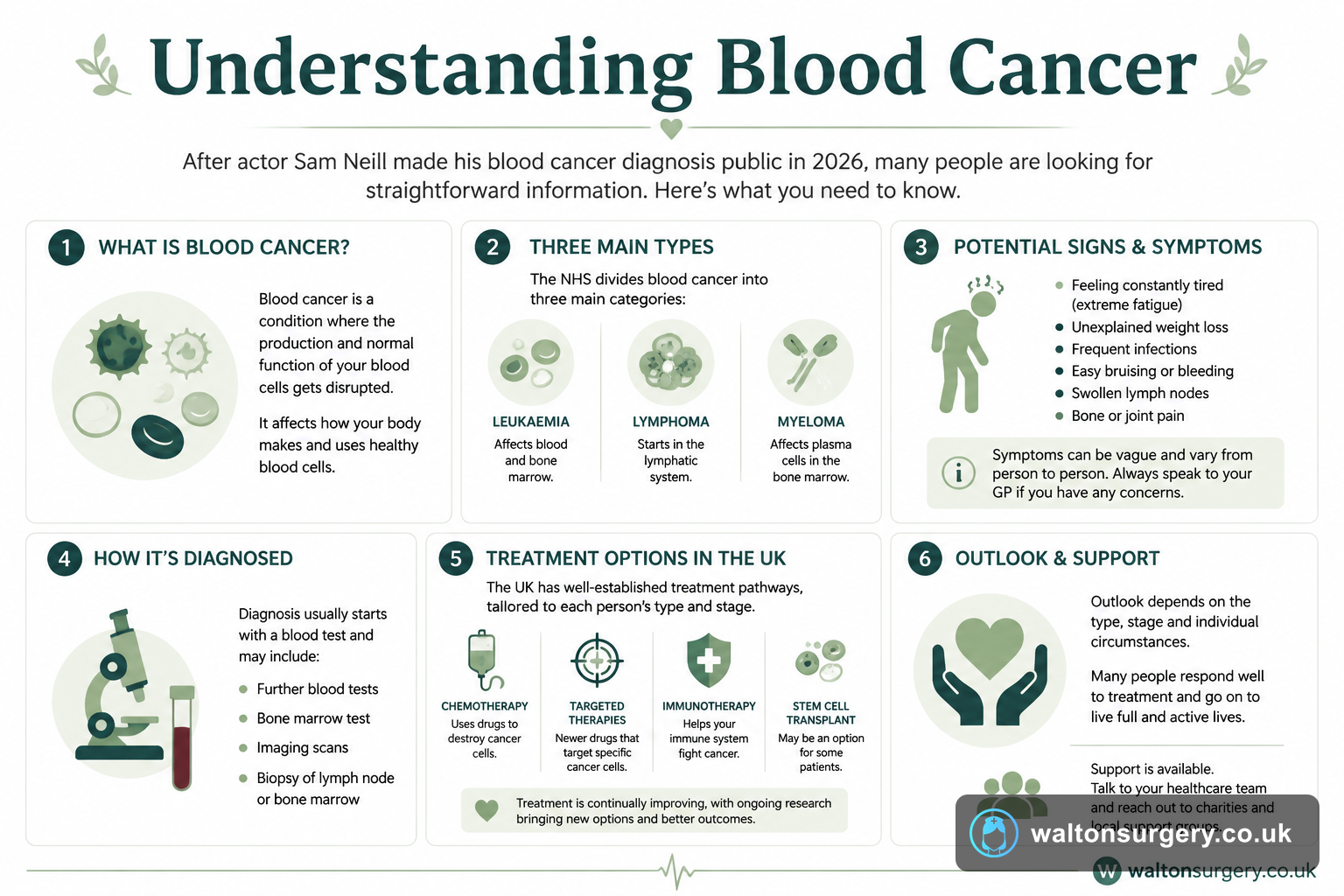
After actor Sam Neill made his blood cancer diagnosis public in 2026, a lot of people started looking for straightforward information on what this actually means. Basically, blood cancer is a condition where the production and normal function of your blood cells gets disrupted. The NHS splits it into three main categories: leukaemia, lymphoma, and myeloma. The signs might be things like feeling constantly tired, which is pretty vague, but thankfully the UK has solid treatment pathways in place, including chemotherapy and newer targeted drugs.
Back in July 2026, the actor Sam Neill talked openly about his blood cancer diagnosis and the treatment he’d been through. For many people across the UK, this news acted as a prompt to find out more about what this disease actually is and how it’s dealt with.
Blood cancer is an umbrella term for cancers that impact the blood, bone marrow, and your lymphatic system. Getting to grips with the different kinds, being able to spot potential warning signs, and having a handle on treatment routes are all quite important if you’re worried about your health.
What Exactly Is Blood Cancer?
This type of cancer starts in the blood-forming tissues inside your body. The main site is the bone marrow, that spongy stuff found inside some of your bones where blood cells are created. It also involves the lymphatic system, a key part of how your immune defence works.
Normally, your bone marrow makes blood stem cells that grow up into different types of mature blood cells. There’s red blood cells for carrying oxygen, white blood cells that tackle infections, and platelets which help your blood to clot. When blood cancer develops, this whole process goes haywire. Your body starts churning out abnormal blood cells that just don’t work right. These faulty cells can multiply out of control, pushing aside the healthy ones you actually need.
The Main Types of Blood Cancer You Should Know
The NHS identifies three primary groups of blood cancer. The specific type you’re diagnosed with comes down to which blood cell turns cancerous and where exactly in the body that happens.
Leukaemia
Leukaemia is a cancer that starts in the blood and bone marrow. It’s marked by the fast production of abnormal white blood cells. Blood Cancer UK, a UK charity, points out these cells aren’t very good at fighting infection and they can pile up, leaving less room for healthy red blood cells and platelets.
Lymphoma
Lymphoma is a cancer that begins in the lymphatic system, a network of vessels and glands spread throughout your body. In the UK, Hodgkin lymphoma is one common type, but the broader group, non-Hodgkin lymphoma, is actually more common. This cancer targets a kind of white blood cell known as lymphocytes.
Myeloma
Myeloma, sometimes called multiple myeloma, is a cancer that develops from plasma cells in the bone marrow. Plasma cells are a type of white blood cell that makes antibodies to fight off infection. In myeloma, these cells grow uncontrollably and produce faulty antibodies, which can end up damaging your bones and harming kidney function.
Recognising the Symptoms of Blood Cancer
One of the tricky things about blood cancer is that its symptoms can be quite general, and look a lot like those from many other, less serious problems. The NHS says you should go see your GP if you have symptoms that are persistent, unexplained, or just not going away.
Common signs might include a fatigue that doesn’t get better with rest, losing weight without trying to, and picking up infections all the time. You could also get night sweats, bruise or bleed easily for no clear reason, or have aches in your bones or joints. Another one to get checked is swollen glands in your neck, armpits, or groin that stay swollen for weeks. High-profile cases, such as the jessie j cancer free breast cancer mastectomy update 2026, often highlight how persistent symptoms can signal different types of cancer.
It’s really important to keep in mind that these symptoms don’t automatically mean you have blood cancer. But getting them looked at by a doctor is the only way to know for sure and to get the right support if it is needed.
How Blood Cancer Is Diagnosed in the UK
Should your GP suspect blood cancer, they’ll probably send you to a hospital specialist, most likely a haematologist. The diagnostic path typically kicks off with a thorough chat about your symptoms and medical past, then a physical exam.
A full blood count (FBC) is a standard initial test. This blood test checks the number and types of different cells in your blood, which can flag up a problem. An unusual result would normally lead to more tests.
🔬 Key Facts
The Diagnostic Process
- → Full Blood Count (FBC) – A standard test checking cell numbers and types to flag problems.
- → Bone Marrow Biopsy – The most conclusive test, taking a sample from the hip bone to identify abnormal cells.
- → Specialist Scans – CT scans or lumbar punctures may be used to see if the cancer has spread.
For many blood cancers, the most conclusive test is a bone marrow biopsy. A tiny sample of your bone marrow, usually taken from the hip bone using local anaesthetic, gets looked at under a microscope. This lets specialists see precisely what kind of abnormal cells are there. Other scans, like a CT scan or sometimes a lumbar puncture, might be used to check if the cancer has spread to other areas.
Understanding Your Treatment Options
Treatment for blood cancer in the UK is determined by the exact type of cancer, how far it’s progressed, and your general health. The NHS offers several main treatment routes, which are often used together.
Chemotherapy is a treatment that uses anti-cancer drugs to kill cancer cells or prevent them from growing. It’s a frequent approach for many blood cancers and can come as tablets, injections, or through a drip into a vein.
For certain kinds of leukaemia and lymphoma, a stem cell transplant might be a possibility. This process aims to swap out damaged bone marrow for healthy stem cells. The stem cells can come from your own body, which is called an autologous transplant, or from a donor, known as an allogeneic transplant.
Radiotherapy, a treatment that uses high-energy rays to destroy cancer cells, is more often used for lymphoma than for other blood cancers. It can be used on its own or after chemotherapy.
Newer Treatments and Ongoing Research
Research into blood cancer treatment doesn’t stop. A particularly active field is targeted therapy, which uses drugs aimed at specific differences in the cancer cells. For instance, the drug imatinib, sold as Glivec, has really changed how chronic myeloid leukaemia (CML) is treated by targeting the particular protein that makes the cancer cells grow.
Immunotherapy is another area seeing real progress. This kind of treatment helps your own immune system spot and attack cancer cells. CAR-T cell therapy is a complicated form of immunotherapy where a patient’s T-cells are taken and engineered in a lab to fight their cancer. Right now, it is used on the NHS for some types of advanced lymphoma and leukaemia. The landscape of cancer care is constantly evolving, and stories like the julia bradbury breast cancer update serve as reminders of the ongoing research into managing the disease.
Clinical trials also play a big part in moving care forward. Your treatment team is the best place to ask if there are any suitable trials for your specific blood cancer. Blood Cancer UK and groups like Myeloma UK have information and support for people who are thinking about trials.
Living with Blood Cancer: Support and Management
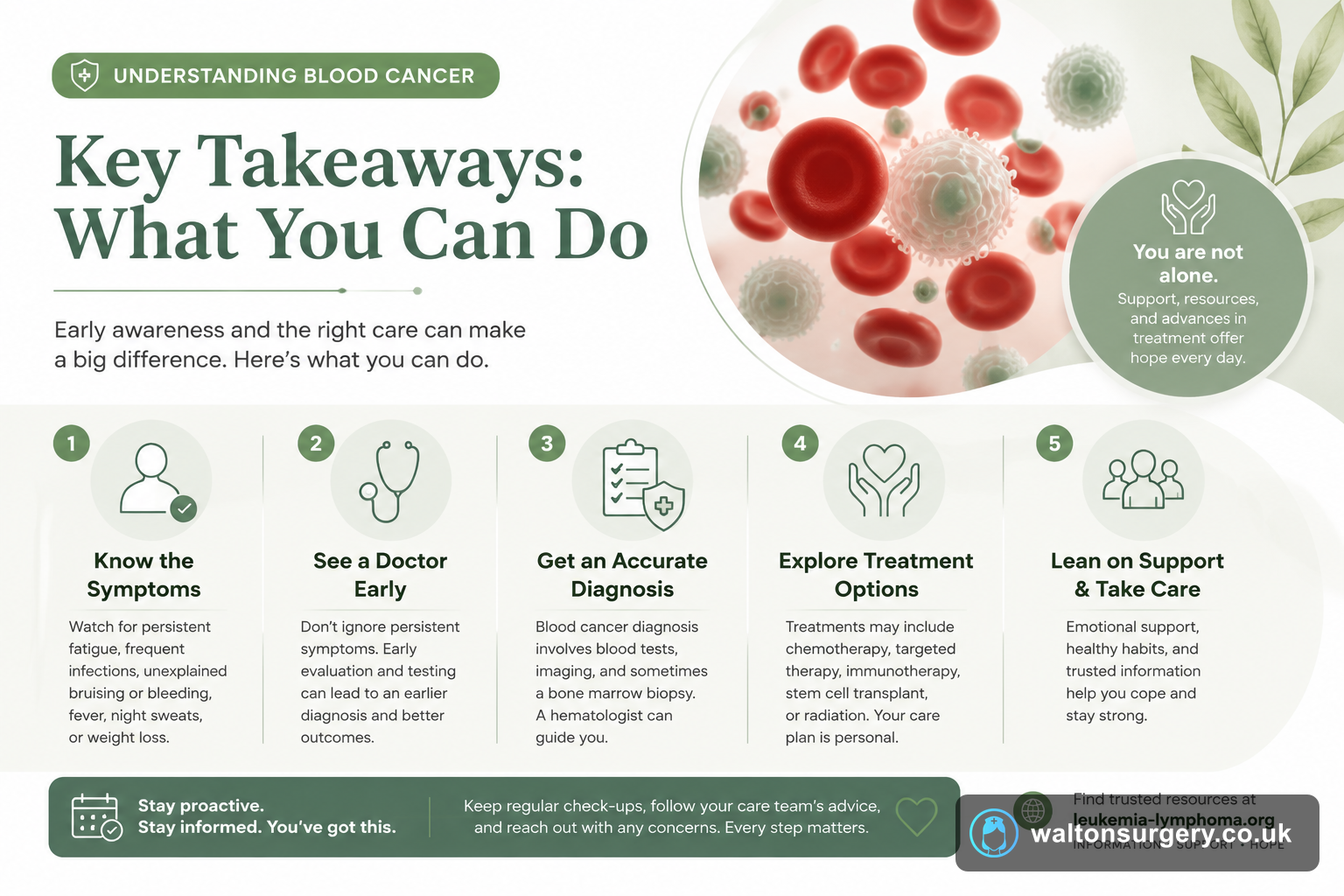
Getting a blood cancer diagnosis affects more than just your body. It is normal to feel a whole mix of emotions and to have practical worries. The NHS and UK charities have a lot of support available.
Your hospital team will have more than just doctors and nurses. Clinical nurse specialists are often a main point of contact for advice and support. They can help you make sense of your treatment and handle side effects.
For quite a few people, blood cancer turns into a long-term condition that is managed rather than cured. This might mean regular check-ups and periods of treatment. The challenges of accessing care are a key concern, whether for common conditions or complex issues like breast cancer treatment in prison uk. Organisations like Macmillan Cancer Support give financial advice, counselling, and run support groups, which can be a huge help for both patients and their families.
⭐ The Bottom Line
What this means for you
Sam Neill’s candour has put a spotlight on why understanding blood cancer matters. While its symptoms can be common to other illnesses, persistent and unexplained signs should always be checked by your GP. The NHS provides established diagnostic pathways and a range of treatments, from chemotherapy to advanced immunotherapy. Support is available from healthcare teams and dedicated UK charities to help manage the condition and its impact on your life.
Frequently Asked Questions
Last updated: 2026-07-13 · Written by the Walton Surgery editorial team · Medical information is for educational purposes only and does not replace advice from a qualified healthcare professional.
