New blood tests for NHS lung and breast cancer patients
⚡ Quick Answer
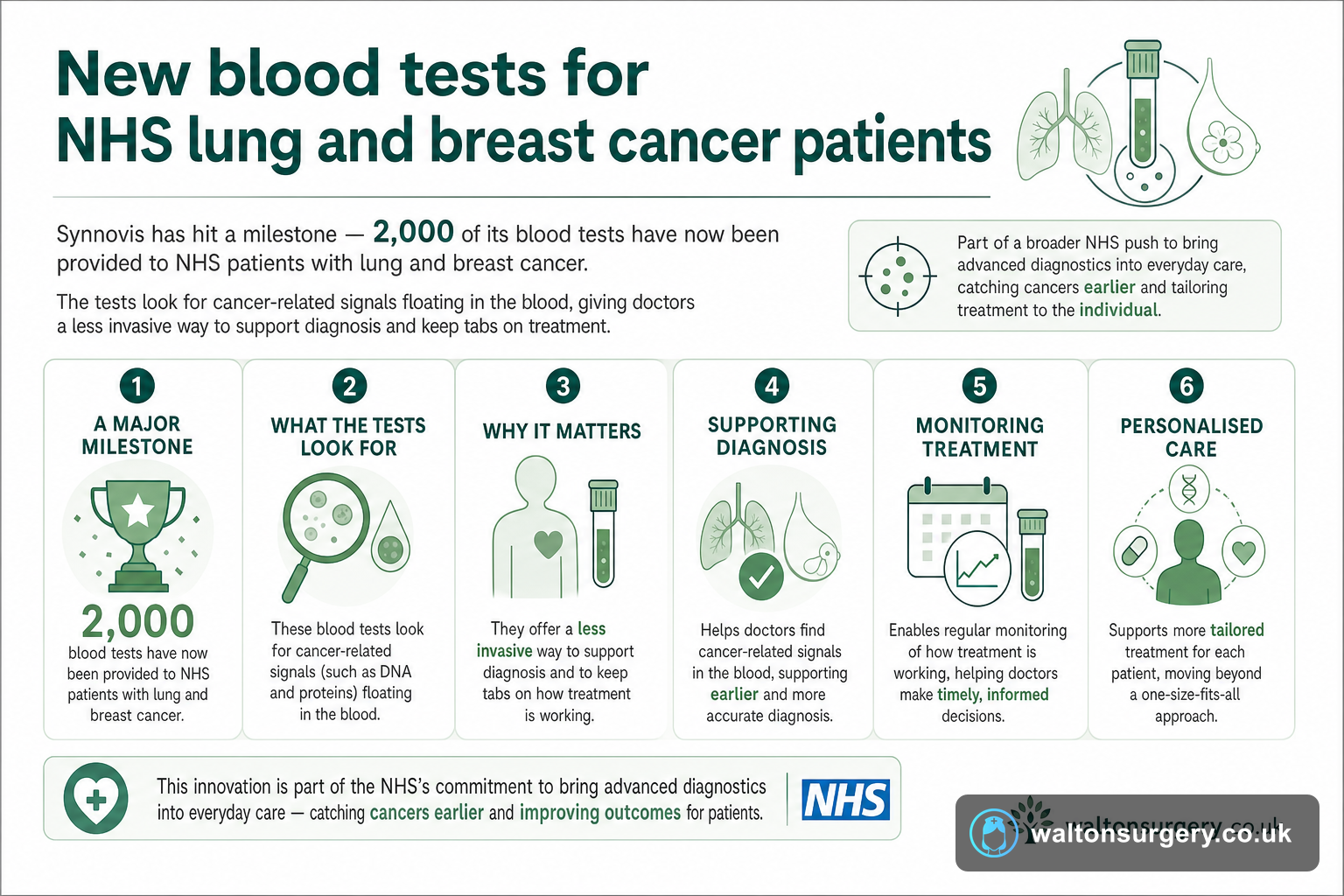
Synnovis has hit a milestone — 2,000 of its blood tests have now been provided to NHS patients with lung and breast cancer. The tests look for cancer-related signals floating in the blood, giving doctors a less invasive way to support diagnosis and keep tabs on treatment. It ties into a broader NHS push to bring advanced diagnostics into everyday care, catching cancers earlier and tailoring treatment to the individual, rather than relying solely on traditional tissue biopsies.
2,000 blood tests. That's the number Synnovis has now reached for NHS lung and breast cancer patients, and it matters because it takes this technology out of clinical trials and drops it into real-world practice. What it offers is the chance to pull detailed information about a person's cancer from a straightforward blood draw — something considerably less burdensome than the procedures most patients are used to. For a health service trying to modernise how it handles cancer, that's not a small thing. Recent headlines about the jessie j cancer free breast cancer mastectomy update 2026 have also highlighted how vital early detection and advanced diagnostics are becoming in the fight against the disease. If you want the fuller picture, our guide to jessie j cancer free breast cancer mastectomy update 2026 goes further.
What is the Synnovis blood test?
You might have heard the term "liquid biopsy" thrown around. That's essentially what this is. Instead of cutting out a piece of tissue — which is what a traditional biopsy does — the Synnovis test looks at fragments of DNA that cancer cells shed into the bloodstream. That circulating tumour DNA, or ctDNA as clinicians call it, carries genetic markers unique to the cancer. Spot those markers, and you can learn a surprising amount about the disease without putting a patient through an operation. The whole point is to understand the cancer's genetic profile so that treatment decisions can be made with more precision.
How does this test support lung and breast cancer care?
For people with lung or breast cancer, the information this test turns up has quite a few practical uses. It can back up a diagnosis, which is especially helpful when a conventional biopsy is too risky or just not technically feasible. The results can pinpoint particular mutations — and that matters, because some targeted therapies are built specifically to attack cancers with those mutations. Treatment, in other words, can be shaped more closely around the individual. There's also the monitoring angle: doctors can track ctDNA levels over time to get a sense of whether a treatment is actually working. This mirrors the logic behind the NHS heartburn cancer test, which uses non-invasive signals to identify cancer risk early and guide clinical decisions.
The role in diagnosis and treatment selection
At the point of diagnosis, working out the exact genetic makeup of a tumour is often the first priority. This is where the Synnovis test comes in — it can pick up mutations that signal whether someone is likely to respond to a given drug. Lung cancer is a good example. Tests frequently screen for changes in genes like EGFR or ALK, because finding them opens the door to medications designed to target precisely those pathways. In practice, that can mean better outcomes for patients who might otherwise have been offered a more generic treatment plan. Understanding genetic markers is also key to conditions like the sam neill blood cancer condition, where specific mutations dictate the course of treatment. There's more on this in our sam neill blood cancer condition explainer.
What does the 2,000-test milestone mean?
Scale. That's the headline here. Two thousand tests tells you this isn't some pilot gathering dust in a research paper — it's a service being used week in, week out, on real patients across the NHS. Volume like this also builds something less visible but equally important: confidence. Healthcare professionals get a clearer picture of how the technology performs in everyday clinical settings, not just controlled trials. They start to trust its reliability, and that trust is what eventually shapes whether a test becomes standard practice.
🔬 Key Facts
The 2,000-Test Milestone
- → Scale — 2,000 tests means the technology has moved from trials into real-world NHS practice.
- → Confidence — High volume builds trust among healthcare professionals regarding reliability.
- → Consistency — The service is being used week in, week out on real patients.
- → Standard Practice — Volume and trust are the precursors to widespread adoption.
How is this different from traditional cancer tests?
The fundamental difference comes down to how you get the sample. Drawing blood is straightforward, repeatable, and far less involved than a surgical biopsy. Traditional biopsies require removing tissue, which can hurt, carries a small chance of complications, and isn't always possible if the tumour sits in a tricky spot. A liquid biopsy sidesteps some of that — it gives you a genetic snapshot of the cancer from a blood sample. That said, it doesn't always replace tissue biopsy entirely. Think of it as a complementary tool, one that's particularly good at providing ongoing monitoring when repeated tissue sampling would be impractical.
Who can access this test on the NHS?
You can't just request this test off your own bat — it's routed through NHS clinical pathways. Your cancer specialist, usually an oncologist, is the one who decides whether it's appropriate for you. That decision hinges on things like your cancer type, the stage, and whether the information the test provides would actually change your treatment plan in a meaningful way. If you're curious, the conversation starts with your doctor. They'll know whether it fits your situation.
Frequently Asked Questions
⭐ The Bottom Line
What this means for you
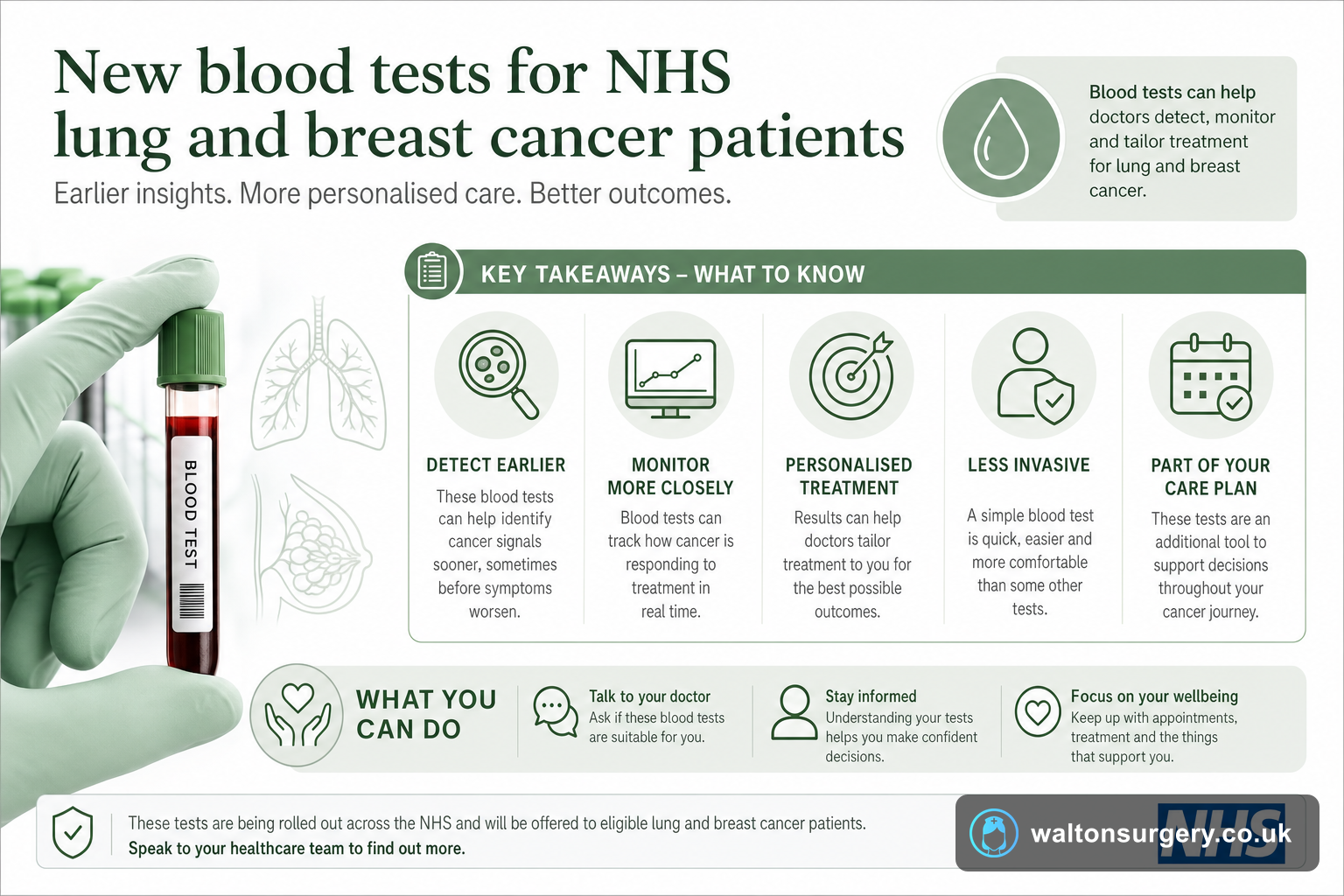
The 2,000-test mark from Synnovis is a real signal that liquid biopsy technology is settling into NHS cancer care, not hovering on the sidelines. By analysing DNA in the blood, it offers a way to guide treatment and monitor the disease without resorting to invasive procedures every time. It sits alongside other tests rather than replacing them all. Whether it's right for you is something your cancer specialist will determine based on your specific needs. Got questions about advanced testing options? Your GP or oncologist is the person to ask.
Last updated: 2026-08-10 · Written by the Walton Surgery editorial team · Medical information is for educational purposes only and does not replace advice from a qualified healthcare professional.