Summer Foot Care: How Your Sandals Could Be Harming Your Feet
PART C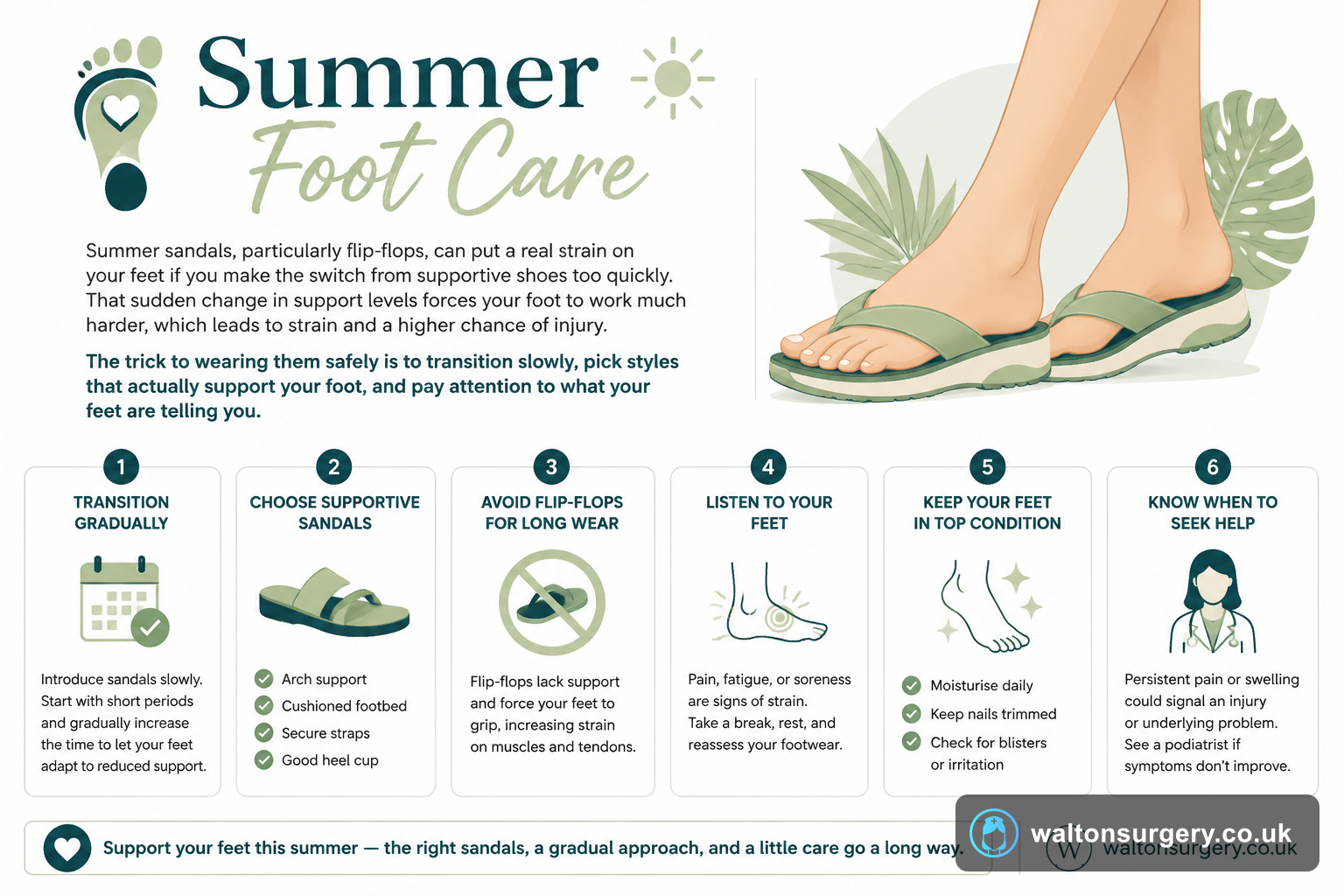
⚡ Quick Answer
Summer sandals, particularly flip-flops, can put a real strain on your feet if you make the switch from supportive shoes too quickly. That sudden change in support levels forces your foot to work much harder, which leads to strain and a higher chance of injury. The trick to wearing them safely is to transition slowly, pick styles that actually support your foot, and pay attention to what your feet are telling you.
Your go-to summer sandals might be doing more damage than you think. While they're brilliant for keeping cool, popular choices like flip-flops provide very little in the way of arch or joint support. Podiatrist Dr Helen Branthwaite, who is the Chief Clinical Adviser at the Royal College of Podiatry, points out the real culprit isn't the sandal itself. It's the abrupt switch from structured, supportive shoes to flat, unsupportive footwear that causes the trouble. This sudden change puts your foot under a lot more strain than it's used to, and that makes you much more likely to get injured. Much like the sudden strain of a heatwave on the body, discussed in our guide to cardiovascular wellness summer uk heatwave nhs tips 2026, this transition can catch you off guard.
Getting your head around this risk is the first step towards happier feet this summer. This isn't about banning sandals from your wardrobe entirely. It's about picking them more carefully and making the transition safely. What follows is practical, medically-sound advice to help you enjoy the warm weather without ending up in pain.
The Real Problem With Flip-Flops
Flip-flops remain a summer staple for many people, and they've even had a bit of a fashionable revival lately with kitten heel versions. But their basic design still presents real challenges. As Dr Branthwaite explains, going straight from a very structured shoe to wearing flip-flops a lot means your foot is under more strain than normal. Your foot has to work harder, and that increased workload can lead to problems down the line.
What happens next is your foot's natural response to this change — it starts to adapt. Over time, the foot can begin to change shape and tends to splay a little. That splaying, when you combine it with the lack of support, can contribute to issues like plantar fasciitis (that's the heel pain people talk about), arch strain, and it can even start to alter your walking pattern. Which in turn could affect your knees and hips. The simple slip-on design, convenient as it is, often comes at a cost to your foot health that people don't really think about until it's too late. If you notice unusual marks on your skin this summer, our article on exercise induced vasculitis golfers purpura uk summer 2026 can help you identify potential causes.
How to Choose Supportive Summer Sandals
Not all sandals are created equal, and this is something worth remembering when you're shopping. Look for styles that offer more than just a flat sole. Prioritise sandals with a contoured footbed — one that gives you some arch support. Even a modest amount can make a real difference to how your feet feel at the end of the day. A deep heel cup is also good, because it helps to stabilise your foot and stop it sliding around.
🔬 Key Facts
The Science of Transition
- → Sudden switch is the main risk factor: It isn't the sandal itself, but the abrupt change from supportive shoes to flat footwear that causes injury.
- → Foot splaying occurs: Over time, the foot adapts to lack of support by changing shape and spreading out.
- → Chain reaction to joints: Altered walking patterns can eventually affect your knees and hips.
- → 2-3 weeks adaptation: A gradual introduction period allows muscles and tendons to adjust safely.
The Royal College of Podiatry advises against making a sudden switch. If you're used to wearing supportive trainers or work shoes most days, don't just start wearing completely flat sandals all day from the first sunny day. Introduce them gradually instead. Wear them for short periods at first, maybe an hour or two, and then slowly increase the time over a couple of weeks. This gives the muscles, tendons, and ligaments in your feet a chance to adapt to the reduced support without getting overstressed. It sounds simple, but it really does make a difference.
What To Do If Your Feet Already Hurt
If you're already experiencing some discomfort, the first thing to do is cut back on how long you're wearing the problematic sandals. Switch back to a more supportive pair of shoes for most of the day. Resting your feet matters, but gentle stretching can also help ease things along. Try rolling a frozen water bottle under your arch for a soothing kind of massage, or do simple toe curls and calf stretches. These are easy to do while you're watching telly.
Should the pain stick around for more than a few days, or if it's sharp, or if it affects your ability to walk normally — it's time to get professional advice. You can speak to your GP, who might refer you to a specialist, or you could book an appointment directly with a registered podiatrist or chiropodist. They can give you a proper diagnosis and may recommend specific exercises, padding, or even custom orthotics if that's what's needed. This article is for general information only and isn't a substitute for personalised medical advice from your healthcare provider. For insights into the standard of care in the region, you might also be interested in the recent news regarding nhs cancer care north east uk.
Frequently Asked Questions
⭐ The Bottom Line
What this means for you
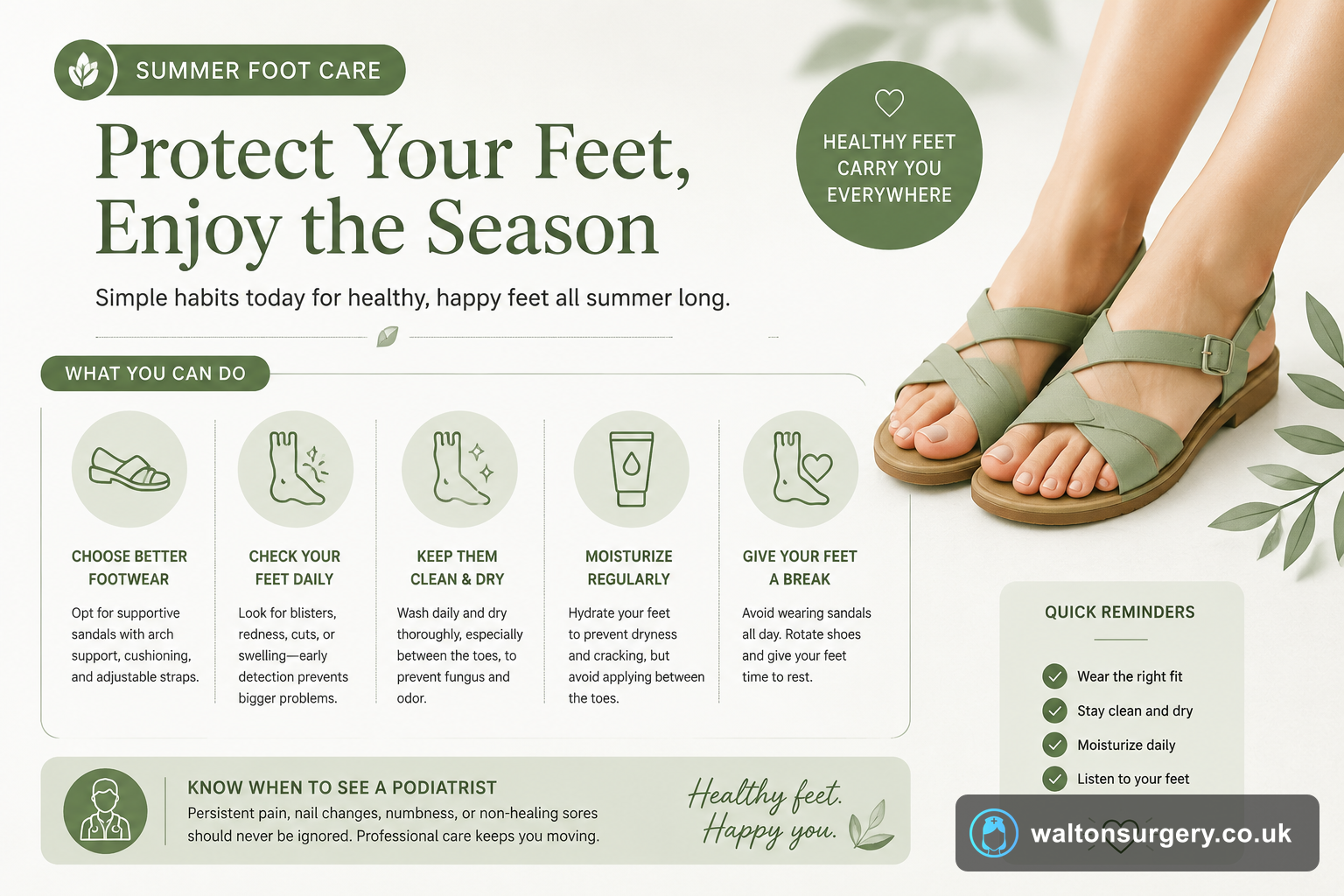
Enjoying the summer in sandals doesn't have to mean sacrificing your foot health. The main risk comes from making a sudden shift to unsupportive footwear like flat flip-flops, which can cause your feet to strain and splay over time. By choosing sandals with better support features, transitioning into them gradually, and actually listening to your body's pain signals, you can keep your feet comfortable all season long. If pain does show up, don't ignore it. Speak to your GP or book in with a registered podiatrist — getting on top of it early is always easier than trying to fix it later.
Last updated: 2026-08-13 · Written by the Walton Surgery editorial team · Medical information is for educational purposes only and does not replace advice from a qualified healthcare professional.