New Board Formed to Oversee Cancer Care in the UK
⚡ Quick Answer
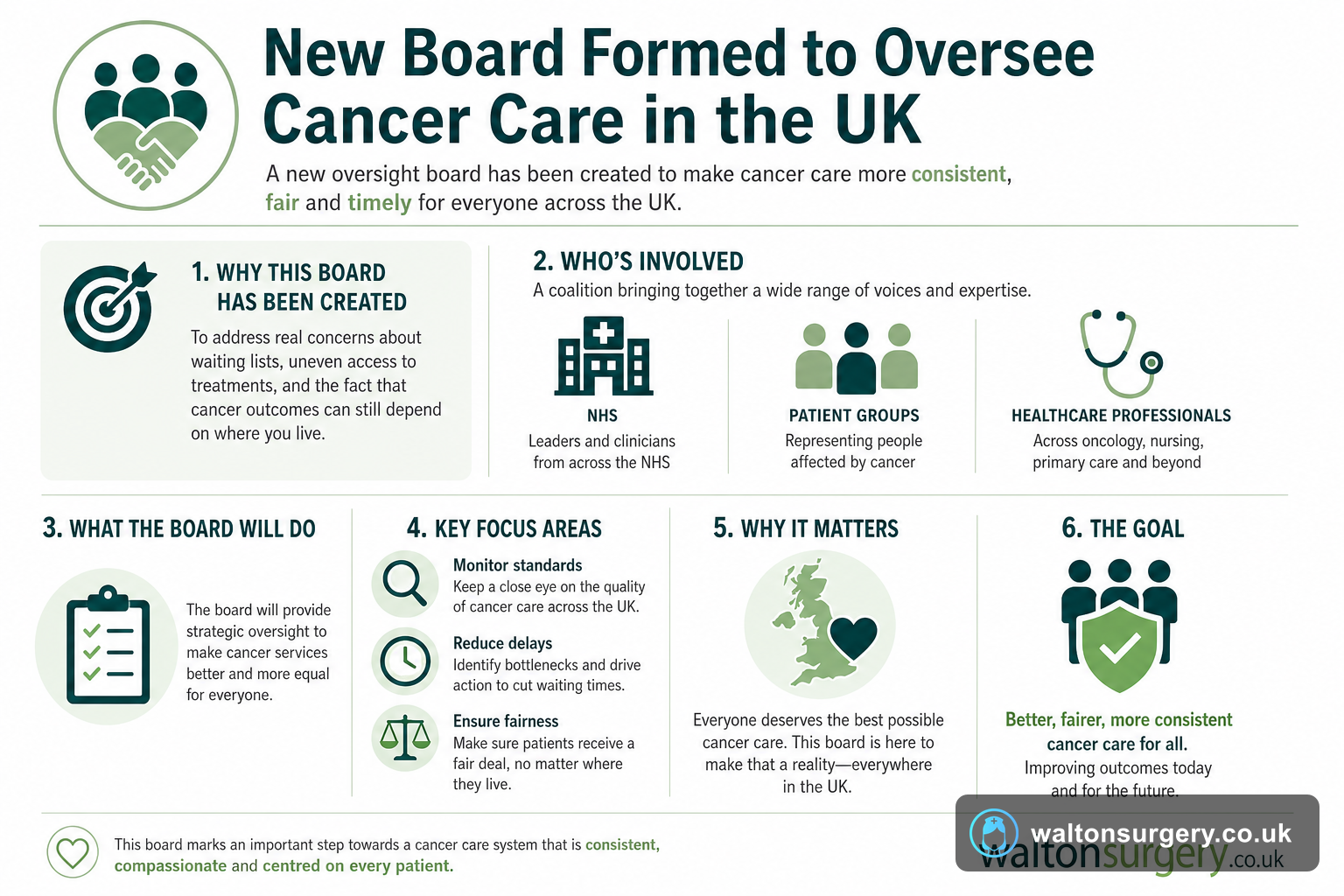
A new oversight board for cancer care has been put together with the aim of making how cancer services are run more consistent across the UK. It's a coalition, really — NHS people, patient groups, and various healthcare professionals all sitting around one table. Their job is to keep an eye on standards, try and close the gap on delays, and make sure patients get a fair deal no matter where they live. The whole thing is a response to real worries about waiting lists, getting access to treatments, and the fact that your cancer outcome can depend on your postcode.
Something new is in place for cancer care in the UK. A board has been set up, specifically to keep watch over how cancer services are being managed, and to try and improve them. It's meant to get the NHS, the people who actually treat patients, and patient organisations all pulling in the same direction instead of working in their own little silos. The challenges around cancer diagnosis and treatment haven't exactly gone away.
If you're someone who's dealing with the cancer system right now, or someone you love is, then who exactly is responsible for making things better isn't just an abstract question. This piece goes through what the board is supposed to do, who's actually on it, and what any of this might mean for patients and their families going forward.
What Is the New Cancer Care Oversight Board?
It's a new body, set up with the specific job of watching over and, hopefully, improving cancer services across the UK. The reason it exists is down to problems that have been hanging around for a while: waits for a diagnosis can be far too long, starting treatment takes longer than it should, you can't always get the therapies you might need, and where you live has too much of a say in how well you do.
What the board is really there for is to get the important people talking to each other. The idea is to make improvements happen on a national scale, instead of leaving each hospital trust or region to figure things out for themselves. It's supposed to be one central place you can point to and ask, "who is actually in charge of cancer care standards?"
Who Sits on the Board and Why Does That Matter?
So, who's in the room? There are people from the NHS, various clinical specialists, and, importantly, representatives from patient advocacy groups. The thinking behind getting all these different voices together is to make sure that decisions aren't just made by clinicians looking at spreadsheets. They should also reflect what it's actually like for the patients and their families going through it all.
Getting patient organisations a seat at that table is a big deal. It's been a problem for years — decisions about how services run are made without really asking the people who use them. This board's structure is meant to stop that happening. The whole point is to keep the needs of patients right at the centre of any changes that get proposed. Recent coverage of nhs cancer care north east uk has highlighted how these regional successes can inform national strategy.
How Patient Voices Shape the Board's Work
What the patient groups bring is honest feedback. They can tell the board what it's like to actually try and get through the cancer system — the endless waiting, the times when one part of the system doesn't know what the other is doing, the places where support just falls through a crack. Their stories help spot the problems that a spreadsheet on its own would never show you.
What Problems Is the Board Trying to Solve?
Look, the UK has had some well-publicised struggles with cancer care. The waits for referrals, for a diagnostic scan, and to actually start treatment have been a source of real anxiety for a long time. People are sometimes left hanging around for weeks longer than they should be, and honestly, that can have a real effect on what happens next. Stories like the jessie j cancer free breast cancer mastectomy update 2026 serve as a reminder of how critical early diagnosis and swift treatment are.
Then there's the regional lottery. Whether you can get on a clinical trial, access a certain specialist treatment, or see the right expert can depend massively on your postcode. Tackling these inequalities is a core part of what the board is supposed to do. The goal is that your address shouldn't decide how good your cancer care is. Even topics like the kim kardashian psoriasis cancer risk discourse show the public appetite for understanding risk factors and ensuring everyone has equal access to information and care. If you want the fuller picture, our guide to kim kardashian psoriasis cancer risk goes further.
The Impact of Delays on Patients
For anyone waiting for news about cancer, or waiting to begin treatment, every single week feels like a month. The anxiety is constant. The disease can get worse in that time, and your options for treating it might shrink. Cutting down these waits is right at the top of the board's to-do list.
🔬 Key Facts
The Core Challenges
- → Long Waits: Delays in referrals, scans, and starting treatment are a major source of anxiety and can affect outcomes.
- → Regional Inequality: Access to clinical trials, specialists, and treatments can depend on your postcode.
- → Fragmented Systems: Different parts of the healthcare system often don't communicate effectively, leading to gaps in patient support.
- → Accountability Gap: Responsibility for cancer care standards has been spread across too many different organisations.
How Will the Board Actually Make a Difference?
The plan is for the board to do more than just point out what's wrong. It will set out what good looks like, track how services are doing, and hold them to it. There needs to be a clear line of who is responsible for what.
This involves looking closely at data — waiting times, who's getting access to which treatments, how patients are doing. If the board spots somewhere that's falling behind, it can call for changes and then check that those changes actually happen. The whole aim is to move past just admitting there are problems to actually getting them sorted.
What Does This Mean for You as a Patient or Carer?
For patients and carers, this board is a change in the structure of things. Let's be clear: it's not going to change your next hospital appointment, or what your oncologist recommends for your treatment. What it does do is create a proper, formal way to hold cancer services to account right across the country.
If you're stuck in a delay, or you feel your care isn't up to the standard it should be, the fact this board now exists actually gives more weight to raising that concern. The patient organisations on the board are a direct channel — they can take feedback from people in your situation and feed it right into the oversight process.
How to Raise Concerns About Your Cancer Care
Not happy with something in your care? The first step is usually to talk to your clinical team or the patient liaison service at your hospital. That's PALS. You could also get in touch with your local Healthwatch or the patient charity for your type of cancer. These groups have a direct line into the oversight board's work.
Frequently Asked Questions
⭐ The Bottom Line
What this means for you
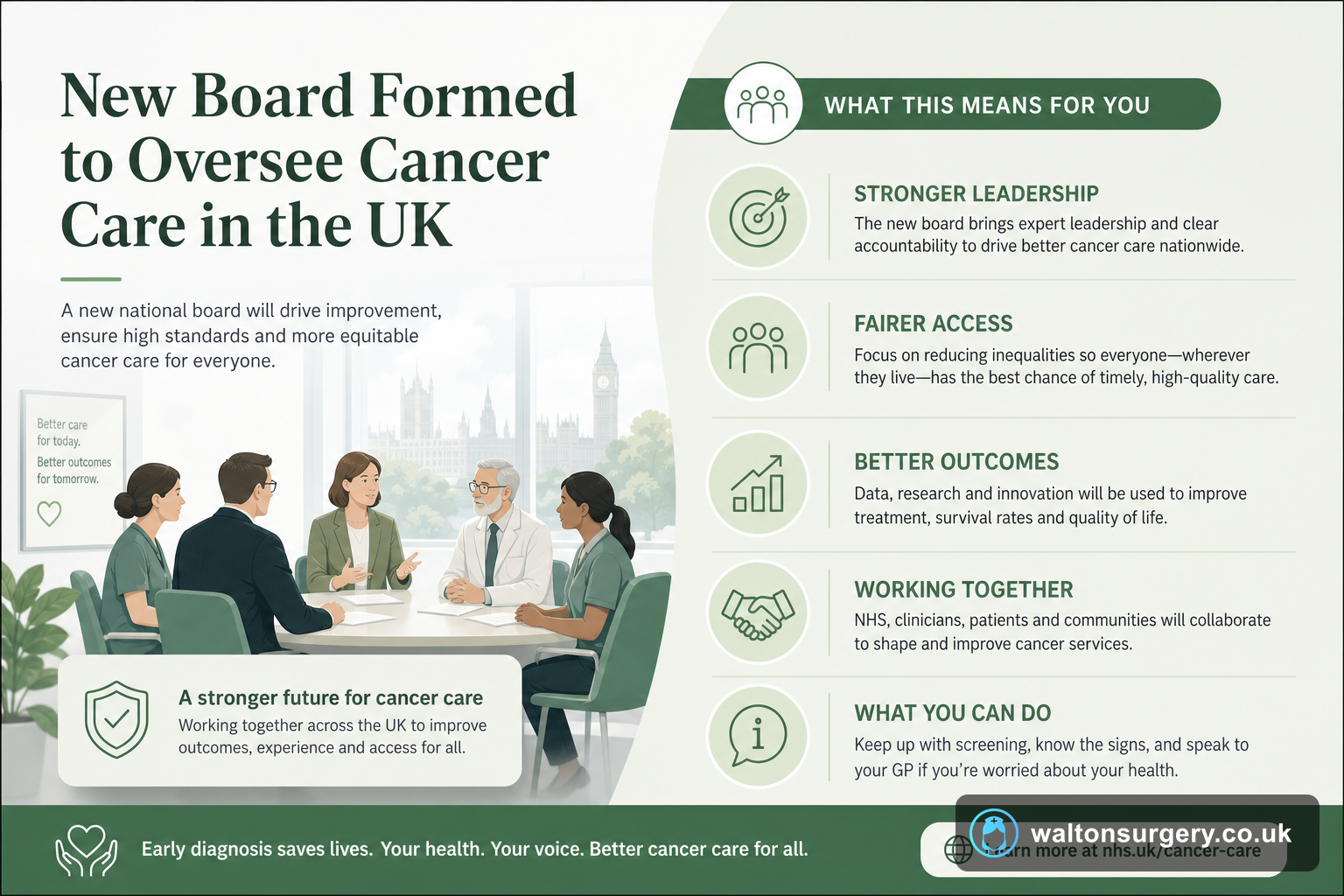
The new cancer care oversight board is a structural shift, designed to tighten up accountability and get better coordination in UK cancer services. It's pulling together the NHS, clinicians, and patient organisations to tackle the big, persistent problems: waits that are too long, and care that varies too much depending on where you are. For patients and carers, it creates a proper, formal route for your concerns to be heard at a national level. It won't change your next appointment, that's true. But it does build the machinery needed to start pushing for real, meaningful improvements across the whole system.
Last updated: 2026-09-22 · Written by the Walton Surgery editorial team · Medical information is for educational purposes only and does not replace advice from a qualified healthcare professional.