Abortion law in the UK: what you need to know after US changes
⚡ Quick Answer
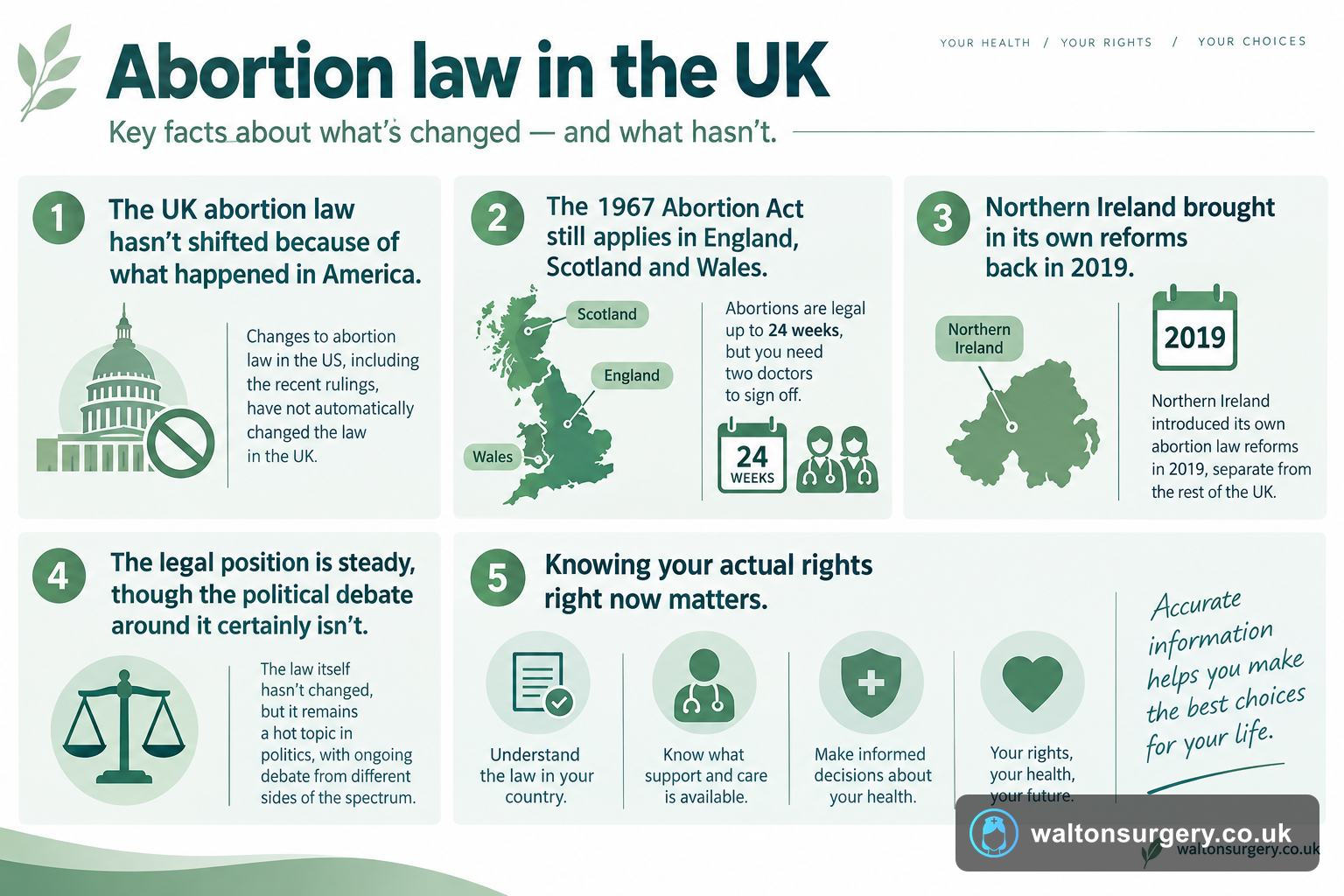
UK abortion law hasn't shifted because of what happened in America. The 1967 Abortion Act still applies in England, Scotland, and Wales — abortions are legal up to 24 weeks, but you need two doctors to sign off. Northern Ireland brought in its own reforms back in 2019. The legal position is steady, though the political debate around it certainly isn't. Knowing your actual rights right now matters.
Abortion is still legal across the UK. That much hasn't budged, despite the panic that followed the US Supreme Court overturning Roe v Wade in 2022. People understandably worried, but our legal system operates on its own terms — and it hasn't been touched. The Abortion Act 1967 is what governs things in England, Scotland, and Wales. Northern Ireland took a different path and reformed its laws in 2019.
If you want to actually understand where you stand, getting into the specifics is the only way through. The rules run deeper than most people expect — there are time limits, you need medical sign-off, and it matters where the procedure happens. This piece lays out what the law says today, plainly and without spin.
The UK legal landscape: a brief overview
The Abortion Act 1967 is the bedrock here, at least for England, Scotland, and Wales. Originally it set the limit at 28 weeks, though that got tightened to 24 weeks in 1990 when the Human Fertilisation and Embryology Act came in. One thing that catches people off guard: abortion isn't a right you can just claim. It's a medical procedure, and two registered medical practitioners have to agree to it first.
Those two doctors need to be satisfied that carrying on with the pregnancy would create a bigger risk — to your physical or mental health, or to any children you already have — than ending it would. That two-doctor requirement is basically the backbone of how the UK system works. Over in Northern Ireland, the picture looks different. Abortion was decriminalised there in October 2019, and up to 12 weeks you don't need to give a reason. After that, access is still possible but only under specific conditions.
🔬 Key Facts
The UK Legal Framework
- → Abortion Act 1967 governs England, Scotland, and Wales, allowing abortion up to 24 weeks.
- → Two doctors must agree the procedure is necessary based on health grounds.
- → Northern Ireland decriminalised abortion in October 2019 with its own rules.
How does US abortion law differ from the UK?
These are two systems that don't really resemble each other. In America, Roe v Wade being struck down didn't ban abortion outright — what it did was hand the decision back to individual states. According to The Guardian's reporting, this created a messy patchwork. Plenty of states moved fast to impose harsh restrictions or outright bans. The 2026 analysis put it bluntly: "the US has already grown used to the horror caused by abortion bans," and Republicans have been actively trying to "quash the stories" of people caught up in it.
The UK works differently. It's centralised — the same law covers England, Scotland, and Wales. Northern Ireland runs its own show, amended separately. There's no serious push to hand this power over to devolved parliaments or local councils. What UK politicians tend to argue about is fiddling with the existing Act's terms — gestational limits, whether the approval process should change — not ripping the whole thing up and starting again. This political turbulence is nothing new, though; public attention often drifts to celebrity health crises 2026 or other high-profile stories that dominate the news cycle.
Where can you get an abortion in the UK?
England changed its rules in 2018, and since then you've been able to take both abortion pills — mifepristone and misoprostol — at home. You do still need to see someone face-to-face first for a consultation, though. So the early medical route can kick off at your own kitchen table, in a manner of speaking, but the initial assessment has to happen in person. Surgical procedures, on the other hand, take place in licensed clinics or NHS hospitals.
The whole thing runs through the NHS or through approved independent providers — BPAS and MSI Reproductive Choices being the two big ones. You can contact them directly and self-refer, no need to go through your GP at all. Your GP can make a referral if you'd prefer that route, but either way your privacy stays protected. It's confidential whichever path you pick. If you're navigating other healthcare changes this year, such as the mounjaro qof gp contract uk april 2026 prescribing changes, speaking to your GP remains a sensible first step for clarity.
Frequently Asked Questions
The Bottom Line
UK abortion law is its own thing, completely separate from what's happening in the US, and the Dobbs decision hasn't changed a word of it. The 1967 Act is still the law in England, Scotland, and Wales — abortion up to 24 weeks, two doctors needed. Northern Ireland has its own, more recent framework. The law isn't shifting anytime soon, but knowing the details and understanding where you can access confidential care through the NHS or a licensed charity is genuinely the most useful thing you can do. Check the official NHS pages or speak to a licensed clinic if you want the most up-to-date information. It can also help to stay informed on wider health topics, such as the Duane Kuiper cancer diagnosis story, which has raised public awareness about accessing timely care.
⭐ The Bottom Line
What this means for you
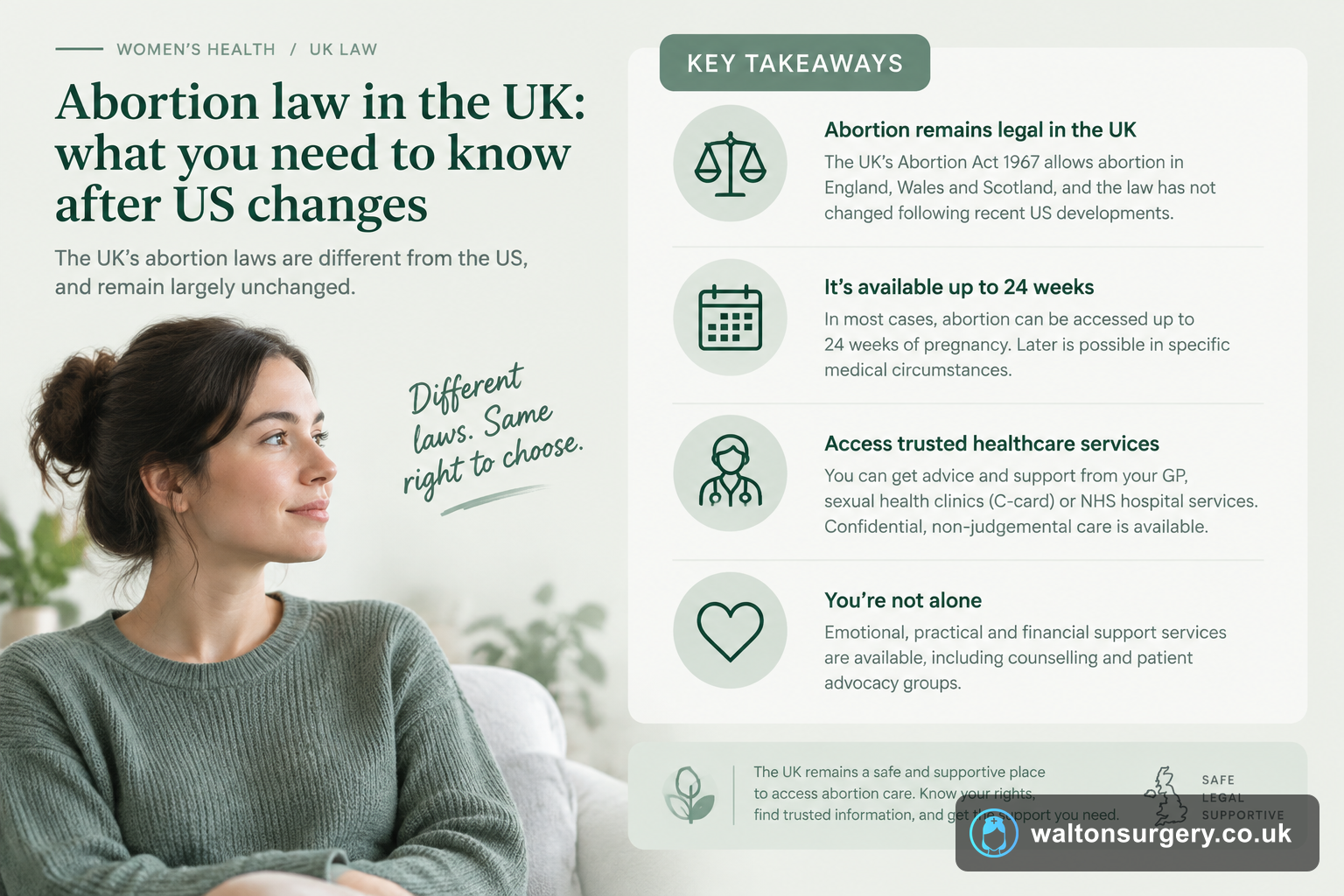
UK abortion law is its own thing, completely separate from what's happening in the US. The 1967 Act still applies: abortion is legal up to 24 weeks in England, Scotland, and Wales with two-doctor approval. Northern Ireland has its own framework. Your rights haven't changed — but knowing the details and where to find confidential support is the most useful thing you can do.
Last updated: 2026-09-28 · Written by the Walton Surgery editorial team · Medical information is for educational purposes only and does not replace advice from a qualified healthcare professional.