

Garcinia Cambogia Review 2026: Does HCA Really Help With Weight Loss?

⚡ Quick Answer
Garcinia cambogia contains hydroxycitric acid (HCA), which is theorised to inhibit fat production and suppress appetite — but high-quality clinical evidence for meaningful weight loss is weak and inconsistent. A major 2011 meta-analysis found a statistically significant but clinically modest effect of less than one kilogram over placebo, and subsequent reviews have offered mixed conclusions. It is sold as a food supplement, not a licensed medicine, and is best understood as a low-risk, low-reward addition to a broader weight-management strategy rather than a standalone solution.
🛒 Shop the product
Approx. £32 / $40.00 per bottle — affiliate link, see disclosure above.
Weight management remains one of the most common health concerns we hear about in general practice. Whether it is the desire to shed a few kilograms before summer or a longer-term effort to reduce health risks associated with carrying excess weight, many adults are actively looking for something — anything — that might give them a helpful nudge. It is no surprise, then, that supplements promising natural appetite suppression and fat blocking continue to fly off the shelves.
One of the most recognisable names in that space is Garcinia Cambogia — a tropical fruit extract that became a global phenomenon after being championed on US television in the early 2010s. Years on, it remains widely sold, including through online supplement retailers targeting UK customers. But what does the evidence actually say? Is this a genuinely useful tool, or has clever marketing outpaced the science?
In this review, we take a clear-eyed look at the science behind hydroxycitric acid (HCA) weight-loss supplements, examine the specific product being offered, and help you decide whether it is worth your money or better left on the shelf.
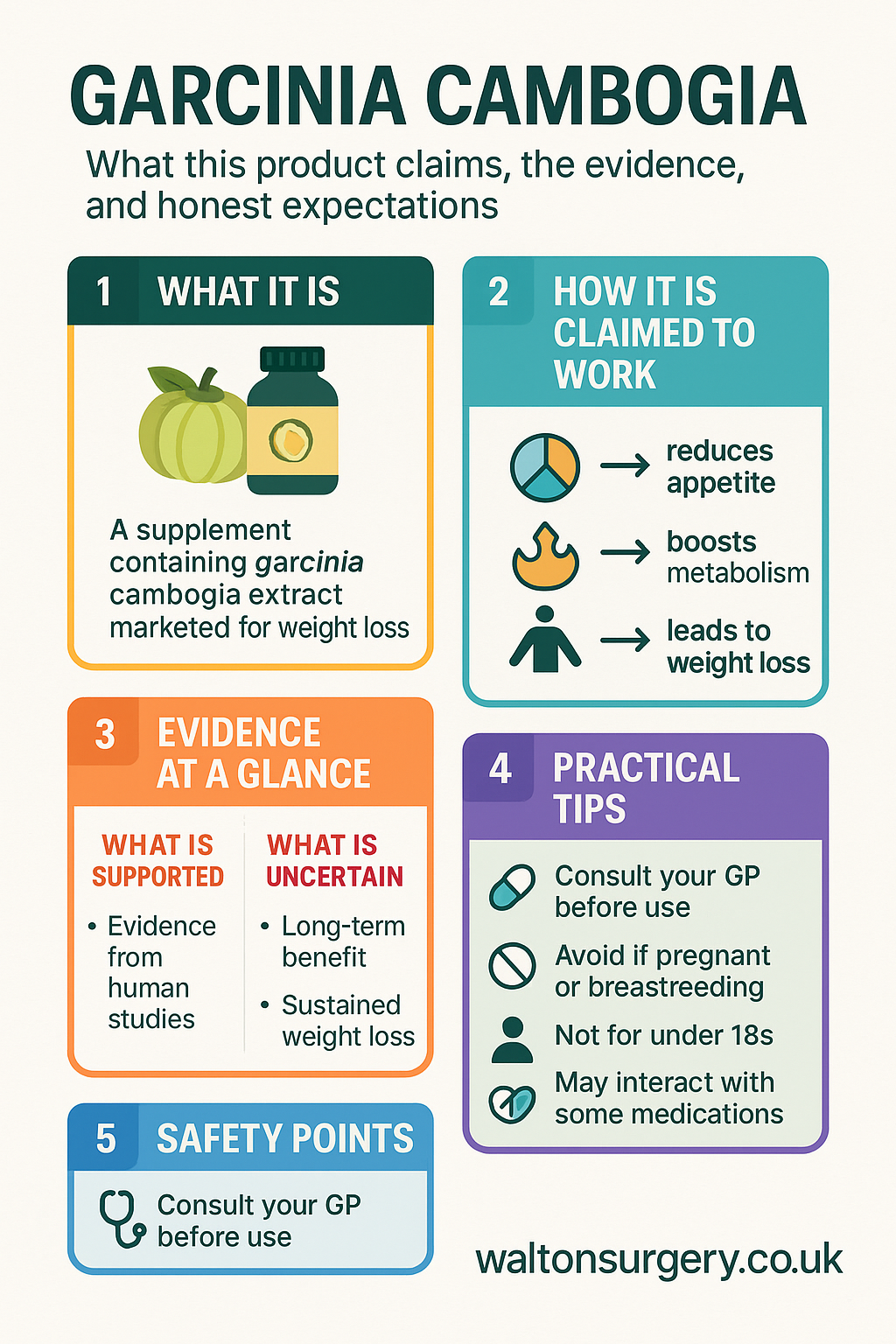
What Garcinia Cambogia Actually Is
Garcinia cambogia — also known as Malabar tamarind — is a small, pumpkin-shaped fruit that grows across parts of Southeast Asia and India. For centuries, the fruit’s rind has been used in traditional cooking, particularly in South Indian and Thai cuisine, where it lends a sour flavour to curries and chutneys.
What makes it interesting to the supplement industry is a compound found in the rind called hydroxycitric acid (HCA). HCA is the primary active ingredient in virtually every Garcinia cambogia weight-loss product on the market, including the one we are reviewing here. Most supplements standardise their extract to contain 50-60% HCA by weight.
The fruit itself is harmless as a food. The question is whether concentrated HCA extract, taken in capsule form at doses of 500-1,500 mg per day, can meaningfully influence body weight. That is where the picture becomes considerably less clear.
How HCA Is Supposed to Work
The proposed mechanism of HCA centres on an enzyme called ATP citrate lyase. This enzyme plays a role in converting excess dietary carbohydrates into fatty acids, cholesterol, and triglycerides — in other words, the building blocks of body fat. HCA is thought to competitively inhibit this enzyme, theoretically reducing the body’s ability to synthesise and store new fat.
A secondary proposed mechanism involves serotonin. Some researchers have suggested that HCA may increase serotonin levels in the brain, which could, in turn, reduce appetite and emotional eating. Serotonin is a neurotransmitter closely linked to mood and satiety, and low levels have been associated with increased cravings — particularly for carbohydrate-rich comfort foods.
In theory, the combination — less fat production plus reduced appetite — sounds promising. The trouble is that theory and real-world outcomes do not always align, particularly when the active compound has difficulty reaching its target enzyme in meaningful concentrations.
🧬 How HCA interacts with metabolism
The biochemical story is plausible — but incomplete
- Inhibition of citrate lyase: HCA competes with citrate at this enzyme, potentially reducing de novo lipogenesis (new fat creation).
- Serotonin pathway: Animal studies show increased brain serotonin after HCA intake, which may reduce food intake.
- Oral bioavailability problem: Human studies suggest that only a fraction of orally ingested HCA reaches systemic circulation in active form.
- Compensatory eating: Even when fat storage is slightly reduced, people may unconsciously eat more to compensate — a well-documented biological phenomenon.
- Effect size: Theoretical models predict modest effects, and clinical data has largely confirmed this — the effect, when present, is small.
What Does the Clinical Evidence Actually Show?
This is the part of the review where we need to be especially careful about what we claim. Garcinia cambogia has been studied in numerous clinical trials over the past three decades, and the results are — to put it charitably — underwhelming.
The most widely cited analysis is a 2011 systematic review and meta-analysis published in the Journal of Obesity (Onakpoya et al.), which pooled data from 12 randomised controlled trials. The authors found that HCA produced a small, statistically significant difference in short-term weight loss compared to placebo — approximately 0.88 kg more weight lost over study periods ranging from two to twelve weeks. However, the clinical significance of less than one kilogram was questioned even by the study’s own authors, who noted that the effect was “small” and “of borderline statistical relevance.”
Subsequent reviews have painted an even less optimistic picture. A 2020 systematic review examining HCA for weight management concluded that there was insufficient high-quality evidence to support its use as a weight-loss aid. Many of the earlier positive trials were small, short-term, and funded by supplement manufacturers — factors that tend to inflate effect sizes.
⚠️ Reality check — the marketing vs. the data
The product description for the supplement under review claims “an average weight loss of 5-6% in just 8 weeks.” This figure is not supported by the weight of independent clinical evidence. The best available meta-analysis found a difference of less than one kilogram over placebo, and many individual trials showed no significant effect at all. A 5-6% weight loss in eight weeks from a supplement alone would be extraordinary — and no peer-reviewed data we are aware of has demonstrated this. When reviewing marketing claims, always look for the actual study referenced, its funding source, sample size, and whether the results have been independently replicated.
How to Use It and What to Expect
Most Garcinia cambogia supplements, including the product under review, recommend taking one or two capsules daily — typically 30 to 60 minutes before meals. The standard dose of HCA used in clinical studies has ranged from 500 mg to 1,500 mg per day, usually divided across two or three doses.
If you choose to try it, here are some practical points to bear in mind:
- Take it before meals — the appetite-suppressing effect, if any, is most useful just before eating.
- Do not expect dramatic results — the evidence suggests any effect is likely to be very modest, perhaps half a kilogram to one kilogram over several weeks beyond what diet and exercise alone would achieve.
- Pair it with dietary changes — a supplement will never outpace a calorie surplus. If your diet is unchanged, the odds of noticeable weight loss are slim.
- Give it a realistic timeline — most studies ran for 8-12 weeks. Anything less is unlikely to show measurable effects, and anything more without results should prompt you to stop.
- Track your weight weekly, not daily — daily fluctuations of a kilogram or more are normal and can be misleading.
Side Effects and Who Should Think Twice
For most healthy adults, short-term use of Garcinia cambogia appears to be generally well tolerated. The most commonly reported side effects in clinical trials have been relatively mild: digestive discomfort, nausea, headache, and occasional diarrhoea. These tend to resolve when supplementation stops.
However, there are more serious concerns worth knowing about:
- Liver toxicity: There have been multiple case reports — including some published in peer-reviewed journals — linking Garcinia cambogia supplements to acute liver injury. While causation is difficult to prove definitively (many products contain multiple ingredients), the signal is concerning enough that the US FDA has issued warnings about certain products.
- Serotonin interactions: Because HCA may influence serotonin levels, there is a theoretical risk of serotonin syndrome when combined with SSRIs, SNRIs, triptans, or other serotonergic medications. This is a potentially dangerous condition.
- Diabetes medications: HCA may lower blood sugar, potentially increasing the risk of hypoglycaemia when combined with insulin or oral hypoglycaemics.
- Statin interactions: Some evidence suggests HCA may amplify the risk of rhabdomyolysis (serious muscle breakdown) when taken alongside statin medications, though this link is not firmly established.
You should speak to your GP before taking Garcinia cambogia if you: are pregnant or breastfeeding; have liver or kidney disease; take any prescription medication, especially antidepressants, diabetes drugs, or statins; or are under 18 years of age. This is not a licensed medicine, and the MHRA does not regulate it as one — it is sold as a food supplement, meaning the safety and quality assurance standards are less stringent than for pharmaceuticals.
A Focused Look at This Product
The Garcinia Cambogia supplement available through HealthBuy is marketed as a natural weight-loss aid built around HCA extract. The sales page makes bold claims about rapid weight loss and appetite suppression. As we have discussed, those claims exceed what the independent evidence supports — but that does not mean the product itself is necessarily of poor quality. Let us look at what is being offered.
🔬 Product snapshot — Garcinia Cambogia
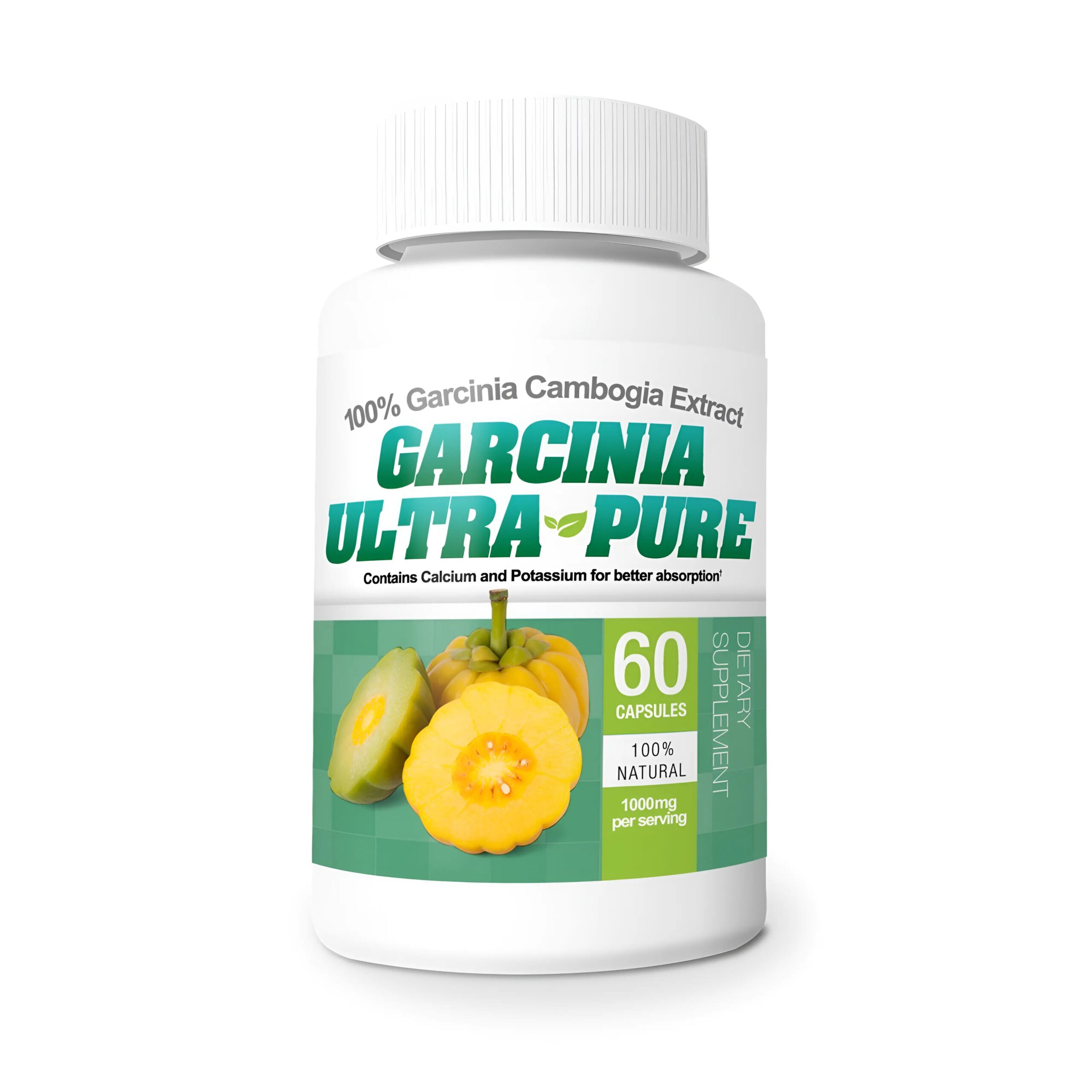
- Active ingredient(s): Garcinia cambogia extract (standardised to HCA content — exact percentage not clearly stated on the listing)
- Format: Capsules (exact per-capsule HCA dose not stated — readers should check the label on delivery)
- Marketed claims: “5-6% weight loss in 8 weeks,” appetite suppression, metabolism boost
- Quality info: Sold via Shopify storefront; no explicit mention of third-party testing, cGMP certification, or FDA-registered facility on the current listing — readers may wish to contact the seller directly for batch testing documentation
- Price: Approx. £32 / $40.00 per bottle
A few things stand out. First, the absence of a clearly stated HCA percentage and per-capsule dosage makes it difficult to compare this product against the doses used in clinical research. Responsible supplement manufacturers typically disclose this information prominently. Second, no third-party testing or quality certifications are mentioned. This is not unusual in the supplement industry, but it does mean you are placing a degree of trust in the manufacturer without external verification.
At roughly £32 per bottle, the pricing is in line with many Garcinia cambogia products on the market — neither suspiciously cheap nor premium-tier. If you have already decided to try an HCA supplement, this is a mid-range option. Just be aware of the evidence limitations we have discussed.
Realistic Expectations: What This Can and Cannot Do
It would be irresponsible to end this review without setting realistic expectations. The supplement industry has a long history of overpromising and underdelivering when it comes to weight loss, and Garcinia cambogia is arguably one of the most prominent examples of that pattern.
Here is what the evidence does and does not support:
- It does NOT support claims of losing 5-6% body weight in eight weeks from HCA alone. No independent trial has demonstrated this.
- It does NOT support the idea that Garcinia cambogia can replace dietary changes or physical activity.
- It MAY support a very small additional reduction in weight — in the order of less than one kilogram over several weeks — when combined with calorie reduction and exercise, though even this finding is inconsistent.
- It MAY help some individuals with mild appetite control through its serotonergic effects, though this is not well quantified.
The honest bottom line is this: if you are looking for a supplement that will meaningfully accelerate weight loss on its own, the evidence does not suggest Garcinia cambogia is that supplement. If, however, you are already making dietary and lifestyle changes and want to try a low-risk addition that might — might — offer a marginal benefit, it is unlikely to cause harm for most healthy adults, provided you follow the safety guidance above.
Frequently Asked Questions
What is Garcinia Cambogia and what is HCA?
Garcinia cambogia is a small, pumpkin-shaped tropical fruit native to Southeast Asia. Its rind contains hydroxycitric acid (HCA), the active compound used in weight-loss supplements. HCA is thought to temporarily inhibit an enzyme called citrate lyase, which the body uses to convert carbohydrates into fat.
Is there scientific evidence that Garcinia Cambogia causes weight loss?
The evidence is mixed and generally weak. A 2011 meta-analysis published in the Journal of Obesity found a small, statistically significant short-term weight difference of roughly 0.88 kg compared to placebo. However, the clinical relevance of this finding has been widely questioned, and higher-quality trials have often shown no meaningful benefit over diet and exercise alone.
Is Garcinia Cambogia safe? Are there side effects?
For most healthy adults, short-term use appears generally well tolerated. Common side effects include digestive discomfort, headache, and nausea. More seriously, there have been isolated case reports linking concentrated Garcinia cambogia extracts to liver damage. The US FDA has issued warnings about certain products, though causation is not always confirmed.
Can I take Garcinia Cambogia if I am on medication?
HCA may interact with diabetes medications (as it can affect blood sugar), statins, and some psychiatric medications that influence serotonin levels. Anyone taking regular prescription medication should speak to their GP or pharmacist before starting Garcinia cambogia.
Is Garcinia Cambogia approved by the MHRA or NHS?
No. Garcinia cambogia is not licensed as a medicine by the MHRA and is not recommended by the NHS. It is sold as a food supplement, which means it has not undergone the same rigorous safety and efficacy testing required for licensed medicines.
How much weight can I realistically expect to lose?
Marketing claims of “5-6% body weight in 8 weeks” are not well supported by independent clinical evidence. Realistically, any weight loss effect from Garcinia cambogia alone, if present at all, is likely to be modest — on the order of a few hundred grams to one kilogram over several weeks, and only when combined with dietary changes and exercise.
✅ The verdict
Garcinia cambogia is one of the most heavily marketed natural weight-loss ingredients in history, yet the clinical evidence consistently fails to match the hype. The best available data shows a very small, borderline-significant weight difference compared to placebo — far short of the dramatic results promised on many sales pages. The product under review is a mid-range option at a reasonable price point, but the absence of detailed quality certifications and clearly stated HCA dosing on the listing are points worth noting.
If you are already committed to dietary and exercise changes and want to explore whether an HCA supplement offers any marginal benefit, this product is a reasonable starting point for healthy adults not taking interacting medications. If you are hoping for meaningful weight loss from a supplement alone, we would gently suggest redirecting that budget towards a consultation with a registered dietitian — the evidence base for dietary counselling is vastly stronger. For those who would like to check current pricing here, please review the safety guidance in this article first.
If weight management is your broader goal, you may also find our reviews of NAD+ supplements and BPC-157 relevant for understanding the wider landscape of metabolic and recovery-focused supplementation.
🛒 Reader-recommended option
A mid-range Garcinia cambogia supplement for readers who understand the evidence limitations and have decided to try HCA as part of a broader weight-management plan.
Affiliate link — see disclosure at the top of this article. Current price approx. £32 / $40.00 per bottle.
This article is informational and contains affiliate links. It does not replace personalised advice from your GP, pharmacist, or another qualified healthcare professional. Garcinia cambogia is sold as a food supplement and is not licensed as a medicine by the MHRA. It should not be used as a substitute for evidence-based weight-management strategies including dietary modification and physical activity. Do not use if pregnant, breastfeeding, or under 18. Consult your GP before use if you take prescription medications — particularly antidepressants, diabetes treatments, or statins. If you experience symptoms such as jaundice, dark urine, or severe abdominal pain while taking any supplement, stop immediately and seek medical attention.
